HSMAI Adrian Awards Best Practice: Tourism Australia Come and Say G’Day Campaign

The 2024 Adrian Awards are now open! Take some inspiration from last year’s Public Relations Campaign, Consumer, Winner  – Tourism Australia and their agency, Turner.  Submit your entry for the 2024 Adrian Awards by September 9, 2024.  

In our Special Report, we profile all of the Platinum and President’s Award winners — including video and interview footage.  

BACKGROUND:
Tourism Australia launched its new Come and Say G’Day campaign in the United States on October 19, with the goal of reigniting U.S. traveler interest in the destination as a vacation destination post-pandemic. The campaign introduced the organization’s new Brand Ambassador, Ruby, a souvenir kangaroo, brought to life with CGI animation and voiced by Australian actress and Australian Tourism Ambassador Rose Byrne. 

CAMPAIGN:
The campaign’s objectives included generating 500 million incremental impressions on the campaign’s earned media impressions across print, digital, and broadcast media within the U.S. and driving unique views of the campaign’s hero asset, the G’Day short animated movie. 

RESULTS:
As a result, the campaign goal target was more than doubled, securing 1.06 billion earned media impressions through 516 placements, largely driven by national US TV placements and online syndication of content in US media. Based on ad equivalency of $6.67 million from earned media generated, Tourism Australia recorded an ROI of 10:1. 

HSMAI Adrian Awards Best Practice: The South Dakota Corn-Bassador

The 2024 Adrian Awards are now open! Take some inspiration from last year’s Public Relations Best of Show winner – The South Dakota Corn-Bassador South Dakota Department of Tourism, and their agency: Lou Hammond Group.  Submit your entryfor the 2024 Adrian Awards by September 9, 2024. 

In ourSpecial Report, we profile all of the Platinum and President’s Award winners — including video and interview footage. 

BACKGROUND: 

The goal of the campaign was to harness the viral exposure of the “Corn Kid” to propel South Dakota to a national conversation and reach new audiences. The campaign aimed to convert Tariq, the “Corn Kid,” to be a South Dakota ambassador/spokesperson, merging his love for corn with a new appreciation for family fun in the state. The campaign also aimed to engage state officials and tourism partners to educate a national audience about the diverse, lesser-known regions in South Dakota and develop resources for traveler use to plan a visit. The campaign had a goal to secure 100 earned editorial placements and 500,000 social media engagements that promote South Dakota’s family-friendly offerings and agritourism. 

CAMPAIGN: 

The campaign invited Tariq to visit South Dakota’s corn-related attractions and other tourism sites and honored him as the first-ever “Corn-Bassador” with a proclamation from the governor. The campaign also developed a Corn-Bassador itinerary for travelers to follow Tariq’s footsteps. 

RESULTS: 

The campaign generated more than 2,320 earned media placements, 46.6B+ impressions, $69.7M+ in media value, and 8.3M+ social media engagements. The campaign also contributed to a record-breaking visitor spending in South Dakota and increased traffic to the lesser-known regions featured in the itinerary. 

Top Digital Trends for Hospitality C-Suite to Future Proof Your Digital Footprint

Milestone partnered with Dorothy Dowling, former CMO of Best Western Hotels and HSMAI, to create an eBook on key digital marketing trends for hospitality executives to future proof their digital presence. It covers the latest advancements in AI, Google’s search algorithm, personalization, videos and images, and ancillary and group business, and how these trends are set to reshape the digital landscape. The eBook also includes insights shared with Dorothy Dowing, by key industry leaders on how their organizations are leveraging these trends to enhance their digital presence.

Top Digital Trends for Hospitality C-Suite to Future Proof Your Digital Footprint Ebook (milestoneinternet.com)

HSMAI Top 25 Profile: Mark Fancourt

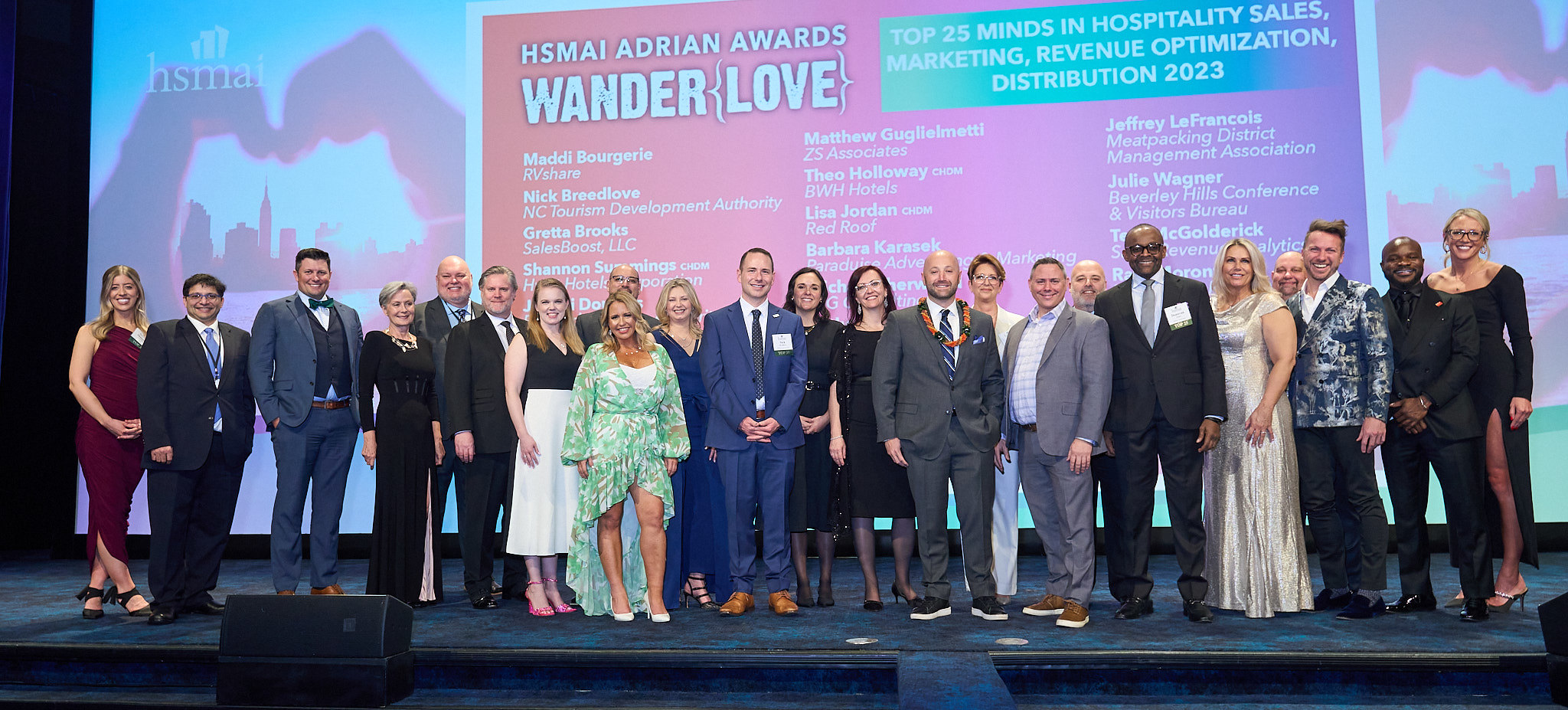
HSMAI honored the 2023 Top 25 Extraordinary Minds in Hospitality Sales, Marketing, Revenue Optimization and Distribution — recognizing leaders from hospitality, travel, and tourism organizations for their accomplishments. Mark Fancourt, Co-Founder & Principal at TRAVHOTECH is one of these honorees.  

Mark Fancourt’s international career in the hospitality and travel industry spans three decades, characterized by a progressive and globally informed approach. Serving as a forward-thinking corporate hotelier, technology provider, and management consultant, Fancourt consistently embraces innovation with a proactive mindset toward enablement and change. His brainchild, TRAVHOTECH, encapsulates this ethos by integrating business and technology expertise, providing clients with a dynamic competitive edge in the market. Fancourt’s executive leadership roles at renowned establishments such as MGM Resorts, Micros Fidelio, Pan Pacific, and Qantas not only underscore his commitment to pushing industry boundaries but also highlight his capacity to instigate positive change at an organizational level. His extensive global experience positions him as a strategic visionary adept at navigating the complexities of the ever-evolving industry landscape.  

Key Accomplishment: Mark has been pivotal in driving innovation and strategic thinking in hospitality technology, significantly impacting the industry’s evolution.  

What Inspired This Nomination? 

Fancourt’s forward-thinking and expertise have positioned TRAVHOTECH as a leading consultancy in hospitality technology. 

Q&A with Mark Fancourt  

What keeps you inspired? The perpetual evolution of the travel and hospitality technology landscape fuels my enthusiasm, presenting a myriad of new possibilities each day. Embracing the constant change, I find joy in steering away from routine and exploring the vast array of challenges and innovations. My passion lies in leveraging thought leadership to not only navigate this dynamic terrain but also to actively contribute to the improvement of business environments within the industry.  

Nominations are now open for the 2024 HSMAI Top 25! Deadline is September 9.

HSMAI Adrian Awards Best Practice: Destination Canada

The 2024 Adrian Awards are now open! Take some inspiration from last year’s Integrated Campaign Best of Show winner –  Destination Canada Specialist Sales Companion from Destination Canada and their agency: TravPRO.  Submit your entryfor the 2024 Adrian Awards by September 9, 2024. 

In ourSpecial Report, we profile all the Platinum and President’s Award winners — including video and interview footage. 

Award Campaign Video: https://www.youtube.com/watch?v=U8Ip0es2Kio&t=6s

Background: 

Destination Canada Specialist Sales Companion, an integrated campaign in the business-to-business division. The campaign falls under the category of Integrated Campaign and the classification of CVB/Destinations/Offices of Tourism. The entry organization country is Canada. The goal of the campaign was to rebuild Visit Canada’s global B2B engagement platform as a mobile-first platform, surpassing the Aussie Specialist program with advanced technology and a deep learning library. The campaign aimed to increase new advisor registrants, improve engagement and retention, and increase sales. 

Campaign: 

The campaign aimed to increase the sales of Visit Canada by training and engaging travel advisors around the world on the diverse and unique experiences that Canada offers. The campaign used TravPRO Mobile, a mobile-first platform that provided a comprehensive learning library with over 40 chapters on various provinces, cities, and experiences in Canada. The platform also included sales and marketing tools, such as videos, brochures, and itineraries, to help advisors promote Canada to their clients. 

Results: 

The campaign exceeded its goals by attracting over 27,000 global travel advisor registrants, achieving a 61% graduation rate, maintaining an average monthly engagement rate of over 53%, and generating over $3.8 million in reported bookings from just three markets. The campaign also achieved a 34:1 return on investment and surpassed the Aussie Specialist program as the largest B2B training library in the industry. 

Insights from the winners: https://www.youtube.com/watch?v=T2tVSHjqAgw


HSMAI Customer Insight: Americans Planning More International Leisure Trips | Longwoods

According to the latest Longwoods International tracking study of American travelers, 37% of them report that the political reputation of potential destinations is a factor in their travel selections.  And 14% of travelers say they avoid some destinations because of their political reputations.

“In a divided country and during a presidential election year, it is not surprising that the perceived political environment of destinations would impact travel decision-making for some travelers,” said Amir Eylon, President and CEO of Longwoods International. Insights for HSMAI from Eylon:

Key Strategies from the Ownership Group Roundtable

As part of HSMAI’s Commercial Strategy Week in Charlotte, HSMAI hosted a roundtable for ownership executives. Industry experts pinpointed five main challenges and offered tactics to tackle them. Below are the identified challenges and their corresponding strategies:

1.Rising Costs and Profitability Challenges

Challenge: Rising sales, marketing, and operational costs are outpacing revenue growth, creating profitability challenges. Innovations and fundamental revenue management are needed to address these increasing costs. Accurate forecasting and strategic cost management are essential to maintain profitability.

Strategy: Implementing advanced revenue management systems and techniques can help mitigate rising costs. Focusing on accurate forecasting and strategic cost management, hotels can optimize resources and improve profitability. Regularly reviewing and adjusting operational practices to align with market conditions is also crucial.

2. Data Management and Utilization

Challenge: Organizations face difficulties in prioritizing and effectively analyzing the growing amounts of available data. There’s a struggle to derive actionable insights from this data, necessitating sophisticated analysis and integration. The acceptance of AI and algorithms is increasing to enhance decision-making processes.

Strategy: Investing in advanced data analytics tools and training staff to utilize these technologies can help extract meaningful insights. Integrating AI and machine learning algorithms into data analysis processes can improve accuracy and decision-making. Creating a centralized data management system ensures consistency and accessibility.

3. Talent Acquisition and Development

Challenge: The lack of skilled talent to drive revenue and make informed decisions is a significant issue. The post-pandemic workforce has seen a decline in quality, with many skilled professionals leaving the industry. Developing business acumen among staff is crucial for effective negotiation and strategic implementation.

Strategy: Establishing robust talent development programs and offering continuous learning opportunities can attract and retain skilled professionals. Implementing mentorship initiatives and career advancement opportunities fosters growth and loyalty. Focusing on business acumen training for staff enhances their ability to negotiate and implement strategies effectively.

4. Customer Preferences and Market Trends

Challenge: Understanding and adapting to changing customer preferences is critical for maintaining competitiveness. Normalizing leisure demand impacts profitability and necessitates adjusted revenue strategies. Staying ahead of market trends and evolving expectations is essential for success.

Strategy: Conducting regular market research and gathering customer feedback can help hotels stay informed about changing preferences. Adapting marketing and revenue strategies to align with current trends ensures competitiveness. Offering personalized experiences and flexible booking options can meet evolving customer needs.

5. Alignment and Collaboration within Organizations

Challenge: Misalignment between property management, brands, and ownership on success metrics is a major challenge. Effective communication and education about profitability and long-term goals are needed to align stakeholders. Fostering collaboration and breaking down silos is vital for strategic alignment and improved performance.

Strategy: Establishing clear communication channels and regular alignment meetings between stakeholders can improve collaboration. Educating all parties on the importance of profitability and long-term goals fosters a unified approach. Encouraging cross-functional teams and shared objectives enhances strategic alignment.

Thank you to the companies sponsoring this roundtable Dragonfly Strategists and FLYR. This Roundtable was attended by ownership groups such as Apple REIT Hospitality, Ashford Hospitality Trust​, Hospitality Investors Trust​, Newcrest Image, Noble Investment Group, Ohana Real Estate Group, Summit Hotel Properties, and Trinity Investments.

HSMAI hosts this unique by-invitation forum annually for executives from ownership groups who specialize in a commercial role at their company. If you are interested in being invited next year, please email Bob Gilbert.

HSMAI Adrian Awards Best Practice: New Atlantis Website

The 2024 Adrian Awards are now open! Take some inspiration from last year’s Digital Best of Show winner – New Atlantis Website from Atlantis Paradise Island, The Bahamas and their agencies: LogicBomb Media and GlueIQ.  Submit your entry for the 2024 Adrian Awards by September 9, 2024.

In our Special Report, we profile all of the Platinum and President’s Award winners — including video and interview footage.

New Atlantis Website

Video: https://youtu.be/vbCLODfkp2E

Background:

The entry aimed to enhance the online experience of Atlantis Paradise Island to increase reservations and revenue through the website. The entry used a new website design, experience-based content, video content, high-quality imagery, and interactive features to achieve these goals.

Campaign:

The campaign aimed to enhance the online experience of Atlantis guests, increase engagement, and drive bookings for rooms, dining, and activities. The campaign involved launching a new website that featured experience-based content, video content, high-quality imagery, and interactive games and blogs.

Results:

Impressive results, such as a 5% increase in website revenue, a doubling of keyword count, an increase in average user visit duration, a decrease in bounce rate, and a shift from phone to online bookings. The entry also claimed a 289 to 1 return on investment.

Video: https://youtu.be/cyl251jbAFg


Economist Insights from the HSMAI Revenue and Ownership Executive Roundtable

Last week, economist Aran Ryan joined the HSMAI Revenue and Ownership Executive Roundtable discussions to offer insights on the state of the economy, travel, and current risks.  

Economy 

Despite prevailing fears, the economic outlook isn’t as dire as some might believe. The economy is indeed decelerating this year and is expected to continue on this path into the next year. However, this slowdown is not alarming. A resilient labor market and cooling inflation are key factors supporting consumer spending, even as many lower-income households might feel the pinch. 

Travel 

In the travel sector, lower-tier hotels are experiencing a softening in demand. Nonetheless, leisure travel continues to benefit from a favorable tailwind as consumer budgets show capacity. Business travel is on a positive trajectory, with group travel trends rebuilding steadily. Notably, international inbound travel is experiencing strong gains. 

Risks 

The global economic landscape is not without its risks. Significant geopolitical tensions, including those in the Middle East, Taiwan, and the ongoing Russia-NATO dynamics, pose considerable uncertainties. The baseline economic outlook carries a 45% probability, suggesting a balanced perspective between potential upsides and downsides. Alternatives to this baseline scenario include both stronger outcomes, such as a scenario where inflation is fully controlled, and weaker outcomes, like prolonged high interest rates or escalations in the Middle East conflict. 

HSMAI hosts this unique by-invitation only forum annually forhospitality executives. If you are interested in being invited next year, please emailBob Gilbert.     

How Are You Engaging Your Sales Team?

Katie Davin, CHBA, Associate Professor, Johnson & Wales University College of Hospitality Management 

Companies with high levels of employee engagement have higher productivity and profitability and lower turnover and absenteeism, according to Gallup research. I asked the Sales Advisory Board how they keep their teams engaged. 

Hands-on learning 

The HSMAI Foundation’s special report on talent identified hands-on learning as a way to engage staff. The Board agreed and described examples.  

One SAB member described the practice of identifying Subject Matter Experts and having those experts teach classes to the team. This method can work across departments, too; for example,  the revenue strategist teaches strategy to the sales team. Another approach is to have someone who doesn’t know something teach a class, which compels that person to learn about the topic so that they can teach it. Another SAB member keeps it simple by rotating the leaders of the weekly sales meeting, providing each team member a regular opportunity for leadership. 

Several sales leaders described opportunities for staff to opt into leadership development programs. One in particular encourages participants to complete projects. When the director needs projects done, she sends details out to the people in the development program. They can choose a project, which helps them learn and demonstrates commitment and growth.  

Collecting feedback 

In his article “How to boost your team’s engagement,” Michael Papay said that collecting input from employees resulted in increased engagement and trust and an improved company culture. Several SAB members provided examples of successes with collecting feedback, adding that analysis and implementation of the results is as important as collecting the information. One member’s company forms focus groups based on employee survey results, and each focus group develops an action plan that the company must execute. Progress is checked quarterly, with mini-surveys – five questions that can be easily and quickly answered on the respondent’s phone. The board agreed that if employees have a stake in the solution, they will embrace it and want it to work. 

Training  

Training is essential for employee engagement, particularly for companies or groups going through change. However, “one-and-done” training is not particularly effective. Training cannot be a “to-do” list item to be checked off; spaced repetition to reinforce training is necessary. 

Self-assessment of skill levels can identify training needs. In order to truly identify such needs, leaders must encourage employees to be vulnerable and say, “I don’t know.” That sentence can be scary to say at work, but several SAB members explained that their companies have built a culture that supports such expression, even applauding colleagues who say “I don’t know” in meetings.  

Several sales leaders stressed the importance of team members’ willingness to learn. Some leaders take this philosophy to the hiring process, identifying and selecting applicants who express an interest in learning. 

Defining engagement 

Engagement does not mean all work, all the time. Engagement on the job can be improved by making sure that people have time away from it. Leaders must communicate that time off is essential; they should encourage their teams to use their vacation time, and model this behavior by taking vacations themselves.  

How workers define and demonstrate engagement can vary by generation. An SAB member summarized the philosophy of younger workers, that they “work to live, not live to work.” They can get their work done during work hours, then they leave work and have a life. They may not be interested in after-hours team-building activities, because their time outside of work is really their time. To older generations, that might look like disengagement, when in reality those employees are fully engaged when they are at work. 

Further reading: 

HSMAI Foundation (2024). HSMAI Foundation Special Report: The State of Hotel Sales, Marketing, and Revenue Optimization Talent 2023-2024 

Papay, M. (2021). How To Boost Your Team’s Engagement: Employee voice, a critical element of organizational success. HCM Sales, Marketing & Alliance Excellence, 20(2), 38–39.