Digital Marketing Best Practice: Margaritaville Resort Orlando

HSMAI’s 2019 Adrian Awards competition is open and accepting entries through Aug. 22 — honoring creativity and innovation in hospitality advertising, digital marketing, and public relations. Take some inspiration from one of last year’s Platinum winners: Margaritaville Resort Orlando, whose “Margaritaville Resort Orlando: Integrated Consumer Digital Campaign” was honored in the Digital Marketing/Digital Campaign/Integrated Market Campaign for Consumers. (View all of last year’s Adrian-winning submissions here.)

BACKGROUND: Margaritaville Resort Orlando (MRO) is a 300-acre resort that opened in Kissimmee, Florida, in January 2019. The resort features a hotel and 1,000 rental cottages to house guests as well as a water park and a retail center with dozens of restaurants and a movie theater. MRO worked with Concept Farm to handle the marketing leading up to the resort’s opening.

RESEARCH: More than 62 million people visit Orlando every year, while more than 60 million customers engage with the Margaritaville brand every year. The purpose of MRO’s campaign was to excite both bases. Supplementing existing research with its own to identify and then test potential messaging points, MRO found that the three messages that generated the highest engagements were “Becoming immersed in Margaritaville,” “Learning the business of Margaritaville,” and “Being in the know as it relates to Margaritaville.” From there, MRO supplemented information provided by tourism boards and its corporate brand with research that identified target audiences. Because the range of customers was so broad — from a hotel guest spending $200 per night to a cottage owner spending a million dollars — there was a wide spectrum for whom to tailor messages.

THE CAMPAIGN: The primary objective was to deliver 300 leads to the in-house sales team for phase one cottage sales. The secondary objective was to build a pool of potential renters for the rental units and hotel rooms. The marketing team worked to promote the brand while engaging with the existing Margaritaville base and extending to consumers beyond the brand, fostering a relationship with the audience to convince them to stay at MRO once it opened. The message conveyed was to make the Margaretville lifestyle possible for everyone to enjoy by offering a vacation experience that was on their terms and in their very own place in paradise. Content was designed to play out on the digital screen and be quickly digestible. Engagement was constantly monitored to refine audiences and hone the messages. This delivered highly qualified traffic to the website, which maintained a 10-percent conversion rate (lead submissions/unique visitors).

RESULTS: As of April 2018, 12,000 ownership leads for the cottages were delivered, and were converted into 550 deposits, then 225 closed contracts, selling through all inventory in the first two phases of development without the use of an outside broker. That left an additional 325 depositors awaiting new inventory. This far surpassed the original goal of 300 leads and closing on 100 cottages. Also, as of April 2018, 20,000 rental/hotel leads were delivered.
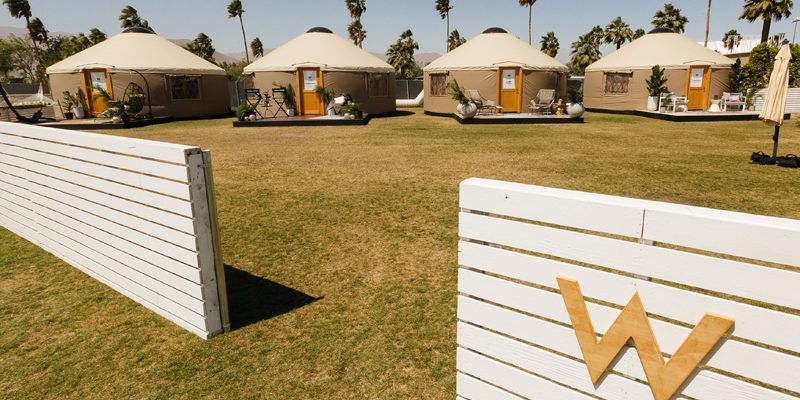

PR Best Practice: ‘W Hotels’ Experience at Coachella’

HSMAI’s 2019 Adrian Awards competition is open and accepting entries through Aug. 22 — honoring creativity and innovation in hospitality advertising, digital marketing, and public relations. Take some inspiration from one of last year’s Platinum winners: Marriott International, whose “Marriott International Presents: W Hotels’ Experience at Coachella” was honored in the Public Relations/PR Campaign/Experiential category. (View all of last year’s Adrian-winning submissions here.)

BACKGROUND: In 2017, Marriott International introduced an immersive experience for loyalty members at the Coachella music festival, transforming eight safari tents on festival grounds into hotel rooms representing each of Marriott’s lifestyle brands. In 2018, Marriott sought to take it a step further, spotlighting one of the company’s luxury brands, W Hotels, with four exclusive luxury yurt experiences.

MARKETING GOALS: There were two major goals of the Coachella activation. The first was to drive awareness and affiliation of the W Hotels brand within the broader Marriott portfolio by spotlighting the brand’s music strategy and highlighting the W properties that have private music studios and writers’ rooms and that will host Wake Up Call festivals in 2018 and 2019. The second goal was to drive engagement and advocacy with Marriott’s loyalty program. The target audience was Millennial-minded global jetsetters who seek memorable experiences and as many choices as possible.

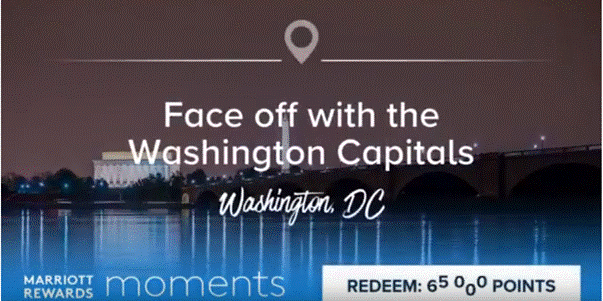
THE EVENT: To gain access to the W Hotels yurts at Coachella, guests had to be a member of one of Marriott’s loyalty programs — Marriott Rewards, SPG, and/or The Ritz-Carlton Rewards. Members could bid on one of four yurts and/or ticket packages using their loyalty points on the Marriott Rewards or SPG Moments platform. Perks included a 24/7 concierge and amenities tent, maid service, private parking, dedicated golf cart and driver, VIP stage access, and moments like a surprise private brunch with the band Marian Hill.

RESULTS: More than 600 million PR impressions were delivered across 35 outlets. Engagement was driven with the loyalty program, generating 5.7 million redeemed loyalty points for the yurt experiences, with the highest bid going to the Bali Yurt for 1 million points. Success was also measured by the guest satisfaction of members on site. The members staying in the yurts over both weekends became fast friends, hanging out in the W Village common area and seeing the headliners together. As one member said, “After having this kind of access, there is no other way to attend Coachella. We were treated as if we were staying at a W Hotel on festival grounds. Once-in-a-lifetime experience for sure.”


20 Questions for Your External Analysis

Every hotel should undertake both an external and an internal analysis on an annual basis. Here’s what you need to know about performing an external analysis. 

An external analysis provides hoteliers with a view of what is happening within the market. This includes consumer trends (demand) and competitors (supply). By understanding the behaviors of both consumers and competitors, a hotel or hotel company can better position themselves to be prepared to meet the needs of — and overcome the challenges specific to — their market.

Questions to ask during an external analysis include:

  1. Is there any new product that has entered the market since the last analysis that can be considered competition?
  2. What type of new inventory is entering your market?
  3. Has any inventory left the market? If so, why? Was it permanently closed? Is it closed for renovations intending to reopen?
  4. When was each competitor’s most recent renovation?
  5. Is there construction nearby any of my competitors?
  6. Have any of my competitors switched flags or management companies since the last analysis?
  7. What benefits have been added or lost with this change, such as distribution partners, group sales resources, and central reservation contribution?
  8. Have any of my competitors implemented revenue management systems or changed distribution partners since the last analysis?
  9. What are the reviews my competitors are receiving on social media sites?
  10. Are there any significant citywide events that are driving demand? If so, what is the volume of this demand and what dates are to be impacted?
  11. Are there any citywide events that are no longer returning?
  12. Have any large corporations moved into or out of our market during the past year? For example, what office sites may now be vacant or are newly occupied? What future economic developments or redevelopments are planned? What is their timing?
  13. Have any large companies in the market been acquired recently?
  14. Have any of your primary accounts changed their travel procurement procedures?
  15. Is there any significant change to how consumers are traveling to the market this year, such as driving versus flying?
  16. How is the booking process on the competitor sites?
  17. What are the market’s booking policies, including cancellation periods? What are the market’s cancellation percentages?
  18. Does the market offer channel-specific booking or cancellation policies?
  19. What is the landscape of the airlift coming into your destination?
  20. Have you or your competitors added new fees, such as a resort fee, facility fee, energy surcharge, parking, etc.? If any fees are already in place in your market, have there been any major changes?

Excerpted from HSMAI’s Evolving Dynamics: From Revenue Management to Revenue Strategy — The Study Guide for the Certified Revenue Management Executive (CRME) Certification, by Kathleen Cullen, CRME.

Digital Marketing Best Practice: ‘Retargeting Marketing’

HSMAI’s 2019 Adrian Awards competition will open on June 25 — honoring creativity and innovation in hospitality advertising, digital marketing, and public relations. Take some inspiration from one of last year’s Platinum winners: VISIT PHILADELPHIA, whose “Retargeting Marketing” campaign was honored in the Digital Marketing/Digital Campaign/Geo-Targeted Campaign category. (View all of last year’s Adrian-winning submissions here.)

BACKGROUND: VISIT PHILADELPHIA works to build Philadelphia’s economy and image through destination marketing. The focus is on engaging with leisure travelers who are interested in visiting the city for fun. Through a matched $75,000 investment from the Pennsylvania Convention Center (PCC), VISIT PHILADELPHIA developed a new retargeting marketing pilot program focused on engagement. The program utilized new technology to pinpoint interests, geofence specific areas, retarget device IDs, and access new data sources to engage with visitors.

MARKETING GOALS: The initial goal was to connect with potential PCC visitors and encourage them to attend events. Additionally, there was a need to engage with the visitors while they were in the city, encourage them to do more while they were visiting, and invite them to come back. VISIT PHILADELPHIA planned to use data sources and capabilities to target high-probability potential visitors, create messages to emphasize reasons to visit, build an audience to capture device IDs and target visitors to invite them back, and increase leisure-driven overnight hotel stays. The targeted audience was anyone whose interests aligned with PCC trade shows/events held in the Mid-Atlantic region and attendees of large citywide events.

THE CAMPAIGN: Social media and advertising teams worked to build audiences interested in activities on the PCC events calendar. Social media posts and advertisements targeted these potential attendees and invited them to trade shows; VISIT PHILADELPHIA worked with PCC to identify high-yield trade shows and the expected number of attendees to determine the size of the audience. VISIT PHILADELPHIA then engaged with visitors when they were in the city by targeting them using geofencing and encouraging them to do more in the city. The campaign also used Facebook to retarget attendees to the trade shows by capturing their device IDs and inviting them to come back and sleep over. Finally, the research team surveyed attendees of one trade show to find out what else people were doing in the city, where they were staying, and how they would rate their experiences both at the event and in Philadelphia as a whole.

RESULTS: After holding 33 trade shows/meetings, 1.6 million visitors were identified to distribute social and paid media ads to while visiting Philadelphia and 1.6 million device IDs were captured to invite visitors back. More than 20 pieces of content were created to convey the reasons to stay in Philadelphia. The project resulted in 1,265 leisure-driven overnight hotel stays. The program also marked a new partnership with PCC, which distributed content from VISIT PHILADELPHIA’s websites, encouraging them to do more outside the convention center.

PR Best Practice: A Perfect Night to Introduce a Perfect Day

HSMAI’s 2019 Adrian Awards competition will open in June 25 — honoring creativity and innovation in hospitality advertising, digital marketing, and public relations. Take some inspiration from one of last year’s Platinum winners: Royal Caribbean International, whose “A Perfect Night to Introduce a Perfect Day” was honored in the Public Relations/PR Campaign/Special Event category. (View all of last year’s Adrian-winning submissions here.

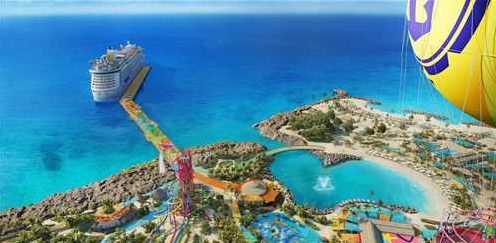
BACKGROUND: In 2019, Royal Caribbean International plans to open Perfect Day Island, a new private island destination in the Bahamas that is designed to deliver the ideal beach day. Due to the extended purchase cycle for cruises, it was important to generate media coverage a year ahead of its opening. Royal Caribbean delivered a launch event to showcase the brand’s newest innovations and allowed guests to experience Perfect Day Island via augmented reality (AR). The company targeted customers who had never cruised before, adults aged 25–54 with a propensity to travel and a passion for adventure, and travel agents.

CAMPAIGN: At the time, the island did not exist yet, nor did any renderings or assets. The only resources available were digital files that the company was using to perfect its design. Royal Caribbean paired its New Build team with technologists and developers to add authentic color detail and texture to the design plans, then searched all over Manhattan for the ideal event location — which ended up being underneath a construction building instead of in a traditional venue. Royal Caribbean advertised the event by contracting with influencers with an existing affinity for the brand to spread the news, and shared information with top media outlets across the business and lifestyle verticals. At the event, guests used a custom outfitted iPad to step through a virtual portal into Perfect Day Island using a unique AR system made possible by a Hollywood-grade motion-capture system that mapped the physical and virtual worlds.

RESULTS: Media were impressed by the announcement of Perfect Day Island. According to Digital Trends, “We’d be lying if we said it didn’t make us want to book a cruise and head to the island.” The launch event resulted in 353 media placements and 1.5 billion impressions. Social media content and influencers generated an additional 146 placements and 92 million impressions. Royal Caribbean’s SOV (share of voice) reached an all-time high as the demand for cruises that call on Perfect Day Island increased.

Advertising Spotlight: ‘Marriott Rewards Dynamic Ads for Moments’

HSMAI’s 2019 Adrian Awards competition will open in June — honoring creativity and innovation in hospitality advertising, digital marketing, and public relations. Take some inspiration from one of last year’s Platinum winners: Marriott Rewards, whose “Marriott Rewards Dynamic Ads for Moments” was honored in the Digital Marketing/Digital Campaign/Facebook Mobile Video Award category. (View all of last year’s Adrian-winning submissions here.

BACKGROUND: Marriott Rewards Moments creates once-in-a-lifetime moments for loyal customers. Past experiences include private dinners with celebrity chefs, suite seats at the Super Bowl, and backstage passes at some of the world’s premiere music festivals. The challenge Marriott Rewards faced was building awareness of the Moments platform while also increasing engagement with Elite members who have earned enough points to redeem. Marriott Rewards created a custom-built API, which feeds directly into video-rendering software, ensuring that Elite members can see Moments that are available for them to redeem in real time. The targeted ads ran on Facebook and directed users to the Moments website.

TARGET AUDIENCE: The campaign started with Marriott Rewards Elite members, who make up the top 10 percent of all Marriott Rewards Members. Elite members with more than 30,000 points were targeted to redeem their points, while Elite members with fewer than 30,000 points were targeted to build awareness of the platform. The audience was limited to members in the United States.

THE CAMPAIGN: Each video was 15 to 30 seconds long and featured three Moments, including more than 60 unique video clips sourced by sub-category and destination. Over the course of the five-week campaign, more than 1 million unique ads were rendered and displayed across Facebook. Marriott Rewards prioritized the first Moment shown in the ad to capture the attention of the user within the first three seconds using an attention-grabbing call-to-action. Ads refreshed every eight minutes and were optimized for the user based on key performance indicators (KPIs). The ads were optimized for mobile and utilized quick video rendering, so they played as expected.

RESULTS: When compared to previous campaigns, site visits increased by 81 percent, the click-through rate increased by 250 percent, bids increased by 33 percent, and redemptions increased by 60 percent. Dwell time was also 33 percent higher than industry benchmarks.

HSMAI Best Practices Guide: Data Analytics

At HSMAI’s 2018 Curate events — an Executive Insights Forum offered exclusively for HSMAI Organizational Members — senior-level hospitality sales, marketing, and revenue-optimization professionals identified three primary challenges facing the industry: innovation, data analytics, and talent acquisition and retention. Each HSMAI Best Practices Guide focuses on one of those challenges, offering case studies, strategies, and solutions that oftentimes have been collected from HSMAI events and programs.

“Hospitality Sales and Revenue Management” is an HSMAI Best Practices Guide: Data Analytics. It features select best practices shared at HSMAI’s Analytics Think Tank, which was presented by HSMAI’s Sales Advisory Board and Revenue Management Advisory Board as part of the 2018 Revenue Optimization Conference.