AI Powers Wisdom Work and Reduces Routine Tasks: Transforming the Workplace Landscape

In today’s digital age, artificial intelligence (AI) has emerged as a pivotal force across various sectors, and the hospitality industry is no exception. With its ability to process vast amounts of data, AI is becoming indispensable, with the power to significantly enhance operational efficiency and transform core functions within the sector. We explore this in the excerpt from the HSMAI Foundation Special Report: The State of Hotel Sales, Marketing, and Revenue Optimization Talent 2023-2024 

One of the key aspects of AI’s impact on the hospitality industry is its integration into various applications. AI is not a standalone entity but an enhancement that can be seamlessly integrated into existing tools. It’s imperative for leaders to understand how AI is integrated and ensure that their teams are proficient in utilizing these capabilities. 

AI’s transformative influence is permeating every facet of our industry, from sales and marketing to advertising, revenue management, loyalty programs, and distribution. It is, in essence, revolutionizing the way we do business. The imperative now stands before us: to embrace AI and its potential for value creation or risk falling behind in an era where innovation is the key to survival. Personalized, targeted content outperforms generic campaigns. AI can speed, scale, and simplify building it. 73% of shoppers expect brands to understand their unique needs and expectations.  

Empowering Sales Teams 

In sales management, AI provides invaluable insights into customer behavior and market trends, equipping sales teams with data-driven decision-making capabilities. Predictive analytics algorithms analyze extensive datasets, extracting valuable insights that enable sales teams to prioritize high-potential leads effectively. Advanced AI-powered tools like ‘Salesforce Einstein’ offer predictive lead scoring, enhancing lead management. Generative AI improves the tools salespeople use for communication, including emails, sales presentations, and proposals, ensuring more effective client interactions. 

Enhancing Marketing Strategies  

AI plays a crucial role in enhancing marketing strategies by leveraging predictive analytics to analyze data, forecast customer behavior, and follow market trends. This empowers marketing teams to make data-driven decisions and develop highly effective campaigns. AI-powered personalization and recommendation engines deliver tailored experiences to individual guests based on their preferences, past behavior, and demographics. AI powers content creation, production, and management enhancing content, and platform monetization and personalizing content for audiences. Real-time AI-powered chatbots and virtual assistants interact with guests, providing personalized recommendations and assistance, contributing significantly to customer engagement. Loyalty programs now leverage AI and machine learning to offer tailor-made recommendations, thereby strengthening customer loyalty and driving revenue. 

Optimizing Revenue Management 

AI significantly enhances revenue management in the hospitality industry by utilizing predictive modeling to analyze historical data and predict future demand and revenue. It helps revenue management teams optimize pricing and availability to maximize revenue, helping set dynamic pricing based on demand, occupancy, and other factors, thereby increasing occupancy rates and room rates. Leading solutions such as the IDeaS’ Revenue Management System leverage AI for precise demand forecasts and dynamic pricing. 

Enhancing Operational Efficiency 

In the wake of HSMAI’s enlightening full-day session on AI during its Curate Event in November, it became abundantly clear that AI’s profound impact transcends mere buzzwords and speculation. With presentations from industry giants like Google, SalesForce, Milestone, the Hotel Network, ZS, and an illuminating legal perspective from Foster Garvey, attendees were presented with tangible case studies, enterprise risk management considerations, and pragmatic frameworks for implementing AI solutions within their organizations. AI extends its benefits beyond sales and marketing. It can be employed to monitor and predict maintenance needs in hotel rooms, optimize energy efficiency, and reduce operating costs, effectively managing and operating the hotel.  

AI tools also play a pivotal role in optimizing staff time around reputation management by quickly processing and analyzing customer reviews to identify trends and areas of improvement. ‘Revinate,’ a hospitality-centric CRM, utilizes AI to manage online reviews and social media interactions, offering staff actionable insights to enhance service and marketing effectiveness. 

AI is not merely a technological tool; it has become a strategic imperative for the hospitality industry. To remain competitive and relevant, investments in AI, education on its applications, and the adoption of AI-driven strategies and chatbots are crucial. Embracing AI is the key to unlocking its full potential and ensuring a brighter future for our talent and our businesses. As AI expert Michael Goldrich aptly stated, “AI Delay is Organizational Decay.” This emphasizes the urgency for the hospitality industry to embrace AI and avoid stagnation.  

Key Takeaways 

  • AI is becoming indispensable, enhancing efficiencies and transforming core commercial functions. 
  • AI is seamlessly integrated into many of our applications in digital marketing, loyalty, revenue management, and sales enablement. 
  • In sales, AI also is powering sales leaders with MARCOMM tools to support emails, presentations, and proposal writing. 
  • In marketing and revenue management, AI is powering predictive analytics supporting forecasting, dynamic pricing, and personalized recommendations to drive customer loyalty and engagement. 
  • Embracing AI is the key to unlocking its full potential. 

To read more about the top talent trends, downloadthe HSMAI Foundation Special Report: The State of Hotel Sales, Marketing, and Revenue Optimization Talent 2023-2024.   

HSMAI Commercial Strategy Conference Session Preview: Ancillary as Primary!

Jeff Borman, VP Revenue Optimization, Ashford, HSMAI Revenue Optimization Advisory Board Member 

I think of ancillary as forever the next frontier. It’s always something that matters, but never something that gets the focus in the short term.  
These statistics highlight the immense value of ancillary revenue for hotels, especially in the wake of the pandemic. Ancillary revenue can help hotels diversify their income sources, enhance their customer loyalty, and increase their profitability. However, capturing this potential requires a strategic approach and a clear vision. 

Despite its vast potential, the ancillary sector has remained a bridesmaid, often sidelined due to its complex nature. I brought this topic to the HSMAI Revenue Optimization Advisory Board meeting to discuss.   

5 Key Takeaways 

  1. Redefining Ancillary: The need to broaden our understanding of what constitutes ancillary revenue is clear. From traditional offerings like spa and dining services to innovative concepts like revenue per available cabana (RevPAC) and on-site advertising. Even the utilization of hotel structures for antenna placements has emerged as a viable ancillary revenue stream. 
  2. Overcoming Obstacles: The absence of a unified strategy has hindered growth. The industry’s challenge lies in creating a cohesive approach that encompasses all potential revenue streams, ensuring they are not only recognized but actively optimized.
  3. Benchmarking for Growth: Identifying and understanding the competitive landscape for ancillary services is crucial.  
  4. Technology: Leveraging technology to streamline ancillary offerings and personalize guest experiences without crossing the boundary into invasiveness can significantly enhance revenue generation. As one AB mentioned, “We’re looking at merchandising opportunities… and leaning on technology providers that specialize in optimizing spend beyond room revenue.” 
  5. Cross-functional Collaboration: Ancillary revenue should not fall solely under the purview of one department. A collaborative approach involving revenue management, marketing, operations, and finance is essential for unlocking its full potential. 

Further explore how Ancillary is Primary! at our upcoming session at the HSMAI Commercial Strategy Conference. Led by the Revenue Optimization Advisory Board, we’ll dive into essential strategies and actionable insights that will transform your hotel’s food and beverage and meeting spaces into key revenue drivers. Learn from compelling case studies and gain practical, low-tech recommendations to capitalize on these crucial ancillary revenue streams.  

Read Further:  

Questions for Your Team: 

  1. Ancillary has so many disparate sources and providers, just getting started is often a challenge. 
  2. What resources exist for an aspiring commercial leader to tap into?  
  3. What would you (your hotels) want to better capture Ancillary revenue?  
  4. Is anyone at a hotel in charge of ancillary? Who should be? 

HSMAI’s Strategic Initiatives to Enhance Local Market Engagement and Value

Robert A. Gilbert, CHME, CHBA, President and CEO, Hospitality Sales & Marketing Association International (HSMAI)    

Here at HSMAI we are ramping up efforts to invigorate our member base and foster robust market-specific growth. As we move into 2024, our strategic priority to “broaden our reach” takes center stage, focusing on developing new markets and enhancing the member value proposition through localized engagement. 

Engaging Locally 

HSMAI recognizes the unique challenges that hotel operators and owners face, particularly in managing the “middle of the P&L.” To address these issues, HSMAI is increasing its focus on local chapter engagement. This approach emphasizes customizing educational programs to meet the distinct needs of the local market, essential for driving revenue growth cost-effectively. Establishing new chapters and developing localized educational initiatives are key elements of this strategy, catering to both on-property and above-property professionals. 

Strategic Developments and Chapter Expansion 

2024 marks a significant year for HSMAI, with the chartering of new chapters in key U.S. markets and active developments in Latin America. If you know people who live in these markets, encourage them to join and engage. Notable new chapters include: 

  • Greater Denver Chapter: Set to host its inaugural event on June 12, this chapter aims to strengthen connections among local members and provide tailored educational resources. Check out the leadership of the chapter here: https://www.hsmaidenver.org/ 
  • Tennessee Valley Chapter: Based in Huntsville, Alabama, this chapter targets a July 9 chartering, focusing on building a strong community of hospitality professionals. 

Expanding in Latin America 

In 2024, HSMAI will build on the strength of the HSMAI Brazil Chapter with a larger reach into Latin America is growing stronger with several significant developments: 

  1. New Chapters and Leadership Boards: Efforts are underway to charter new chapters in strategic locations across Latin America. With four active chapter developments, each new country will also grow its leadership board, aiming to tailor HSMAI’s impact directly to the local needs. 
  2. Strategic Conferences and Roundtables: The newly formed Latin America Advisory Board has already made strides by hosting one-day strategy conferences in Bogotá, Santiago, Mexico City, and Lima. Plans for 2024 include hosting a Revenue Optimization Conference and two executive roundtables in each country, focusing on tackling local challenges and maximizing revenue opportunities. 
  3. Engagement and Growth: These initiatives are designed not only to educate and empower hotel leaders in these markets but also to create a cohesive network of professionals who can collaborate and drive collective success across the region. 

For more information about the growth in these markets or these events, visit: https://hsmailatam.org/ 

Future Initiatives  

The expansion efforts are not limited to new chapters. We are also revitalizing our presence in established markets such as Dallas and San Francisco, seeking grant partnerships to drive the association’s goals forward. ensuring that members can engage locally and benefit from collective expertise.  

Celebrating Success and Looking Ahead 

The impact of these initiatives is already visible. In the past year, HSMAI chapters across the Americas hosted over 200 educational programs, culminating in the recognition of outstanding chapters at the 2024 Mike Leven Leadership Conference. As we look to the future, the phrase “a rising tide lifts all boats” encapsulates HSMAI’s vision—uniting sales, marketing, and revenue leaders in each market to create educational programs that drive demand and optimize revenue collectively. 

For those interested in contributing to or learning more about these exciting developments, additional information can be found at the HSMAI chapter websites and by contacting chapter management directly. 

The Cookie Apocalypse: Adapting to the Era of 3rd Party Cookie-less Marketing

Cristina Suris, Corporate Marketing Manager, Kessler Collection, HSMAI Rising Marketing Leader Council Member  

The hospitality industry heavily relies on third-party cookies for targeted advertising, personalization, and customer tracking across various platforms. With shifting away from third-party cookies, hotels and travel agencies will face significant challenges in understanding and reaching their target audience effectively, along with major impacts on campaign visibility/performance. As reliance on zero and first-party data sources becomes increasingly crucial, proactive adaptation and integration of customer profiles into evolving marketing channels will be essential for maintaining competitiveness in the industry. I discussed this recently with my colleagues on the HSMAI Rising Marketing Leader Council, read on for highlights from our discussion.  

Leaning on New Technologies and Expertise 

The transition away from third-party cookies has led many marketers to reassess their data collection and analysis methods. Rising leaders are increasingly turning to digital marketing experts to refine their strategies, ensuring data remains as clean and actionable as possible. We are also trying to extract maximum reporting insights from Google Analytics before they become obsolete, capturing valuable historical data for future use. 

Enhancing First-Party Data Capabilities 

First-party data has become the foundation of new marketing strategies. By segmenting their databases and launching re-opt-in campaigns, one member shared how they are not only ensuring compliance with privacy laws but also enhancing customer engagement. Loyalty programs and enhanced conversions were other key areas of focus mentioned, helping to build a robust internal data ecosystem that respects user privacy while delivering personalized experiences. 

Integrating with Agency Expertise 

Several members mentioned how agencies are playing a crucial role in this transition, providing essential guidance and innovative solutions. From email marketing enhancements to sophisticated data analysis tools, agencies are helping brands navigate the complexities of a cookie-less environment. This collaboration is pivotal as brands look to leverage first-party data more effectively, creating opportunities for more direct and meaningful interactions with consumers. 

Strategic Adjustments and Future Outlook 

Despite the challenges posed by these technological shifts, we rising leaders are optimistic about the future. The extension of third-party cookie deprecation to late 2024/early 2025 offers additional preparation time, which is being used to refine strategies and test new approaches for the cookie-less future we know is coming! 

Read More  


Questions:  

  1. Do you know what 3rd party cookies are? 
  2. Are you aware they are going away? 
  3. What is your company doing to prepare for a cookie-less world? 
  4. Have you changed your strategies, budgets, or partners based on the change of 3rd party cookies? 
  5. Can you share any successful examples you’ve implemented to collect first-party data through email acquisition campaigns or website integrations? 

AI Education & Implementation in a Hotels Commercial Strategy

Katy Gettinger, Vice President Sales, Preferred Hotel and Resorts, HSMAI Sales Advisory Board Member

Kyle McEachran, Sales Strategy & Insights at Google Travel, HSMAI Sales Advisory Board Member

As the implementation of AI and hotels and hotel sales seems to become more common, it’s really essential for sales leaders to stay in the know about this growing technology. That’s why we wanted to bring this topic, which can feel overwhelming, to the HSMAI Sales Advisory Board for discussion.

Introduction to Artificial Intelligence

At its core, Artificial Intelligence (AI) represents the capacity of machines and software to emulate human intelligence and perform tasks such as learning, reasoning, and understanding natural language. This technology, although not new, has gained significant traction in various sectors, propelled by innovations from leading tech giants like Google, Microsoft, Amazon, and Apple. AI excels in analyzing large amounts of data to derive meaningful insights and facilitate decision-making processes.

Where Are We Learning About AI?

Some mentioned their company’s adoption of tools like Microsoft Copilot Chat, marking a shift towards officially sanctioned AI applications. This aims to harness AI’s potential while safeguarding proprietary information. Security was a huge consideration for most of our group with someone joking that of the hundreds of AI applications, 99.5% of them would never be allowed to be used by their company.

Others mentioned self-taught AI skills and collaborative learning within teams, sharing successes and tips for effective usage. While social channels like YouTube and LinkedIn were mentioned as good sources of tutorials and prompt ideas.  Some of the top-down approaches from IT didn’t resonate as well since they didn’t focus on practical applications of AI, from email automation to customer service enhancements, but more on what was and wasn’t allowed.

Use Cases

One compelling case study highlighted the efficiency of AI in planning unique culinary experiences for a large group. Utilizing AI, the team could quickly generate menus, source ingredients locally, and identify vendors, transforming a potentially days-long process into a matter of hours. This example illustrates AI’s capacity to augment human efforts, not replace them, by enabling high-level planning and execution.

Several members mentioned using AI driven HR systems that helped with review processing and making them more efficient, with better feedback.

The AI Journey

Overall, each person is going on their own unique journey with both understanding and implementing AI. Essentially, AI is the application of big data and understanding big data, and it’s a matter of understating how you can best utilize it for your benefit – whether that’s productive tasks like performance reviews or integrations into a CRM.

The best way to understand the data or AI is to look at your own objectives and tasks and try to work backwards from there.


Read Further:

AI in Hotels: A Complete Guide for the Hospitality Industry

Questions for your team:

  1. Who, where, and how we are educating ourselves and teams on AI?
  2. How and where have we seen success (or failures) in implementing AI in your Commercial Strategy?

Cross Functional Teamwork and the Evolution of Commercial Leadership

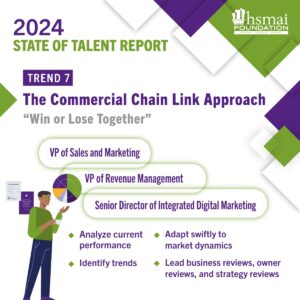
Effective cross-functional collaboration stands as a pivotal trend shaping contemporary business outcomes. Realizing the full potential of collaborative teamwork demands meticulous preparation, the alignment of shared objectives, and the guidance of skilled leadership to reinforce desired organizational behaviors and objectives. While the advantages of cross-functional collaboration are widely acknowledged, the implementation of this approach requires more than mere immediacy; it necessitates a deliberate shift in organizational mindset beyond joint projects. Achieving successful collaboration between teams necessitates a disciplined and strategic effort focused on people development, underpinned by leadership advocacy and unwavering commitment (Henson, 2023).  

Expanding your organization’s mindset so that cross functional teams have contact and influence from initial development, marketing, and communication both internally and externally is seen as a necessary step for organizations. The emphasis is on preparation and recognizing that cross-functional teammates bring different skills, jargon, and viewpoints, and strong communication and agreed upon goals are important to prevent miscommunications which can become breeding grounds for conflict. These conflicts can not only slow down projects but can have a negative impact on employee well-being (Piaggi, 2023).  

Companies need to be proactive in training their employees to work effectively in cross-functional teams and to work to provide a psychologically safe environment to help build and promote trust and open communication. They also need to promote both individual and group development programs to provide the skills needed to make collaboration successful.  

Cross-functional teams can also help address the shortage of skilled employees within the hospitality industry by encouraging collaboration and skill sharing, promoting efficiency and flexibility, promoting the development of new roles within the organization, helping to promote the development and adoption of new technology and bringing diverse perspectives that can encourage innovation and creative problem solving. Additionally cross-functional teams can participate in both group and individual training and upskilling and add to the development opportunities available to current and potential employees.  

Key Takeaways  

  • Effective cross functional leadership requires a disciplined plan focused on people development and leadership advocacy. 
  • Cross functional teams need shared objectives and KPI’s. 
  • Cross functional teamwork requires training in collaboration and teamwork for both individuals and the group. 
  • Cross functional teams bring diverse perspectives that encourage innovation and creative problem solving. 

Additional Resources:

Taking Commercial Strategy To The Next Level: This report and accompanying Commercial Effectiveness Organizational Effectiveness Assessment was created by the HSMAI Commercial Strategy Workgroup. HSMAI’s Commercial Effectiveness Organizational Assessment allows a hotel organization (individual hotel, management company, ownership group, or brand) to assess and score their implementation of the 11 key drivers of commercial excellence.

To read more about the top talent trends, including case studies of this trend, downloadthe HSMAI Foundation Special Report: The State of Hotel Sales, Marketing, and Revenue Optimization Talent 2023-2024. 

Return to Office (RTO) and Hybrid Work Models: Adapting to New Ways of Working

In recent years, the realms of sales marketing, distribution, and loyalty have undergone significant transformation in response to the challenges and opportunities brought about by remote work. Discussions held during HSMAI leadership meetings and conferences within these sectors have illuminated the evolving dynamics of the workplace, emphasizing the importance of happiness, productivity, and equity in this new era. It’s noteworthy that the embrace of remote and hybrid work models varies across the globe. As Gallup (Brecheisen, 2023) research revealed, “the attitude of leaders had an outsized influence on workplace strategies.”  

A unique aspect of this transformation is the long-standing practice of sales and revenue manager leaders working remotely. They have adeptly adapted to the changing landscape. However, the broader shift associated with hybrid work is now associated more with leaders in branding, above-property management, marketing specialists, sales enablement, advertising, project management, property support teams, loyalty, and distribution teams. These professionals now allocate a specific number of days to working from home each week, marking a significant change in work dynamics. 

At the core of these discussions emerges a pivotal question: should compensation for remote work differ from that of in-office work? Within HSMAI, executives have engaged in spirited debates on this matter, with concerns raised about the potential for such a compensation philosophy to disadvantage women and other underrepresented groups. Surveys (The Economist, 2023) have revealed a growing willingness among employees worldwide to accept pay adjustments in exchange for the option to work from home, signaling a shift in work preferences. However, this trend has prompted organizations globally to contemplate potential disparities in compensation and opportunities and how to address these concerns. 

In the specific context of marketing and advertising agencies, a notable trend has emerged. Executives in these sectors are placing emphasis on high-potential employees who choose to invest their time in the office for informal learning opportunities. These individuals are viewed as particularly deserving of additional development and are more likely to receive growth and advancement opportunities. This approach underscores the importance of striking a balance between remote work flexibility and the unique benefits of in-person collaboration and learning.  

Remote work has undoubtedly demonstrated its strengths in facilitating concentration and efficiency, especially for roles that demand solitude and deep focus. The reporting from The Economist suggests that certain functions are more effectively executed from home, challenging the conventional belief that productivity is intrinsically tied to physical office presence. The Gallup study suggests that the best decisions about RTO should consider “(1) employees’ preferred way of working (2) focus on developing communication skills for managers so they can speak to their teams (3) provide managers with training on managing different types of workplace arrangements, especially remote and hybrid.”  

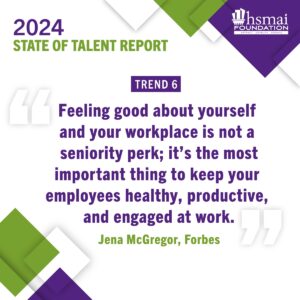
However, the discourse on the impact of remote work on productivity takes diverse forms across the globe. In regions like the United States and Canada, the adoption of hybrid work models has gained momentum, aligning with the desire for workplace flexibility. Consequently, organizational leaders are reassessing their approach to the workplace, recognizing the impracticality of mandating a complete return to the office. As one participant in a study aptly put it, “Feeling good about yourself and your workplace is not a seniority perk; it’s the most important thing to keep your employees healthy, productive, and engaged at work (McGregor, 2023). A recent study showed that companies that provided more employee choice outperformed on revenue growth by 16 percentage points compared to companies that provided fewer choices (McGregor, 2023). 

Korn Ferry (Ferry, 2023) in a Leadership article “Why the World is Back at the Office But the US is not” has also identified how RTO policies are a North American practice while the rest of the world has returned to the office and adopted similar policies for remote work as they had pre-pandemic. This trend of remote and hybrid work is a trend that HSMAI leaders in other parts of the world have clearly stated is a NORAM issue only. Sales, Marketing, and Revenue Management teams in Europe, Asia, and the Middle East returned to the office in 2022 as pandemic concerns eased. 

David Rock (Rock, 2023) has also identified a “patchwork framework” in addressing RTO practices in North America. This framework meticulously ensures that teams are represented in the office on the same days, fostering collaboration and ensuring a critical mass of colleagues for meaningful in-office interactions. This focus on RTO implementation is critical to ensure that all employees benefit from the value creation associated with RTO workdays.  

Moreover, certain HSMAI leaders have adopted a distinctive approach to their designated “collaboration days,” a term coined by an HSMAI leader. These leaders describe their practice of hosting two in-person collaboration days per week. As Michelle Woodley, President of Preferred Travel Group, and past chair of the HSMAI foundation, explained, “We’ve implemented two in-person collaboration days each week where we sponsor lunch, and I personally make an effort to join our team. These days provide an invaluable opportunity for personal interaction with our people, fostering not only informal learning but also enhancing business communication.” This personal touch not only enhances collaboration but also cultivates a sense of unity and camaraderie within the organization. 

The evolving work paradigm in sales, marketing, distribution, and loyalty, as discussed in HSMAI leadership meetings and conferences within these sectors, underscores the critical imperative of balancing happiness, productivity, and equity on a global scale. While the adoption of remote and hybrid work models varies by region, organizations worldwide must remain flexible and responsive to the evolving preferences and needs of their employees. It is recognized that the future of work is not a one-size-fits-all solution. The collaborative and personalized approach embodied in “collaboration days” exemplifies how organizations can foster a sense of belonging and enhance productivity in this ever-evolving landscape. 

Key Takeaways
• Culture and teamwork are fueled by intentional efforts like “collaboration days” for in-office hybrid workdays.  

  • Some companies see in-office work as important for high potential employees to drive career growth and advancement. 
  • Discussion continues on how fully remote employees may be tied to different compensation models

To read more about the top talent trends, downloadthe HSMAI Foundation Special Report: The State of Hotel Sales, Marketing, and Revenue Optimization Talent 2023-2024. 

Evolving Past ROAS as the Primary Marketing KPI

Stephanie Smith, CEO and Digital Matriarch, Cogwheel Marketing & Analytics, HSMAI Marketing Advisory Board Member

Traditionally, Return On Ad Spend (ROAS) has dominated as the primary metric for evaluating the success of marketing initiatives. As we evolve past ROAS, I wanted to get the take from my fellow experts on the HSMAI Marketing Advisory Board. We had an engaging discussion around other KPI’s that our organizations lean into to show value in our digital marketing initiatives. Read on for some key takeaways and ideas to get started.

Beyond ROAS: Index Based KPIs

There is a growing recognition of the limitations of ROAS as a solitary measure of success. This metric, while valuable, often falls short of capturing the full impact of marketing initiatives on a property’s revenue and customer engagement.

The conversation highlights a shift towards index-based KPIs, such as Brand.com Occupancy Index in regards to Channel Mix which offers a broader view of a hotel’s performance relative to its competitors and the market at large. One of my fellow members shared, “It’s incredibly complicated now with all these touch points…educating on the various customer journeys and putting the customer at the center of it.”

Ideas for Measurements:               

  1. Media mix modeling – a statistical technique used to analyze historical data and quantify the effectiveness of various marketing channels on sales or desired outcomes, enabling optimized advertising spend for maximum investments.
  2. Frequency – Related to social media; also the other metric for social is saves.
  3. Adding RPI impact on paid media reporting – offers a big picture perspective next to room nights, revenue production, and conversion.
  4. Lifetime Value – total revenue a hotel can reasonably expect from a single guest throughout their relationship with the brand.

Revenue Marketing vs. Marketing Verbiage

One insight that was clear is the necessity for marketing and revenue management to speak a similar language. This alignment ensures that marketing efforts are not only measured accurately but also resonate with the broader strategic objectives of the property. One AB member noted, “Marketers talk about channel mix and revenue manager talks about segmentation mix. The other verbiage to be clarified is booking window and planning window. Each discipline needs to educate the other regarding the perspective and the impact.

Questions for Your Team

  1. What metrics, other than ROAS, do you talk about with your owners?
  2. How do you educate on the entire customer journey?
  3. How do you get buy-in for top of funnel/low ROAS channels?
  4. What KPIs do you focus on for social media?


Mastering the Art of Communication: Transformative Strategies for Hotel Leaders

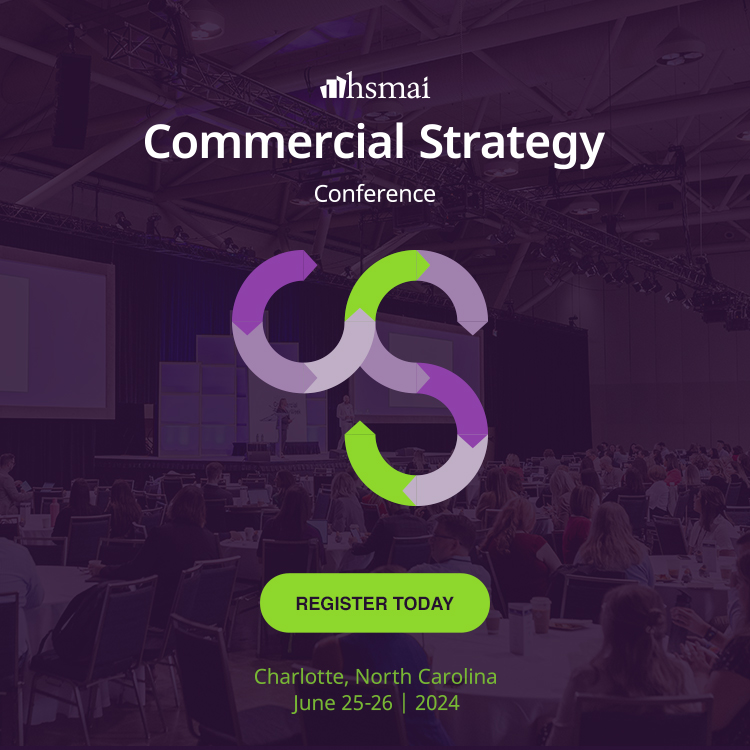
HSMAI staff recently sat down with Denise Thomas, the President of The Effective Communication Coach, who will be a keynote speaker at the HSMAI Commercial Strategy Conference (CSC), June 25-26, in Charlotte, NC. Denise takes a personalized approach, empowering individuals to “lead from where they are” in order to foster substantial, positive changes within their organizations. Her consulting and business serve professionals from entry level to C-Suite Executives on how effective communication can drive advancement in their career and innovation across their businesses.  

Read on for our interview with Denise.  

Q: Could you give us an overview of your session at Commercial Strategy Week? 

A: I’m thrilled about joining HSMAI at CSC in June – Charlotte is a great city! During the keynote Mastering the Art of Communication attendees will understand the power of great and exceptional communication to connect with others. This is for individuals that want to excel and exceed expectations. Attendees should show up ready to have a great time and further their brand to elevate success.  

Q: Why is communication so important for today’s hospitality commercial professionals? 

A: Hospitality professionals have commitment, dedication, and passion for connecting to guests and consumers on a day-to-day basis. How do does our communication change when we are connecting with teams, leaders, or guests? There’s also a responsibility to make sure that we are thinking of psychological safety – there is a mental health crisis. What are some of the words and narratives and language that can sustain a great experience in your role. And that you have what you need psychological safety is protected and embraced.  

Q: What will attendees be able to implement immediately after attending your session? 

A: During the session, attendees will engage in exercises specific to how they show up, how they communicate, and how to bring out the best in them. They will also receive a digital and hard copy of the effective communication guidebook. The session will focus on understanding how to connect with others and how to communicate with others how to get the best out of you. Attendees will be able to apply these techniques and practices immediately when they return to their respective locations. 

Q: How does your session tie into Commercial Strategy?   

A: The session ties into the broader theme of Commercial Strategy by focusing on growth and how to generate more sales and valuable experiences for clients. Communication will be at the forefront of commercial strategy, and attendees will learn how to have difficult conversations and navigate through them. 

This session will provide attendees with applicable mechanisms, great new mindsets and understandings, as well as an appreciation of how to show up as their best authentic, genuine self. We’ll talk about the narratives and even the nonverbal communication techniques to elevate their company’s brand, their mission, and the overall business growth objectives. 

Q: Could you talk about any future trends you’ll be discussing in your session? 

A: During the session, I will discuss generational movements that are changing the landscape of how people work together. The session will cover how having multiple generations in the workforce is impacting the overall experience in the workplace, how to embrace mistakes, learn from them, recruit and sustain top talent, and manage change.  

Q: What resources would you recommend for anyone wanting to maximize their experience? 

A: For those looking to deepen their understanding or application of the session’s insights, I recommend: 

  1. Visit the my website to access tutorials and see her communication and keynote speaking style in action.  
  2. Connect with me on social to ask direct questions and receive additional information. 
  3. Be ready to be engaged and present during the session – it’s an investment in yourself and your growth. 

Q: Anything else you’d like share?  

A: I want to remind attendees that they are not alone in navigating the many challenges they face. I encourage everyone to come to the session with an open mind. Your mindset is so important, so show up as your best self, and remember you are not alone as we come together. Whatever you want to gain, whatever you need to learn, whoever you want to connect with, you can with the right mindset. Be ready to receive the best!  

Unlocking Hyper-Personalization: 5 Strategies for Leveraging First-Party Data in Hospitality

Jessie Radcliff, CRME, Director of Revenue Management & Marketing, Perdido Beach Resort, HSMAI Rising Marketing Leader Council Member 

The hospitality industry continues to witness a significant shift towards personalized guest experiences and enhanced loyalty programs. According to Forbes, loyalty programs are evolving beyond the traditional one-size-fits-all model, catering to individual purchasing behaviors (Fromm, 2024). With 73% of shoppers expecting brands to understand their needs (HSMAI, 2024) and 90% of consumers now expecting tailored experiences (Skift, 2018), personalization has become more than just a strategy—it is a commitment to understanding and serving customers on a deeper level.  

Hyper-personalization is a comprehensive understanding of individual preferences, behaviors, and expectations, empowering hotels to not only meet but surpass guest expectations throughout the customer journey. Hotels are now leveraging first-party data, advanced technologies, and automation paired with a balance of human touch and cross-team collaboration to tailor email marketing, loyalty programs, and on-property communications to achieve hyper-personalization. This data-driven approach is reshaping the future of the hospitality industry and may be a key to sustaining customer loyalty. I discussed this with my peers in the HSMAI Rising Marketing Leaders Council meeting recently. Here are our 5 takeaways. 

1. Email Marketing 

The journey to personalization begins with effective communication, particularly through email marketing. We’re challenged in balancing the frequency and content of emails to avoid saturation while still engaging the audience. For instance, one member shared how including personalized elements such as the recipient’s name or tailoring emails based on past interactions can significantly increase engagement rates. However, another member mentioned that limitations in their marketing platform often pose challenges in achieving this level of customization. Despite these hurdles, their goal was to deliver content that resonates with the guests’ preferences and interests, whether it be through intentional imagery, upcoming events, or exclusive offers. 

2. Enhancing the Entire Guest Journey 

The scope of personalization extends beyond email marketing, touching every phase of the guest experience. From the moment of booking, tools like dynamic pop-ups can guide user behavior, encouraging direct bookings and upselling services. We also discussed that seasonal customization of websites and targeted advertisements based on demographics can be effective in drawing guests’ attention and fostering a connection even before they arrive. 

An innovative approach mentioned involves using AI to adapt communication based on the guest’s language preference, as identified during the booking process. This level of attention to detail not only enhances the guest experience but also bridges potential communication gaps, making guests feel valued and understood. 

3. The Power of Segmentation and Tailored Offers 

Understanding guest preferences allows for more targeted room promotions and offers. By segmenting guests based on their previous bookings or preferences, hotels can send personalized follow-ups, from anniversary emails celebrating a past stay to tailored offers that match their known preferences. This strategy not only increases the likelihood of repeat bookings but also strengthens the relationship between the brand and its guests. 

4. Ensuring Promises are Kept 

The effectiveness of any personalization strategy ultimately depends on the collaboration across all hotel departments. From marketing to guest services, the implementation of personalized initiatives requires a coordinated effort to ensure that the promises made through marketing are fulfilled throughout the guest’s stay. In some cases, this process is surprisingly manual, underscoring the importance of clear communication and detailed standard operating procedures. 

5. Leveraging Technology for Personalization 

To support these personalized initiatives, many hotels are turning to new technology solutions. Platforms like Zingle offer text messaging functions that allow guests to communicate their arrival times and receive personalized messages about property offerings. Another tool, Oaky, facilitates pre-arrival communications, enabling properties to upsell or highlight specific features to guests based on their booking details. 

By leveraging first-party data, AI, and targeted marketing strategies, hotels can create more personalized, engaging, and satisfying experiences. 

Read More  

Questions for Your Team  

  • How is your company leveraging first-party data to personalize email marketing offers? How do you ensure that you are intentional and not over-engaging? 
  • What marketing strategies or tools is your team currently using to enhance and better personalize the guest experience throughout the customer journey? 
  • How does your company incorporate personalization into room promotions and offers, and what insights have you gained from observing strategies implemented by other hotels? 
  • How does your company foster collaboration between all departments (Marketing, IT, Front Desk, Guest Service, etc.) to ensure seamless implementation and delivery of personalized initiatives across the organization? 
  • Does your company integrate personalization into its loyalty program, or have you observed any hotels effectively implementing this approach? 
  • Has your company recently implemented or invested in any technology solutions to help automate the creation of personalized communications and guest segmentation? Additionally, does your company utilize a Customer Data Platform (CDP) or other real-time data tool to aid in automating and updating guest profiles and communications within your CRM system?