HSMAI Top 25 Profile: Shannon Cummings

HSMAI honored the2023 Top 25 Extraordinary Minds in Hospitality Sales, Marketing, Revenue Optimization and Distribution— recognizing leaders from hospitality, travel, and tourism organizations for their accomplishments. Shannon Cummings, Global Brand Marketing Manager at Hyatt,is one of these honorees.  

At Hyatt, Shannon strives to bring the stories of Hyatt’s Independent Collection brands to life for travelers, inspiring new audiences to experience and champion these amazing brands. With over 10 years of experience in marketing strategy, digital media, brand activations and brand management, Shannon has added value and driven impact across the travel, hospitality, and F&B sectors for clients such as Uber Technologies Inc., Choice Hotels International, Berkshire Hathaway Travel Protection, Visit Oklahoma City, Santa Monica Travel & Tourism and Sonic Drive-In. When she’s not traveling, she’s either dreaming of her next trip or working to find presence on her yoga mat.  

KEY ACCOMPLISHMENT: 

Successfully elevated brand awareness and engagement for Hyatt’s Independent Collection through innovative digital marketing strategies. 

WHAT INSPIRED THIS NOMINATION? 

“Shannon’s strategic approach to storytelling and brand activation has significantly enhanced 

the visibility and appeal of Hyatt’s Independent Collection.” 

Q&A with Shannon Cummings 

What advice would you give to your younger self? 

I would tell my younger self to prioritize authenticity over perfection. As I’ve grown in my career and witnessed amazing leadership from some inspiring mentors and supervisors, I’ve more fully realized the value, and even the necessity, of bringing your authentic self to the workplace, aligning your career path with your values, admitting (and even celebrating) your mistakes and failures, being unafraid to ask questions and admit when you don’t know the answer, and not forgetting to bring levity, humor and joy to your work. We work in travel, an industry that bring so much good into the world, so I would remind my younger self that the work will get done and to enjoy the ride! 

What keeps you inspired? 

I am so inspired by travel, specifically the empathy that it builds, the connection it creates, the adventure it promises, the joy it inspires, and the transformative experiences that it brings. Travel gives us the opportunity to experience unique and often remarkable moments that change our perception of the world, allow us to better understand others and ourselves and give us the gift of creating memories that stay with us and positively impact our lives moving forward. I feel so lucky to work within an industry that can deliver such a life-affirming gift and that inspires me every single day. And I think it’s also imperative to remember that travel can be to a far-off place, but it also just be walking down the street to your favorite hometown coffee shop and connecting with a friend. Inspiration comes to those who get out into the world and seek it! 

Nominations will open in mid July for the 2024 HSMAI Top 25!

Insights from HSMAI’s Marketing Educator of the Year: Janelle Hoffman

HSMAI staff recently had the pleasure of talking to Janelle Hoffman, Program Director, Professor & Advisor, Hospitality & Tourism Management Program, Scottsdale Community College. Hoffman will receive the Marketing Educator of the Year during HSMAI’s Commercial Strategy Conference in Charlotte on June 26th 

Hoffman has over 26 years of academic expertise in Hospitality Management at Scottsdale Community College. Prior to her years in the classroom her hotel sales and marketing experience spans 15 years across Michigan and Arizona with hotel management companies Vista Host, Promus, and Hilton Hotels. Hoffman holds a Bachelor of Science Degree in Business Communications from Western Michigan University and a master’s in organizational management from the University of Phoenix.  


1. What significance does receiving the HSMAI’s Marketing Educator of the Year award hold for you?  

I am genuinely grateful and honored that HSMAI recognizes the importance of education in marketing in the hospitality industry. This award is significant to me because it reflects not just my efforts, but also the success of my students. I’ve dedicated over 25 years to teaching and assisting hospitality-hearted people find their place in the industry and many have pursued sales and marketing as a career path. 

2. How did you get your start in the industry? 

Before my years in the classroom, my hotel sales and marketing experience spans 15 years across Michigan and Arizona with hotel management companies Vista Host, Promus, and Hilton Hotels. Upon graduation, my first job offer was in hotel sales and marketing. I remember half-heartedly taking the position thinking I would do this until I found what I wanted to do. Looking back at that moment in time I smile as this is the industry in which I belong I didn’t know enough to truly appreciate the opportunity. I often share my story with my students to express the importance of keeping an open and positive mindset wherever you find yourself.  

3. What is the guiding philosophy of your career thus far?  

To inspire and educate the next generation of hospitality professionals through a commitment to excellence, innovation, and integrity, and to live a life that fulfills what I was created for being of service to others.  

4. Could you share a piece of career advice or key habits you think are important for those starting in the industry?  

Never forget the true definition of “hospitality” it is the generous, friendly, or courteous treatment of others. Exude a joyful attitude regardless of the pressures of life and interact with people directly, honestly, and with compassion. It’s a small world and industry developing your personal brand of hospitality will guide your choices and inspire others to want to work with you.  

 5. During your time in the industry, how have you seen the marketing education space evolve? 

Technology has had the biggest impact on the evolution of hospitality marketing education. Marketing has become more dynamic, interdisciplinary, and responsive to the evolving needs of our customers and partners. Preparing students for careers in a rapidly changing marketplace highlights digital marketing, social media, and understanding how to apply data analytics to target markets, including virtual and augmented reality and artificial intelligence. Today’s focus is to understand customer journeys and leveraging technology to enhance guest experience and create a relationship, one of loyalty.  

6. What are the biggest challenges students face in marketing education? 

Overall, marketing education requires mastering new technologies and understanding how to use analytical tools, navigate digital overload, and stay focused on the question or identified issue. Education should highlight how to navigate ethical dilemmas, and cultural differences in an increasingly globalized marketplace. 

 7. How did you get involved with HSMAI? What impact has your association with HSMAI had on your professional development? 

I’ve lost track of how many years I’ve been a member of HSMAI. I started as a member when I worked on-site as a hotel sales manager over 30 years ago! Overall, joining HSMAI has been beneficial to me in expanding my professional network.  

Membership has also assisted me as a Program Director at SCC in identifying and hiring quality adjunct faculty members to teach part-time in our hospitality program. HSMAI’s Arizona Chapter over the years has provided industry insights, professional development, and camaraderie among members thanks to the best Executive Director, Joanne Winter. 
HSMAI Top 25 Profile: Raul Moronta, Chief Commercial Officer

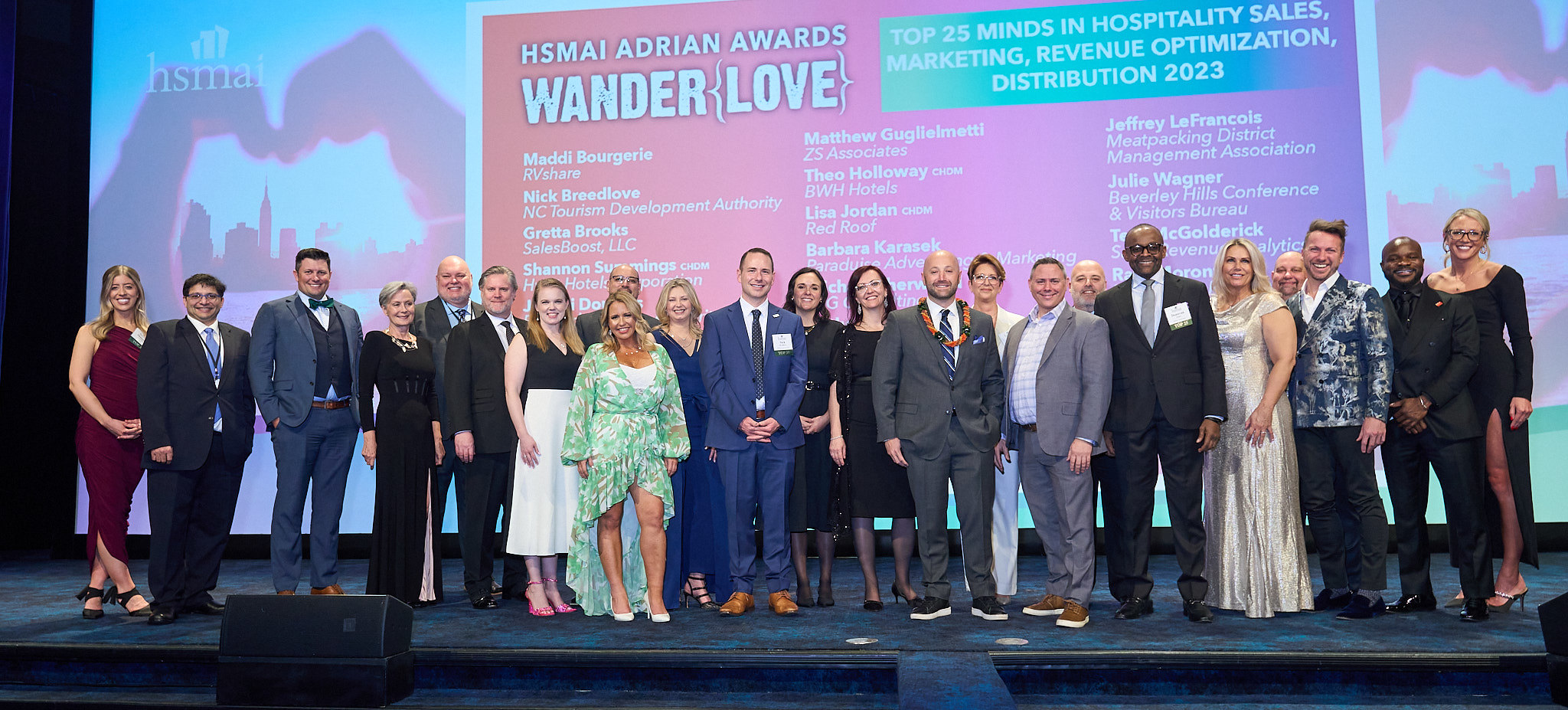
HSMAI honored the2023 Top 25 Extraordinary Minds in Hospitality Sales, Marketing, Revenue Optimization and Distribution— recognizing leaders from hospitality, travel, and tourism organizations for their accomplishments. Raul Moronta, Chief Commercial Officer, Remington Hotels,is one of these honorees. 

Raul Moronta is a seasoned hospitality executive with a career spanning over 25 years. Since 2020, he has served as the Chief Commercial Officer at Remington Hospitality. Armed with an M.B.A. from the University of New Haven and a Bachelor’s in Hotel & Restaurant Management from Pontificia Universidad Catolica Madre y Maestra, Moronta has excelled in leadership roles at prominent organizations, including Crescent Hotels & Resorts and Starwood Hotels & Resorts. His achievements include spearheading international expansions, achieving consecutive years of market share growth, and successfully integrating numerous hotels into portfolios, contributing significantly to overall growth.  

Moronta’s expertise extends to various facets of the hospitality industry, with a particular focus on revenue management, strategic implementation, and executive leadership. In addition to his corporate roles, Moronta has contributed to academia, serving as a professor at Johnson & Wales University and Newbury College. He holds certifications in hotel industry analytics and revenue management and is fluent in Spanish. Moronta’s unique blend of academic insights, industry expertise, and strategic leadership positions him as a transformative force in the dynamic realm of hospitality management. 


KEY ACCOMPLISHMENT: 

Successfully integrated numerous hotels into Remington’s portfolio, enhancing overall growth and revenue. 

WHAT INSPIRED THIS NOMINATION? 

“Raul’s strategic acumen and transformative leadership have been instrumental in Remington Hotels’ success.” 

Q&A with Raul Moronta 

What advice would you give to your younger self? 

If I could offer advice to my younger self, I would emphasize the importance of prioritizing meaningful connections with friends and family. Additionally, I would stress the significance of maintaining a healthy lifestyle, incorporating activities like biking and running outdoors in my younger years as I have now. Having a sense of accomplishment and sharing it with those who I love creates a more harmonious and fulfilling life.  

What keeps you inspired? 

I find continual inspiration through my exploration of new travel destinations and my interactions with guests and colleagues from diverse backgrounds. These experiences help me stay curious to discover innovative ways to enhance our business. It helps me remain grounded, humble, and honest about my own capabilities and those of my team. This blend of diverse perspectives and a commitment to continuous improvement serves as a powerful source of motivation and creativity in our endeavors. 

Headlines & Headwinds: Navigating the Legal & Regulatory Currents

HSMAI staff recently had the opportunity to interview Greg Duff, Principal at Foster Garvey PC, HSMAI Global Distribution Advisory Board Member, and a speaker at the Commercial Strategy Conference, June 24-27 in Charlotte. Duff has a nearly 30 year career working exclusively in the hospitality industry. He has dedicated himself to helping clients solve a wide range of “back of house” legal issues associated with operating a modern hospitality operation – from advising on the myriad of issues associated with distribution and online travel to navigating the complex relationships among owners, operators, regulators, and vendors/suppliers. 

Read on for our Q&A with Greg Duff. 

Could you give us a brief overview of your session at Commercial Strategy Week? 

I am going to be reviewing the “legal headwinds” that attendees and their companies are experiencing (or will soon experience). Topics include junk fees and service charges, Artificial Intelligence (AI), anti-trust (both in the U.S. and UK/EU) and tax. The session will be filled with “real world” examples as to how these issues are arising today. 

What unique perspective do you bring to this topic, and why is it important for today’s hospitality commercial professionals? 

As outside counsel to many of the largest hotel companies, we see first-hand the challenges that they face. If the topics I cover are not yet affecting attendees, they will soon. 

What are the practical takeaways attendees will be able to implement after attending your session? 

My goal is to provide every attendee a list of five to six topics to take back to their companies and ask whether the company is effectively handling these topics today or prepared to handle them in the future.   

How does your session tie into the broader theme of Commercial Strategy? 

Unfortunately, the best commercial strategy will only go so far if it runs into legal limits or exposes a company to unreasonable legal risks. Any effective commercial strategy must take into consideration some or all of the legal headwinds we plan to discuss.  

Could you hint at any future trends or predictions you’ll be discussing in your session? 

I hope to be able to provide some insight as to how the commercial landscape may be changing in the future based on anticipated or forthcoming changes in the legal frameworks around junk fees / service fees, AI, anti-trust, etc. 

For those looking to deepen their understanding or application of your session’s insights, what resources or next steps would you recommend? 

First and foremost, the list of topics or issues that I provide attendees with should be taken back to their companies and presented or discussed.  Existing legal resources (whether internal or external) should also be consulted. Our firm would also be willing to assist if needed. 

HSMAI Perspective: Commercial Strategy in Focus

Robert A. Gilbert, CHME, CHBA, President and CEO, Hospitality Sales & Marketing Association International (HSMAI)   

As we prepare for the upcoming Commercial Strategy Conference (CSC), I’m excited to share insights from the newly released HSMAI Foundation report, “From Solos to Symphony. The Transformational Power of ‘Commercial’.” Authored by Breffni M. Noone and Chris Boyd, this report offers the first comprehensive research of how the formalization of the commercial function can revolutionize hotel performance. 

One of the standout findings from our study is how 54% of participants identified topline revenue optimization across all revenue-generating assets as the primary goal of an effective commercial strategy. This underscores the importance of a unified approach that brings together sales, marketing, and revenue management. It’s about moving from siloed efforts to collaboration that enhances overall performance. 

Insights from Industry Leaders 

Next month, at CSC, we are poised to dive deeper into these themes with an impressive lineup of speakers and sessions designed to provide actionable insights and strategic frameworks that reflect the convergence of marketing, revenue optimization, sales, and other commercial functions into new and evolving commercial strategy organizations. Lori Kiel, Gissell Moronta, and Stephanie Smith will lead discussions on crafting dynamic and agile commercial strategies that drive profitability. 

Another session not to be missed is “Customer Experience in the Age of AI,” where David C. Edelman, a recognized leader in digital transformation, will discuss how AI is reshaping customer interactions and strategies. His insights will be invaluable for commercial professionals looking to leverage AI for enhanced customer engagement and profitability. 

An Invitation 

It’s clear that the future of commercial strategy in hospitality is both challenging and full of potential. The need for a cohesive, integrated approach has never been more apparent. I encourage all members to read the full report and to join us in Charlotte to engage with industry leaders and peers. Together, we can transform our individual efforts into a movement that drives success and innovation across the hospitality sector. 

Innovative Marketing in Hospitality: Insights from Industry Experts

Leora Halpem Lanz, Assistant Dean of Academic Affairs; Faculty Chair of the Graduate Program; Associate Professor of the Practice, Boston University School of Hospitality Administration; HSMAI Board Member 

If your marketing is effective, would you consider it innovative? Is innovative marketing always effective? How can we be so sure?   

Today’s marketers, particularly in hospitality, deserve loads of credit; there is so much to know. The ecosystem of marketing continuously grows, and the opportunities continually evolve. There is so much knowledge needed to sustain and intelligently utilize tools for fluid connection, engagement, dialogue, and conversion. How do we keep marketing initiatives targeted? How do we cut through the vastness of clutter and noise, to reach new audiences and maintain existing ones? Remember, the marketing mindset also involves strategy and language skills that are critical for creative and meaningful outreach which results in two-way communication and engagement.   

“Marketing” may mean certain skills and activities for some brands, and different approaches for others.  The variety of specializations from technological connectivity, back-end CRM and distribution channels, and online marketing efficiencies, to branding, press relations, influencer marketing, anything “Google,” consumer behavior, activations, and large-scale events – well, that’s all “marketing.” There’s digital marketing, and there’s also destination marketing. There’s event marketing, and there’s back-end analytics. There’s VR, AR, and now IM and AI.  I wanted to understand how today’s practitioners who are involved in these various marketing specializations think about their craft and continued innovation.  

I recently curated a two-part series in the Marketing Innovation edition of the Boston Hospitality Review. I spoke with several of my favorite marketing masterminds to talk about what constitutes “innovation” in hospitality marketing today. Here is a selection of HSMAI affiliated interviews, please enjoy and get inspired!   

Republished with permission of Boston University’s School of Hospitality Administration, as published in the April and May 2024 issues of the Boston Hospitality Review. 

HSMAI CHSL Study Guide Coming Soon!

Are you looking to enhance your knowledge of hotel sales? HSMAI’s comprehensive CHSL study guide covers a wide range of topics relevant to today’s hotel sales leaders. From the intersection of sales and technology to the importance of business acumen, this guide provides valuable insights and practical strategies for success in the dynamic world of hotel sales.  

You’ll discover how technology is transforming the sales process, with chapters on digital marketing, artificial intelligence, and data analytics. Learn how to leverage these tools to generate leads, personalize offers, and optimize revenue.  

But it’s not all about technology – this guide also covers essential leadership skills, from building and retaining a high-performing sales team to managing the sales function and driving profitability. With contributions from industry experts, this guide is an invaluable resource for hotel sales leaders looking to stay ahead of the curve.  

In addition to sales and technology, this guide also delves into the importance of revenue management and the interdependence of sales and revenue optimization. Learn how to evaluate potential business and determine its value, as well as how to optimize your distribution and reduce customer acquisition costs. 

Read on for excerpts from the first chapter Chapter 1: Where Hotel Sales and Technology Meet by HSMAI’s Americas Sales Advisory Board.  

Technology and Leading Sales Today 

Technology has radically altered selling processes, creating new opportunities for sales teams to become more efficient and data-driven, and to deliver highly personalized experiences throughout the customer journey. 

Technology has made some of the transactional aspects of sales easier, making touchpoints with customers even more important. Robust customer relationship management (CRM) systems have become essential for managing leads, tracking customer interactions, and analyzing sales performance data to optimize processes. A successful sales leader will: 

  • Fully understand the capabilities of the sales intelligence and CRM tools to which their team has access, especially when it comes to lead scoring, sales forecasting, and customer data and analytics. 
  • Ensure that their team leverages the hotel’s CRM systems to manage leads and customer interactions, track sales performance metrics, and optimize sales processes. 

Made possible by developments in technology, hotel sales, marketing, and revenue management functions have become more integrated. Digital marketing tactics like content marketing, email campaigns, and paid advertising directly support sales pipelines. And advanced revenue management systems allow revenue teams, of which sales is a member, to dynamically manage pricing and inventory in response to real-time market conditions. This integration requires sellers to understand the fundamentals of both revenue management and marketing to make sure the right offer is made to the right customer at the right time. A successful sales leader will: 

  • Appreciate the components of, and colleagues who specialize in, digital marketing and revenue management. Understand how they influence the discipline of sales, and vice versa. 
  • Ensure that their team knows how and when to leverage which marketing tools — from content marketing to email campaigns, paid advertising, and more — to support sales efforts (see Chapter 10 on Digital Marketing Best Practices & Measurement). 
  • Ensure that their teams master the fundamentals of revenue management and can identify the most impactful partnership opportunities for sales and revenue management, including market segmentation, pricing, forecasting, and performance measurement (See Chapter 11, A Sales Leader’s Guide to Revenue Management). 

Sales teams now have access to richer data analytics tools, enabling them to better understand customer behavior, communication and buying preferences, and purchasing patterns, allowing for more personalized and targeted sales efforts. These data analytics tools are also used to measure success metrics and make more informed decisions. A successful sales leader will: 

  • Recognize the tremendous value — and role — of data for the sales organization and understand how to leverage data to become a more effective commercial strategist. 
  • Build the capabilities of their sellers to use data to be more strategic and targeted in their prospecting and customer engagement efforts. 

Additional technological innovations impacting sales today — and how successful sales leaders can lean into them — include: 

  • Digital Sales Channels: Train and coach sellers to adapt their traditional face-to-face sales interactions to virtual selling environments and digital channels like email, social media, and video conferencing. See Chapter 3 (Effective Communication and Presentation Skills for Sales Leaders). 
  • Social Media: Understand the role of social media in hotel sales, and leverage social platforms like LinkedIn for your (and your team members’) personal branding, networking, and directly engaging prospects. See Chapter 3 on Effective Communication and Presentation Skills for Sales Leaders (“Your Professional Image and Personal Brand” section) and Chapter 10 on Digital Marketing Best Practices & Measurement. Also, see the section on “Social Selling” later in this chapter. 
  • Automation and AI: Investigate opportunities for automation and AI to streamline repetitive sales tasks, enhance lead scoring and personalization efforts, and answer customer queries. See Chapter 13 on Artificial Intelligence and Hotel Sales. 


HSMAI’s CHSL Study Guide will be available this summer!  

HSMAI Top 25 Profile: Tess McGoldrick

HSMAI honored the 2023 Top 25 Extraordinary Minds in Hospitality Sales, Marketing, Revenue Optimization and Distribution — recognizing leaders from hospitality, travel, and tourism organizations for their accomplishments.Tess McGoldrick, Vice President, Travel & Hospitality, Revenue Analytics,  is one of these honorees. 

Tess is the Vice President for the Travel & Hospitality vertical at Revenue Analytics. In this role, she leads cross-functional teams to develop high-impact products that provide revenue growth for her customers. Having started her career at Revenue Analytics, Tess developed an expertise in Revenue Management from the best in the business. Tess’ experience includes ensuring client satisfaction is achieved with all product implementations, from business process improvements to forecast predictions to actionable pricing recommendations. She drives the vision for N2Pricing , as well as the implementation & ongoing customer success for these customers. Prior to joining Revenue Analytics, Tess graduated from the Goizueta Business School at Emory University with a BBA concentration in Strategy & Management Consulting and Accounting. 
KEY ACCOMPLISHMENT: Spearheaded the development of N2Pricing, improving pricing strategy and analytics for hospitality clients. 

WHAT INSPIRED THIS NOMINATION? “Tess’s innovative leadership and dedication to enhancing revenue management practices have made a significant impact.” 

Q&A with Tess McGoldrick 

What advice would you give to your younger self? 

Don’t be afraid to ask for help! The first six months of my career were rough. Coming out of business school I had an attitude that I was super smart and could figure anything out. Once I got over that ego and asked my (super smart) co-workers (who had already figured it out) for help, my learning curve shot up. The help I received accelerated how efficient I could be, gave me more time to do higher-value and more interesting work, and inspired me to pass along that same help as a coach and mentor later in my career. 

What keeps you inspired? 

I’ve never considered myself creative in the traditional sense – don’t ask me to draw, paint, or write something. But I consider myself a creative problem solver. With my work, I get to creatively problem solve nearly every day – and it’s never the same ‘problem’ which certainly keeps things interesting. Whether it’s designing a new feature that improves user experience, tackling how to incorporate a new data source into our analytics modules, or helping my team find ways to be more efficient with how we work – it’s always fun! I’ve joked with people that N2Pricing is my third child. So, like a true Mama Bear, what inspires me is continuing to see the product grow and provide value to the industry. 


HSMAI Top 25 Profile: Maddi Bourgerie

HSMAI recently honored the 2023 Top 25 Extraordinary Minds in Hospitality Sales, Marketing, Revenue Optimization and Distribution — recognizing leaders from hospitality, travel, and tourism organizations for their accomplishments.Maddi Bourgerie, Director of Communications at RVshare, is one of these honorees. 

Maddi is a multidisciplinary creative strategist who has a passion for growing and scaling businesses in the travel industry. Her career has been primarily focused on brand-building through powerful storytelling. She currently leads a brand team at RVshare, a leading RV rental website backed by private equity giant KKR. Maddi joined the company in 2019 and helped scale the business 10x in a few short years. In her role as Sr. Director of Communications, she oversees brand strategy, communications, PR, social, and content. Under her leadership, RVshare has partnered with megabrands like Mattel’s Barbie, CAMP, and Elon Musk’s Starlink. She is also the brand’s lifestyle spokesperson and can be found doing TV and podcast interviews across the country. 
Over the past 10 years, Maddi has spent her career in the travel industry with a focus on peer-to-peer marketplaces. Her prior role was at Expedia’s Vrbo. In 2021, she was named a Phocuswright Younger Leader, a nomination given to a select group of emerging leaders in the travel industry. Maddi has also been named a Top Women in Communications in 2021 and a PR News Top Women in PR in 2020. 

KEY ACCOMPLISHMENT: Maddi was integral in scaling RVshare 10x in a few short years, elevating the brand through powerful storytelling and strategic partnerships. 

WHAT INSPIRED THIS NOMINATION? “Maddi’s innovative approach to brand-building and her ability to elevate RVshare through strategic partnerships have made her a key figure in the travel industry.” 

Q&A with Maddi Bourgerie 

What advice would you give to your younger self? 

The three things I would share with my younger self are:  

  1.  Relationships matter, so grow your network. Relationships in marketing can open doors, offer insights, and create opportunities that you might not expect. 
  1. Data is your friend. Learn to love data analytics. Understanding metrics and data-driven decision-making will set you apart.  
  1. Creativity and strategy go hand in hand. Creativity is essential but tying it to a solid strategy is what brings results. Balance the two to create impactful campaigns. 

What keeps you inspired? 

The challenge of solving complex problems, the constant learning that comes with leadership, and the chance to shape a vision that others can rally behind all keep me inspired. I enjoy empowering others, fostering growth, and creating an environment where everyone can thrive. 

Nominations for the 2024 HSMAI Top 25 Minds will open in July 2024.

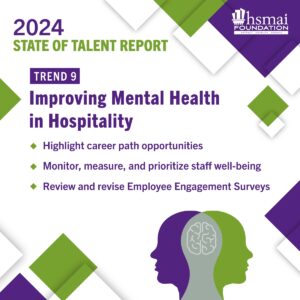
Mental Health and Employee Well-being: Prioritizing Emotional Wellness

The concept of mental health and well-being has taken center stage as an indispensable requirement for employers. The Hospitality Sales and Marketing Association International (HSMAI) has emerged as a trailblazer in identifying and advocating for this crucial trend. As industry leaders grapple with the challenges of burnout and the increasing importance of nurturing the holistic well-being of their employees, the emphasis on mental health and well-being remains paramount. We explore this in the excerpt from the HSMAI Foundation Special Report: The State of Hotel Sales, Marketing, and Revenue Optimization Talent 2023-2024.   

The paradigm of leadership has evolved significantly. The traditional notion of “soft skills” has given way to what is now referred to as “human skills.” These human skills encompass empathy, communication, and a profound understanding of the mental and emotional needs of the workforce. Today’s successful leaders recognize that these skills are not merely optional but are pivotal in nurturing a thriving and engaged team. In an era of multi-generational workforces, acknowledging and valuing the mental and physical well-being of employees while celebrating their individuality has become a linchpin for success. Fostering a workplace culture that prioritizes the personal growth and happiness of employees is instrumental in ensuring that they are not only content but also empowered to excel in their respective roles.  

This report aims to shed light on the current state of mental health in the workplace using current data including LYRA 2023 State of Workforce Mental Health, The Conference Board, Employee Benefit News, and Hospitality Net. (HSMAI, 2023) (Srini Pillay, 2023) (Lyra Health, 2023) (Lyra Health, 2023)  

Workforce Mental Health 

Based on the Lyra 2023 State of Workforce Mental Health report, depression and anxiety disorders have been recognized as the most common forms of mental illnesses in the workplace. These conditions have a significant impact on workers’ productivity, engagement, and overall performance. Furthermore, a substantial percentage of employees exhibit signs of burnout and stress, manifesting poor concentration, discontent, and adverse work relationships.  

The top five insights from the 2023 study are:  

  1. Most workers face mental health struggles but, for a myriad of reasons, many don’t get help. 
  2. Many employees struggle to get the right care. 
  3. More people are discussing mental health at work, propelling a culture shift. 
  4. Managers lack needed mental health resources. 
  5. Employees are increasingly stressed and burned out, signaling a need for better work design.

The Lyra report spotlights that nearly 20% of the workforce experiences a diagnosable mental health condition like depression or anxiety disorder. Between 16% and 68% of employees with these conditions do not seek treatment due to worries about confidentiality, fear of negative career impacts, and the stigma associated with mental health. The report recommends implementing various approaches to address mental health support in the workplace. 

  1. Listen to your employees and encourage dialogue around mental health.
  2. Ensure access to effective care. 
  3. Unlock access to care for serious mental health conditions. 
  4. Support both parents’ and children’s mental health. 
  5. Give managers the mental health training and resources they need. 
  6. To combat burnout, design better work conditions. 

Impacts of Mental Health on Productivity 

The research from The Conference Board (Srini Pillay, 2023) emphasizes that mental health issues significantly affect workforce productivity. The results of the survey showed that nearly onethird of employees felt a lower level of mental health, employee engagement, and a sense of belonging than just six months prior. Traditional approaches to treating mental health have not been as effective as intended – only 29 percent of employees judged them as being useful. This finding was echoed in the C-Suite where only 25 percent of executives judged them as helpful. 

The Conference Board Report viewed personalized treatment using AI as a possible way to address the mental health crisis. Using Bank of America as an example, AI driven, virtual reality therapeutic platforms help reduce feelings of stress and anxiety measured over a six-month period.  

Factors identified as contributing to mental health issues included:  

  • increased work hours (48% of workers who reported decreased mental health worked 50+ hours a week, with 49% of women saying increased workloads/hours hurt their mental health, compared to 39% of men), 
  • heavy workloads (50% of millennials say their workload/hours hurt their mental health, compared to 48% of Gen X, and 40% of baby boomers), 
  • poor workplace communication (42%), 
  • lessened ability to balance the demands of work and personal life, 
  • time spent in meetings (40%), 
  • and toxic workplaces (26%).

The report (Srini Pillay, 2023) discusses the importance of destigmatizing mental health in the workplace and underlines the role of management in this regard. It places significant emphasis on building a supportive culture where employees feel comfortable seeking assistance if required. It estimates depression costs to Fortune 500 companies, contributing to $210.5 billion of lost productivity due to absenteeism. By investing in mental health care at work, employers could save up to $8,000 per employee per year. Mental Health in the Hospitality Industry: According to an article on Hospitality Net, (HSMAI, 2023) employees in the hospitality industry appear to suffer more than average from mental health issues. The stress of irregular hours, customer service pressures, and lack of job security contribute to higher levels of depression and anxiety among these workers. In an industry-specific context, employees in the hospitality industry face unique mental health challenges. The uncertainty and stress tied to roles in hotels, restaurants, and other service-driven jobs contribute to elevated depression and anxiety levels. Unconventional working hours, high pressure, and the need to maintain a hospitable front while handling customers are all significant mental health stressors. The report suggests an immediate need for support, training, and sensitization efforts to manage the same efficiently.  

Employees seek:  

  • Work/life balance and manageable stress. 
  • Tools to evaluate their own mental health in their decisions to stay or leave. 
  • Help with feeling extremely vulnerable, especially early career employees. 
  • A rewarding and meaningful career that challenges them without demanding the sacrifice of health and balance in their lives.
  • Leaders who demonstrate empathy.

Things that need to be done:  

  • Realign guest-centricity to meet guest expectations around health, safety, and wellbeing. 
  • Highlight career path opportunities along with personal and professional growth to help build a talent pipeline and retain valued team members.
  • Monitor, measure, and prioritize staff well-being to create healthy workplaces and teams. 
  • Review your Employee Engagement Survey to ensure it asks relevant health and well-being questions. 

Today, employers must prioritize mental health as a core aspect of a healthy and productive workplace. It requires a comprehensive, multi-faceted approach inclusive of supportive workplace policies, open dialogues about mental health, and accessible mental health resources. By addressing workplace mental health, companies also invest in their productivity, employee satisfaction, and retention, contributing to a more conducive environment for all stakeholders. The focus on mental health in the workplace is not merely a trend but a necessary shift towards nurturing a healthy and productive workforce. 

Key Takeaways 

  • Employee well-being and mental health are on the top of leadership priorities today to support a more productive and resilient workforce.
  • Fostering a workplace culture that prioritizes personal growth and happiness of employees is part of the lifestyle contract that todays’ employee values. 
  • Leaders need to ensure their employee engagement surveys provide insights into employee well-being.

To read more about the top talent trends, downloadthe HSMAI Foundation Special Report: The State of Hotel Sales, Marketing, and Revenue Optimization Talent 2023-2024.