Leadership Essentials from the Hotel Sales Playbook

HSMAI Global recently launched itsCertified Hotel Sales Leader(CHSL) certification. This new program is designed to recognize the expertise of hotel sales leaders, emphasizing the most up-to-date sales and commercial principles, practices, and strategies.  

The CHSL certification is tailored for hospitality sales leaders who are proficient in leading high-performing teams, demonstrating overall commercial acumen, applying best practices in hotel sales to drive revenue growth, and more.   

Approved applicants willreceive a digital copy of the study guide,The Hotel Sales Playbook: Winning Strategies for Success,andcomplete an online examination covering essential functions of hospitality sales. Here we share excerpts from Chapter 2: Leadership Essentials, contributed by Ciara Feely and Amy Infante. 

Chapter 2: Leadership Essentials 

Cultivating Ownership Mentality 

At the heart of exceptional leadership lies the ability to instill an ownership mentality within the sales team. Encouraging team members to take ownership of their responsibilities fosters a sense of accountability and pride in their work. By viewing themselves as stakeholders in the organization’s success, sales professionals become more invested in achieving goals and delivering exceptional results. 

Start by building your and your team’s business acumen. As silos in hotel organizations continue to erode, and as sales professionals engage at a higher level with owners, asset managers, general managers (GMs), revenue management teams, and marketers, they are increasingly expected to demonstrate their knowledge of the sales discipline as well as operations and other functions. 

  • Sharpen the team’s understanding of the acronyms, jargon, and terminology used in and around the business of hotels. It will help strengthen their skills and build their reputations as knowledgeable team members. This book’s Glossary is a great place to start. It includes more than 300 terms every hotel sales professional needs to know to better communicate with their GMs, asset managers, owners, and colleagues in other commercial disciplines. 
  • Provide education and coaching to help the team understand how financial statements (P&Ls, balance sheets, cash flow statements, and more) are used to make business decisions. HSMAI’s Certified in Hospitality Business Acumen (CHBA) program is a highly effective online course on this topic. 

Another best practice for every sales team — whether reporting directly to the owner/operator, a management company, or a brand/chain — is to devote time to the exercise of putting themselves in the owners’ shoes. Consider facilitating a monthly or quarterly “ownership mentality” discussion with your team to talk about questions like: 

  • What keeps our stakeholders up at night? 
  • What risks are they taking to pay for our team and resources to support us? 
  • What expectations do they have for our team? 
  • Why are those expectations set that way? 
  • Why might sales not be their biggest priority? 
  • Why and when does the owner’s attention focus on sales? 
  • What is the owner’s level of sales acumen and why does that matter to us? 
  • Why is accurate, timely, consistent, and clear reporting so critical? 

The most effective way to cultivate an ownership mentality is to be transparent with the hotel’s goals, the “why” that is the root of those goals, and how the revenue and management teams agree the sales team can help reach those goals. Diving into these topics and making them a part of the blueprint for how a team conducts business can be a game-changer in the team’s willingness and ability to embrace a stronger ownership mentality. 

In Start with Why: How Great Leaders Inspire Everyone to Take Action, Simon Sinek shares, “Passion alone can’t cut it. For passion to survive it needs structure. A why without how has little probability of success.” 

A Powerful Monthly Sales Meeting Agenda1 

Use this sample agenda as part of your strategy to build a culture of intentional communication and innovative collaboration. 

The purpose of time limits on the agenda is to ensure that there is enough time to resolve significant issues, go beyond simple updates, and enhance a culture of solving challenges together as a team. Adjust the recommended time limits for the size of your team, frequency of meetings, and other unique needs. 

Personal & Professional Celebrations (5 minutes) 

Each team member shares one personal and one professional update they want to celebrate. This builds comradery among the team and starts the meeting focused on a positive note no matter the noise, pressure, or stress occurring around the business. 

Scorecard Review (5 minutes) 

Review the team’s high-level scorecard of key performance indicators (KPIs).2 Quickly review results in a fact-based manner. Any underperforming KPIs can be discussed more in depth later in the meeting. 

Key Strategy Review (5 minutes) 

Review the 3-5 core strategies for the hotel and sales team and how they intersect with the entire organization. This is the opportunity to drive the “why” behind the strategy, as well as reiterate everyone’s role in the strategy. 

Customer and Employee Updates (5 minutes) 

Team members share updates on customers and/or employees. These updates will be diverse — from announcements of departures and promotions to new hires, customer moves, and customer sentiment alerts. 

Last Meeting’s To-Do List Review (5 minutes) 

Every meeting produces a series of next steps and to-dos. It is important that these are documented and then addressed in the following meeting to ensure tasks stay on track and there is accountability within the team. 

Issues Discussions (35 minutes) 

Designed to resolve issues, this is the longest portion of the meeting. When a team is moving quickly, the root cause of issues often becomes clouded. The issues discussion is for solving challenges and focusing on what the team in the room can control, so that the issues do not continue to bubble back to the surface. 

Conclusion (5 minutes) 

Recap the to-dos that came out of the meeting, review any messages that need to go out to other departments or missing team members, and rate the meeting allowing team members to give feedback on the quality of the meeting and ways to improve. 

HSMAI members who attain the CHSL certification will gain professional recognition, career advancement opportunities, and the ability to contribute more effectively to their organizations’ success. For more information, visithsmaiacademy.org/certification-hotel-sales-leaderor contact Kathy Tindell atkathy.tindell@hsmai.org.  

HSMAI Top 25 Profile: Nick Breedlove

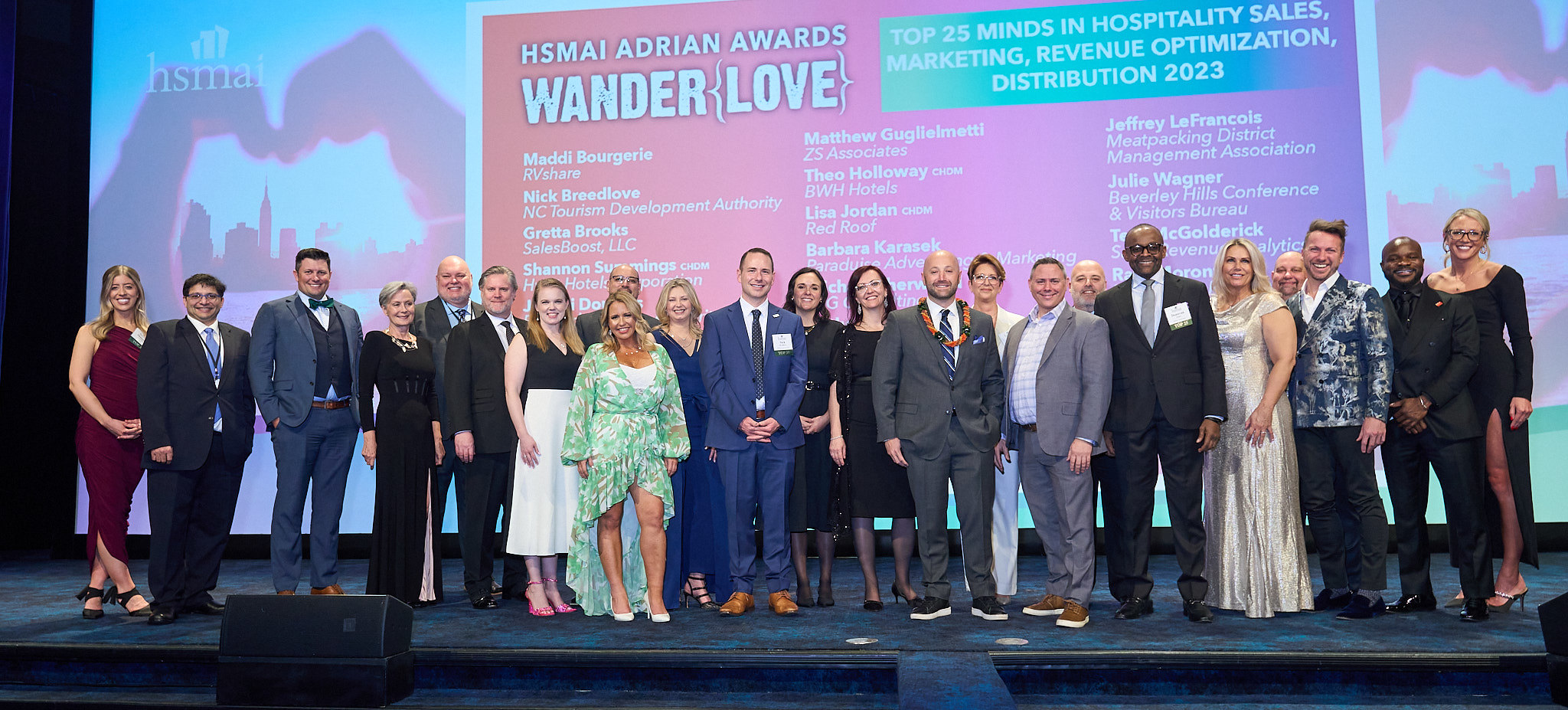
HSMAI honored the2023 Top 25 Extraordinary Minds in Hospitality Sales, Marketing, Revenue Optimization and Distribution— recognizing leaders from hospitality, travel, and tourism organizations for their accomplishments. Nick Breedlove Executive Director, Jackson County NC Tourism Development Authority, is one of these honorees.  

Nick Breedlove, a distinguished leader in tourism, has significantly impacted the industry with his innovative strategies and expertise. Once the youngest elected Mayor in North Carolina, he later became the Executive Director of the Jackson County Tourism Development Authority in 2015. Under his leadership, the destination thrived, generating nearly $500 million annually in visitor spending. He has been honored with the ‘Tourism Office of the Year’ award by the Southeast Tourism Society and a national ‘Rising Star’ award in Tourism Research.  

Nick holds multiple certifications, including Travel Marketing Professional and Certified Destination Management Executive. He is also a certified expert in Crisis Management, Communications, and Recovery Strategy for DMOs. His commitment to diversity and inclusion is evident in his achievement as the first graduate to receive the Certified Diversity Travel Professional credential from Travel Unity. 

An influential thought leader, Nick is an alumnus of the N.C. Rural Center’s Economic Development Institute and serves on several boards, including the Blue Ridge Parkway Association and Western Carolina University’s Hospitality and Tourism program.  

WHAT INSPIRED THIS NOMINATION? “Nick’s innovative strategies and expertise have significantly impacted the tourism industry, making him a distinguished leader in the field.”  

Q&A WITH NICK BREEDLOVE  

What advice would you give to your younger self? 

 I would advise my younger self to embrace change and the unexpected, both in my personal and professional life. Recent years have underscored the importance of adaptability; resilience is rooted in accepting that change is not just inevitable, but also an opportunity for growth. It’s crucial to build a network of individuals who complement your strengths and weaknesses, forming an environment where everyone grows stronger together. Lastly – never stop learning!  

What keeps you inspired?  

The peers I have in the industry are a constant source of inspiration. Every day, I am astounded by the creativity and ingenuity of my colleagues, as well as their eagerness to assist and share knowledge collaboratively. 

Nominations will open in mid July for the 2024 HSMAI Top 25! 

Full Report of the Top 25

The State of the Hospitality Student Pipeline: Insights from Industry Experts

In a recent series of interviews organized by the HSMAI Foundation and led by Lori Kiel, HSMAI Foundation Chair, HSMAI leaders and academic professionals discussed the hospitality student pipeline. The goal, aligned with the HSMAI Foundation mission, was to explore how the industry can better support academia to attract, engage, and develop the next generation of hospitality professionals. Key participants included Donna Quadri-Felitti, PhD, Director and Associate Professor, School of Hospitality Management at Penn State, and Kate Walsh, Dean and E. M. Statler Professor at School of Hotel Administration, Cornell College of Business 

Here are the main points from these enlightening discussions. 

Do Hospitality Programs Have an Enrollment Problem? 

The answer, it seems, depends on who you ask. Donna Quadri-Felitti highlighted several challenges impacting enrollment in hospitality programs: 

  1. Competition from Other Fields: Jobs in tech and real estate, among others, attract students who might otherwise consider hospitality.
  2. Misconceptions About Pay and Work-Life Balance: Many students hold misconceptions about the financial viability and lifestyle associated with hospitality careers.
  3. Changes in Industry Structure: Many sought-after employers no longer require staff to be on-property, altering the traditional career trajectory expectations.

Donna emphasized that the industry’s reputation can be revitalized by showcasing its complexity and the diverse skill sets required to manage significant assets, rather than reducing it to a “people business” alone. 

Kate Walsh, on the other hand, provided a contrasting perspective from Cornell. Walsh acknowledged that some schools are facing declining enrollment, but Cornell has been fortunate to have record applications. She attributed this success to their comprehensive program that spans operations, real estate, private equity, and technology.  

Industry’s Role in Driving Enrollment and Improving Reputation 

Quadri-Felitti suggested that the industry needs to visually and narratively shift away from traditional images, like the front desk, and begin to highlight the dynamic and multifaceted nature of hospitality. She stressed the importance of communicating the broad spectrum of skills necessary in the industry to parents and guidance counselors, making it clear that hospitality is much more than just working with people. 

Kate echoed this sentiment, emphasizing the need for industry engagement in classrooms, offering internships, and outlining explicit career pathways, including opportunities in corporate roles. She noted that competitive salaries and the chance to work with cutting-edge technology (e.g., machine learning, AI) are crucial in attracting students. 

Effective Models and Strategies 

Both academics agreed that some companies and schools are successfully navigating these challenges. Large, multinational brands often have the resources to create scalable initiatives and clear career paths, while smaller, independent hotels may lag. 

Quadri-Felitti highlighted the importance of real-time experience and faculty externships to keep curriculum relevant. She encouraged the industry to support faculty in spending time in the field to stay updated with current practices. Additionally, she called for the industry to help develop lesson plans and modules, providing comprehensive curriculum support to bridge the gap between academia and industry needs. 

Walsh noted that at Cornell, they have great data analytics around who top employers are, trends on salary, bonus, how long they stay for first and second jobs which helps guide students towards fulfilling career paths. 

Addressing the Talent Gap in Commercial Roles 

Both academics addressed the lack of interest in marketing, sales, and revenue management roles among students. Walsh suggested leveraging data and AI to make these roles more appealing. She recommended that industry leaders articulate their needs clearly and collaborate with academic institutions to integrate real-world applications into the curriculum. Sharing personal career journeys and practical challenges with students can also make these roles more relatable and attractive. 

Quadri-Felitti stressed the need to stop glamorizing roles in real estate and finance, highlighting the significant impact commercial professionals can have on business success. 

The interviews underscored the critical need for stronger collaboration between academia and the hospitality industry. By providing robust real-world experiences, reshaping the narrative around hospitality careers, and supporting faculty development, HSMAI members can attract and retain top talent. As Quadri-Felitti fittingly summarized, “We need to teach people how to learn,” emphasizing the importance of fostering lifelong learning and adaptability in the fast-moving world of hospitality. 

These insights provide a roadmap for how the hospitality industry can better support academia and, in turn, secure a bridge to our brightest future of talent in hospitality commercial functions. 

Insights from HSMAI’s single/multi-unit Marketing Professional of the Year: Holly King

HSMAI staff recently sat down with Holly King, Area Director of Marketing at White Lodging. King will receive the single/multi-unit Marketing Professional of the Year during HSMAI’s Commercial Strategy Conference in Charlotte on June 26th.    

King is a multidisciplinary marketing strategist with 9 years of boutique and franchise hospitality experience. She joined White Lodging in late 2021 as a Sr. Market Marketing Manager, demonstrating the impact of senior field leadership and advocating for the continued development of the greater marketing department.   
As White Lodging’s first Area Director of Marketing, Holly leads a direct and indirect team of strategic marketing managers and is responsible for the digital and field marketing performance of 37 premium branded hotels and restaurants in the Austin, Texas region. Her role oversees brand strategy, digital optimization, integrated media, PR, content, and creative. She is an active member of Marriott International’s Convention & Resort Network Council.  

Read on for our interview with Holly King!  

How did you get involved with HSMAI? What impact has your HSMAI membership had on your professional development?  

I got involved with HSMAI via my local Austin chapter. I was introduced to the organization at a time when my understanding of hospitality career paths was still somewhat limited. One of the biggest things HSMAI has given me has been an awareness of the excellence of my industry network. Networking in this environment opened my eyes to the diversity of the hospitality industry, and the confidence to create my place within it.  

What is the guiding philosophy of your career thus far?  

  1. Be respectfully honest. Only saying what you think people want to hear is a quick way to burnout and stagnancy. Listening and responding with informed honesty not only allows your creativity to shine, but it is the key to fostering your own sense of shared ownership in your work and organization. Don’t be afraid to share your expertise and reap the benefits of true collaboration.  
  2. Stay present: with your people, your work, and yourself. There’s always more to be done, more to create, more to revamp, etc. Setting boundaries that allow you to the mental space to be present and focused is the key to making effective and smart decisions.  
  3. People first.  

Could you share key habits you think are important for those starting off in the industry?  

Learn the importance of marginal gains. Big, singular, goals are almost always impossible to reach, and no one performs at their best when they feel constantly defeated. Set micro goals and enjoy the wins (and lessons) along the way.  

Don’t sweat the small stuff. Which is hard for marketers – being hyper-aware is part of what makes us good at our jobs! But knowing what to let go of is essential to allowing yourself the space to really shine at what you’re great at. 

Where do you see the biggest opportunities for growth in hospitality marketing? 

One of the most exciting (and sometimes stressful) things about marketing is how quickly strategies and tools change. Thinking back to the start of my career, I cringe to remember how much of an emphasis was put on quantity-driven digital practices like SEO keyword stuffing. In just 10 years we’ve made countless shifts to strategies and “best practices”; the next 10 will require even more. I think the biggest opportunities will come to those that embrace new tools and tactics with calm curiosity, rather than disruptive urgency or defiance.  

How do you foster innovation and creativity within your team? 

I think most marketing leaders would say that perfection is a core enemy of both creativity and productivity. My goal is always to create an environment that encourages collaboration and kind feedback. I hold monthly “creative days” with my team – a time for us to sit together and fine-tune one focus area, in a non-judgmental way. Allowing my team to see me critique my own work, draft and re-draft, and laugh with them when things don’t go right, has been a vital part of fostering their confidence to try new and creative things. Trust is a circle!  

What significance does receiving the HSMAI’s single/multi-unit Marketing Professional of the Year award hold for you? 

This recognition means a great deal to me and wouldn’t have been possible without the support of my incredibly talented team and mentors. I am fortunate to be surrounded by innovators and experts who encourage me to continue asking the kinds of questions that have been vital to my growth and the growth of my department. My hospitality career has spanned from independent boutiques to corporate organizations, and having my efforts acknowledged at this stage confirms my belief that there is room for creativity and learning in any environment. I’m very thankful! 


HSMAI Top 25 Profile: Anja Fiedler

HSMAI honored the2023 Top 25 Extraordinary Minds in Hospitality Sales, Marketing, Revenue Optimization and Distribution— recognizing leaders from hospitality, travel, and tourism organizations for their accomplishments. Anja Fiedler, Executive Director, Revenue Management Integration, Fairmont Hotels & Resort, is one of these honorees.  

 Anja has an extensive hospitality career spanning over two decades, managing and supporting properties ranging from 75 to 1048 rooms, Anja Fiedler has been a driving force in Revenue Management (RM). Her renowned for her expertise in fostering a robust RM culture within Accor and Fairmont, she has reshaped standards, trained teams, and focused on maximizing resources to propel top-line revenue and profitability, while keeping service delivery and employee impact in line of sight. She serves on the HSMAI Americas RM Advisory board, contributing to finding solutions to current industry challenges, and specifically supporting certification alignment with evolving trends. Anja joined the Accor and Fairmont Corporate office via Swissôtel New York and later Swissôtel Chicago, after working for InterContinental Hotels and Resorts in Berlin and New York City. She completed CRME and CHBA certifications and holds a degree in Hospitality Management from Emil Fischer Staatliche Fachschule Berlin, Germany.  

KEY ACCOMPLISHMENT: Fiedler has been key in orchestrating successful hotel openings and optimizing revenue management and distribution disciplines across Fairmont properties.  

WHAT INSPIRED THIS NOMINATION? “Anja’s dedication to excellence in revenue management and her ability to foster a culture of learning and growth have made her a respected leader in the industry.”  

Q&A WITH ANJA FIEDLER  

What advice would you give to your younger self?  

You will find your passion, it’s a journey. Don’t hesitate to take opportunities to do something you have not done before. Plan time in your day/month or year to focus on learning something new. Follow your curiosity, you may uncover interests you did not know you had. Find time to do the things you enjoy, and all of these little steps along the way will help you find a place in life that you appreciate.  

What keeps you inspired? 

 I enjoy helping others. Ideally teaching someone to help themselves, but also taking away a burden or providing support to someone in need, brainstorming with others for ideas, or mentoring someone to help them find their own solutions. Putting yourself into someone else’s shoes always gives a different perspective and appreciation for others around us 

Nominations will open in mid July for the 2024 HSMAI Top 25!

Insights from HSMAI’s single/multi-unit Revenue Optimization Professional of the Year: Taylor Baca

HSMAI staff recently spoke with Taylor Baca, Corporate Director of Revenue Management at Balboa Bay Resort & Club. Bacawill receive the single/multi-unit Revenue Optimization Professional of the Yearduring HSMAI’s Commercial Strategy Conference in Charlotte on June 26th.   

Baca is an experienced hospitality professional with a strong passion for revenue optimization. She has established a reputation for driving exceptional revenue growth and optimizing hotel performance. 

Baca’s journey in revenue management began in Reservations and progressed through a Manager in Training program, affording her invaluable experience in various hotels and under expert revenue leaders. This hands-on experience cultivated a profound understanding of revenue management principles and strategies.   

Taylor is an active member of the HSMAI Rising Leader Council for Revenue Optimization which has allowed her to stay at the forefront of industry trends and continuously enhance revenue management skills. Taylor is recognized by HSMAI with her CRME and CHDM.   


Read on for our interview with Taylor Baca!  

1. How did you get involved with HSMAI? What impact has your association with HSMAI had on your professional development? 

I became involved with HSMAI through a mentor in the industry who has had a profound impact on my professional development. Seeking to expand my network and learn from professionals outside of my organization, I sought further involvement with HSMAI which led me to apply for the Rising Leader Council. I am thankful for the opportunity to be on the Rising Leader Council because it has provided me with a platform to grow my network and gain insights from a diverse community of peers and mentors. My involvement with HSMAI has truly had a significant impact on my professional development. It has helped me gain confidence as a young leader in the industry, a network of peers, insights and feedback from industry leaders, a mentor to learn from and motivation to continue to grow in the industry.  

2. What is the guiding philosophy of your career thus far?   

The guiding philosophy of my career has been rooted in consistently pushing myself beyond my comfort zone and seizing opportunities to grow both personally and professionally. I have been lucky enough to have opportunities to network and connect with leaders in the industry which has given me the confidence to accept opportunities such as speaking opportunities, leading point of view discussions and attending network events. Through the support of leaders and mentors I have been able to grow in my skill set and revenue discipline. I hope to be a mentor and provide the support that I have been lucky enough to receive.  

3. Could you share a piece of career advice you think are important for those starting off in the industry?  

One piece of advice I would offer is to embrace bravery and courage. It is important to ask for a seat at the table as a young leader. I believe that you can support this courage through seeking out educational opportunities and networking with leaders and peers in the industry. I would also encourage seeking out mentorship from a seasoned professional. I have been lucky enough to gain a mentor in the industry who has offered guidance and support while navigating my career journey. A mentorship connection can provide invaluable insights and open doors to new opportunities.  

 4. Where do you see the biggest opportunities for growth in revenue management? 

In my view, the most significant opportunity for growth in revenue management lies within the realm of technology integration for total revenue optimization. This includes leveraging technology solutions to maximize revenue streams across food and beverage, spa, retail and more. By harnessing advanced analytics, data-driven insights and synergy across systems, revenue management professionals can gain a comprehensive understanding of all revenue streams, enabling them to implement strategic and holistic strategies across all the organization.  

5. How do you foster innovation and creativity within your team? 

I foster innovation and creativity within my team through constant collaboration and open communication. By facilitating regular discussions and brainstorming sessions on weekly strategy topics, I ensure that every member of our commercial team has a voice and contributes ideas. Additionally, I prioritize keeping the team up to date with industry updates and opportunities, empowering them with the latest knowledge and insights to inspire innovative thinking. I emphasize the importance of understanding the “why” behind the need for new creative offerings in our hotel, encouraging our team to think critically and strategically about how their ideas can drive value to our guest and to our organization as a whole. I strive to empower my team to explore new ideas, challenge the status quo and drive meaningful change in our organization.  

6. What significance does receiving the HSMAI’s single/multi-unit Revenue Optimization Professional of the Year award hold for you? 

I am beyond honored to be recognized amongst esteemed leaders whom I admire and look up to in this industry. I began my career journey 8 years ago as a Reservations agent and truly dreamed of receiving an honor like this. I am grateful to the leaders who have guided, taught and mentored me throughout my career and grateful to HSMAI for connecting me with a community and a mentor who has truly had significant impacts on my professional development. I am also thankful to have worked for my organization that has supported me through my career journey and always championed my growth. This award has fueled my passion to continue to grow and invest myself in this industry.  

HSMAI Top 25 Profile: Shannon Cummings

HSMAI honored the2023 Top 25 Extraordinary Minds in Hospitality Sales, Marketing, Revenue Optimization and Distribution— recognizing leaders from hospitality, travel, and tourism organizations for their accomplishments. Shannon Cummings, Global Brand Marketing Manager at Hyatt,is one of these honorees.  

At Hyatt, Shannon strives to bring the stories of Hyatt’s Independent Collection brands to life for travelers, inspiring new audiences to experience and champion these amazing brands. With over 10 years of experience in marketing strategy, digital media, brand activations and brand management, Shannon has added value and driven impact across the travel, hospitality, and F&B sectors for clients such as Uber Technologies Inc., Choice Hotels International, Berkshire Hathaway Travel Protection, Visit Oklahoma City, Santa Monica Travel & Tourism and Sonic Drive-In. When she’s not traveling, she’s either dreaming of her next trip or working to find presence on her yoga mat.  

KEY ACCOMPLISHMENT: 

Successfully elevated brand awareness and engagement for Hyatt’s Independent Collection through innovative digital marketing strategies. 

WHAT INSPIRED THIS NOMINATION? 

“Shannon’s strategic approach to storytelling and brand activation has significantly enhanced 

the visibility and appeal of Hyatt’s Independent Collection.” 

Q&A with Shannon Cummings 

What advice would you give to your younger self? 

I would tell my younger self to prioritize authenticity over perfection. As I’ve grown in my career and witnessed amazing leadership from some inspiring mentors and supervisors, I’ve more fully realized the value, and even the necessity, of bringing your authentic self to the workplace, aligning your career path with your values, admitting (and even celebrating) your mistakes and failures, being unafraid to ask questions and admit when you don’t know the answer, and not forgetting to bring levity, humor and joy to your work. We work in travel, an industry that bring so much good into the world, so I would remind my younger self that the work will get done and to enjoy the ride! 

What keeps you inspired? 

I am so inspired by travel, specifically the empathy that it builds, the connection it creates, the adventure it promises, the joy it inspires, and the transformative experiences that it brings. Travel gives us the opportunity to experience unique and often remarkable moments that change our perception of the world, allow us to better understand others and ourselves and give us the gift of creating memories that stay with us and positively impact our lives moving forward. I feel so lucky to work within an industry that can deliver such a life-affirming gift and that inspires me every single day. And I think it’s also imperative to remember that travel can be to a far-off place, but it also just be walking down the street to your favorite hometown coffee shop and connecting with a friend. Inspiration comes to those who get out into the world and seek it! 

Nominations will open in mid July for the 2024 HSMAI Top 25!

Insights from HSMAI’s Marketing Educator of the Year: Janelle Hoffman

HSMAI staff recently had the pleasure of talking to Janelle Hoffman, Program Director, Professor & Advisor, Hospitality & Tourism Management Program, Scottsdale Community College. Hoffman will receive the Marketing Educator of the Year during HSMAI’s Commercial Strategy Conference in Charlotte on June 26th 

Hoffman has over 26 years of academic expertise in Hospitality Management at Scottsdale Community College. Prior to her years in the classroom her hotel sales and marketing experience spans 15 years across Michigan and Arizona with hotel management companies Vista Host, Promus, and Hilton Hotels. Hoffman holds a Bachelor of Science Degree in Business Communications from Western Michigan University and a master’s in organizational management from the University of Phoenix.  


1. What significance does receiving the HSMAI’s Marketing Educator of the Year award hold for you?  

I am genuinely grateful and honored that HSMAI recognizes the importance of education in marketing in the hospitality industry. This award is significant to me because it reflects not just my efforts, but also the success of my students. I’ve dedicated over 25 years to teaching and assisting hospitality-hearted people find their place in the industry and many have pursued sales and marketing as a career path. 

2. How did you get your start in the industry? 

Before my years in the classroom, my hotel sales and marketing experience spans 15 years across Michigan and Arizona with hotel management companies Vista Host, Promus, and Hilton Hotels. Upon graduation, my first job offer was in hotel sales and marketing. I remember half-heartedly taking the position thinking I would do this until I found what I wanted to do. Looking back at that moment in time I smile as this is the industry in which I belong I didn’t know enough to truly appreciate the opportunity. I often share my story with my students to express the importance of keeping an open and positive mindset wherever you find yourself.  

3. What is the guiding philosophy of your career thus far?  

To inspire and educate the next generation of hospitality professionals through a commitment to excellence, innovation, and integrity, and to live a life that fulfills what I was created for being of service to others.  

4. Could you share a piece of career advice or key habits you think are important for those starting in the industry?  

Never forget the true definition of “hospitality” it is the generous, friendly, or courteous treatment of others. Exude a joyful attitude regardless of the pressures of life and interact with people directly, honestly, and with compassion. It’s a small world and industry developing your personal brand of hospitality will guide your choices and inspire others to want to work with you.  

 5. During your time in the industry, how have you seen the marketing education space evolve? 

Technology has had the biggest impact on the evolution of hospitality marketing education. Marketing has become more dynamic, interdisciplinary, and responsive to the evolving needs of our customers and partners. Preparing students for careers in a rapidly changing marketplace highlights digital marketing, social media, and understanding how to apply data analytics to target markets, including virtual and augmented reality and artificial intelligence. Today’s focus is to understand customer journeys and leveraging technology to enhance guest experience and create a relationship, one of loyalty.  

6. What are the biggest challenges students face in marketing education? 

Overall, marketing education requires mastering new technologies and understanding how to use analytical tools, navigate digital overload, and stay focused on the question or identified issue. Education should highlight how to navigate ethical dilemmas, and cultural differences in an increasingly globalized marketplace. 

 7. How did you get involved with HSMAI? What impact has your association with HSMAI had on your professional development? 

I’ve lost track of how many years I’ve been a member of HSMAI. I started as a member when I worked on-site as a hotel sales manager over 30 years ago! Overall, joining HSMAI has been beneficial to me in expanding my professional network.  

Membership has also assisted me as a Program Director at SCC in identifying and hiring quality adjunct faculty members to teach part-time in our hospitality program. HSMAI’s Arizona Chapter over the years has provided industry insights, professional development, and camaraderie among members thanks to the best Executive Director, Joanne Winter. 

HSMAI Top 25 Profile: Raul Moronta, Chief Commercial Officer

HSMAI honored the2023 Top 25 Extraordinary Minds in Hospitality Sales, Marketing, Revenue Optimization and Distribution— recognizing leaders from hospitality, travel, and tourism organizations for their accomplishments. Raul Moronta, Chief Commercial Officer, Remington Hotels,is one of these honorees. 

Raul Moronta is a seasoned hospitality executive with a career spanning over 25 years. Since 2020, he has served as the Chief Commercial Officer at Remington Hospitality. Armed with an M.B.A. from the University of New Haven and a Bachelor’s in Hotel & Restaurant Management from Pontificia Universidad Catolica Madre y Maestra, Moronta has excelled in leadership roles at prominent organizations, including Crescent Hotels & Resorts and Starwood Hotels & Resorts. His achievements include spearheading international expansions, achieving consecutive years of market share growth, and successfully integrating numerous hotels into portfolios, contributing significantly to overall growth.  

Moronta’s expertise extends to various facets of the hospitality industry, with a particular focus on revenue management, strategic implementation, and executive leadership. In addition to his corporate roles, Moronta has contributed to academia, serving as a professor at Johnson & Wales University and Newbury College. He holds certifications in hotel industry analytics and revenue management and is fluent in Spanish. Moronta’s unique blend of academic insights, industry expertise, and strategic leadership positions him as a transformative force in the dynamic realm of hospitality management. 


KEY ACCOMPLISHMENT: 

Successfully integrated numerous hotels into Remington’s portfolio, enhancing overall growth and revenue. 

WHAT INSPIRED THIS NOMINATION? 

“Raul’s strategic acumen and transformative leadership have been instrumental in Remington Hotels’ success.” 

Q&A with Raul Moronta 

What advice would you give to your younger self? 

If I could offer advice to my younger self, I would emphasize the importance of prioritizing meaningful connections with friends and family. Additionally, I would stress the significance of maintaining a healthy lifestyle, incorporating activities like biking and running outdoors in my younger years as I have now. Having a sense of accomplishment and sharing it with those who I love creates a more harmonious and fulfilling life.  

What keeps you inspired? 

I find continual inspiration through my exploration of new travel destinations and my interactions with guests and colleagues from diverse backgrounds. These experiences help me stay curious to discover innovative ways to enhance our business. It helps me remain grounded, humble, and honest about my own capabilities and those of my team. This blend of diverse perspectives and a commitment to continuous improvement serves as a powerful source of motivation and creativity in our endeavors. 

Headlines & Headwinds: Navigating the Legal & Regulatory Currents

HSMAI staff recently had the opportunity to interview Greg Duff, Principal at Foster Garvey PC, HSMAI Global Distribution Advisory Board Member, and a speaker at the Commercial Strategy Conference, June 24-27 in Charlotte. Duff has a nearly 30 year career working exclusively in the hospitality industry. He has dedicated himself to helping clients solve a wide range of “back of house” legal issues associated with operating a modern hospitality operation – from advising on the myriad of issues associated with distribution and online travel to navigating the complex relationships among owners, operators, regulators, and vendors/suppliers. 

Read on for our Q&A with Greg Duff. 

Could you give us a brief overview of your session at Commercial Strategy Week? 

I am going to be reviewing the “legal headwinds” that attendees and their companies are experiencing (or will soon experience). Topics include junk fees and service charges, Artificial Intelligence (AI), anti-trust (both in the U.S. and UK/EU) and tax. The session will be filled with “real world” examples as to how these issues are arising today. 

What unique perspective do you bring to this topic, and why is it important for today’s hospitality commercial professionals? 

As outside counsel to many of the largest hotel companies, we see first-hand the challenges that they face. If the topics I cover are not yet affecting attendees, they will soon. 

What are the practical takeaways attendees will be able to implement after attending your session? 

My goal is to provide every attendee a list of five to six topics to take back to their companies and ask whether the company is effectively handling these topics today or prepared to handle them in the future.   

How does your session tie into the broader theme of Commercial Strategy? 

Unfortunately, the best commercial strategy will only go so far if it runs into legal limits or exposes a company to unreasonable legal risks. Any effective commercial strategy must take into consideration some or all of the legal headwinds we plan to discuss.  

Could you hint at any future trends or predictions you’ll be discussing in your session? 

I hope to be able to provide some insight as to how the commercial landscape may be changing in the future based on anticipated or forthcoming changes in the legal frameworks around junk fees / service fees, AI, anti-trust, etc. 

For those looking to deepen their understanding or application of your session’s insights, what resources or next steps would you recommend? 

First and foremost, the list of topics or issues that I provide attendees with should be taken back to their companies and presented or discussed.  Existing legal resources (whether internal or external) should also be consulted. Our firm would also be willing to assist if needed.