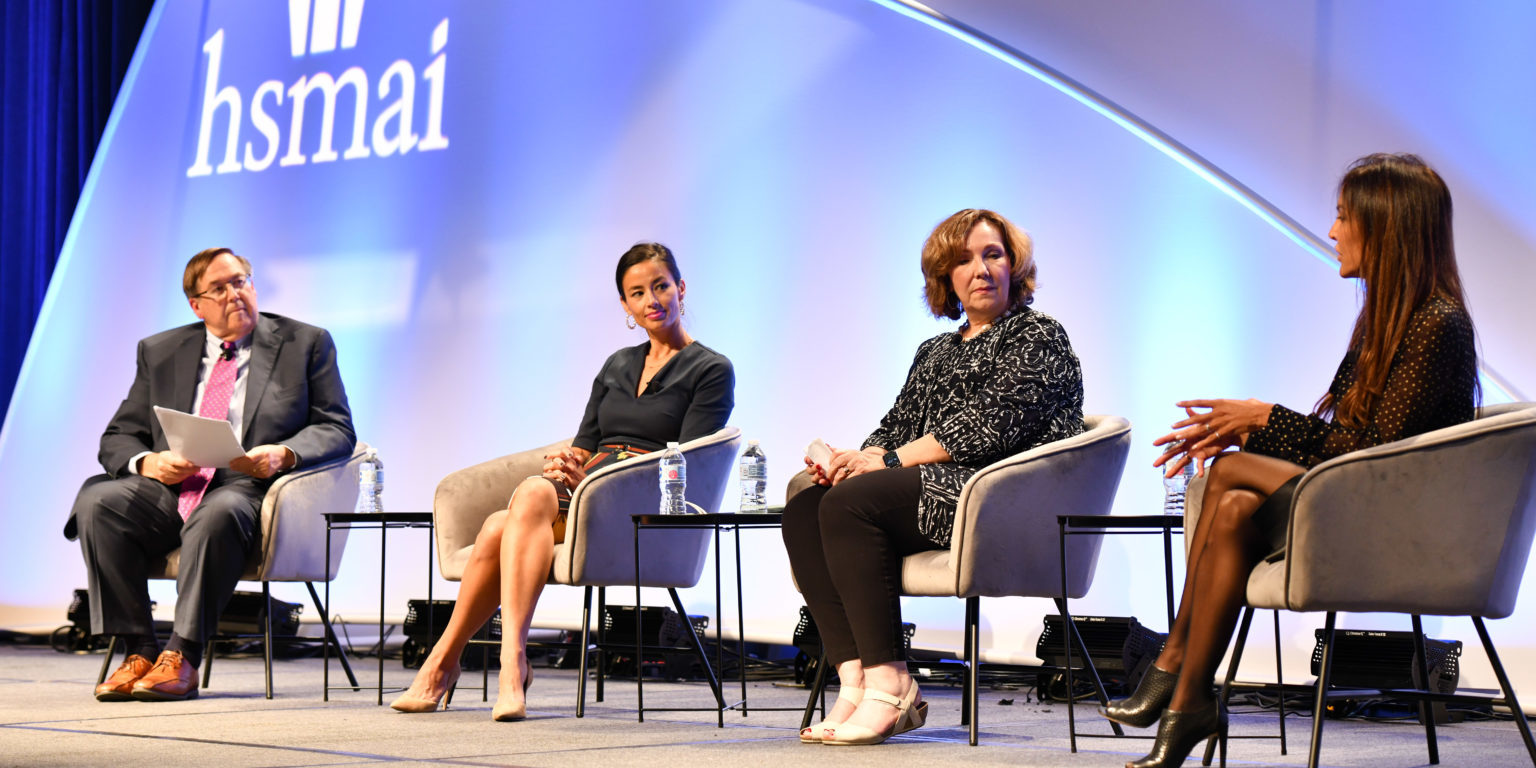
Navigating Traveler Behaviors: Key Insights for Hotel Marketing Pros

Stephanie Smith, CHDM, CEO and Digital Matriarch, Cogwheel Marketing, HSMAI Marketing Advisory Board Member 

Recently Expedia Group released their 2023 Q1 Traveler Insights Report. I brought this interesting piece of research to the great minds at the HSMAI Marketing Advisory Board to discuss the trends and explore if they align with what we are seeing in the industry.  

Booking Window Patterns 

While short-term bookings were common during the pandemic, many in the group have noticed a shift towards longer-term bookings. Some noted that leisure travelers are booking closer to 60 days out for some of their properties. One interesting point was that hotel bookings are being made further in advance compared to flights, indicating a flip-flop in booking patterns, especially in vacation destinations. 

Marketing to Blended Business and Vacation Travelers 

The trend of travelers adding extra days to their business trips for leisure is here to stay, with travelers adding an average of three to six days onto business trips. Parents in our group mentioned a pressure to make up for lost travel memories by combining work and leisure. 

Three ideas to effectively market to this segment:  

  1. Highlight amenities that would appeal to people staying on property for a longer time, like pools and other on-property facilities.  
  2. Leverage data to identify business travelers. 
  3. Focus on the destination rather than specific properties can also help in tailoring marketing campaigns. Partnerships with Destination Marketing Organizations (DMOs) can be valuable in promoting the destination, beyond just the hotel offerings. 

On Loyalty 

Member rates for loyalty programs remain successful for brands, and the research bears out that is what guests want. Another interesting take on loyalty programs was introducing Food & Beverage (F&B) options to both use and gain points, tapping into the local market. 

Experiences are Everything, Except for Airbnb 

The report indicated that experiences are still paramount. On the call, several board members mentioned having success increasing their offerings for experience. However, we discussed why Airbnb has been pulling back on experiences? Is it the lack of control operators have over quality and consistency or profitability concerns? Hotels, on the other hand, have more brand control, which may contribute to the difference in approach between hotels and Airbnb in terms of offering experiences to guests. 

Agility and strategic marketing approaches are crucial to navigate changing trends in booking patterns, flexcations, and loyalty platforms. Staying updated with the latest trends and consumer preferences is essential for hotel marketers to stay ahead in the competitive landscape. 

Further Reading:  

Understanding the Gap: Examining the differences between evolving traveler expectations and industry perceptions | HSMAI Americas 

It Takes a Village: The top 10 things every sales leader needs to know about Distribution

HSMAI’s Global Distribution Advisory Board  

The HSMAI Global Distribution Advisory Board recently met to offer their insights into what every Sales leader needs to know about Distribution.  

The board spoke about the complexity of distribution and the different groups that work to distribute rooms to third party partners.  There can be a disconnect between sales & distribution when the teams are not working together.  This can result in contracts that are difficult to execute and frustration between the teams.  We must work together to drive our organizations Distribution strategy forward.  

Here are ten takeaways for Sales Leaders: 

  1. When negotiating a third-party partner contract, Distribution & Revenue Management should have a seat at the table.   This ensures that the terms of the deal can easily be executed.   
  2. Be sure to include all teams in quarterly QBR meetings (account management, connectivity, content, revenue management.) 
  3. Understand the cost to work with each partner.  Its not all about margins.  There are typically several aspects that make up a Distribution contract and then you need to factor in the costs to manage each partner as well – connectivity, payments, content and reservation management costs should be reviewed. 
  4. Revenue, Sales, and Distribution should have shared goals – not individual goals.  This is especially true if they managed under different parts of the organization. 
  5. Distribution teams love to talk about what we do!   And we love to educate!   Work together to gain a high-level understanding of how our world works, especially connectivity.  
  6. Before a contract is signed, review the value of a partner and what they will bring to the table with the Revenue & Distribution teams. 
  7. It was noted by all members that it is most effective for the organization when Sales, Revenue & Distribution report up through the same leader.  
  8. Include Distribution in training and onboarding for sales & revenue management. 
  9. Brainstorm ideas & solution together on things like parity or onward distribution of rates. 
  10. Distribution is highly complex, don’t be afraid to ask questions! 

Understanding the Gap: Examining the differences between evolving traveler expectations and industry perceptions

Robert Torres, Senior Vice President Media & Affiliate Solution, Expedia Group; Haley White, Senior Director Global Strategic Accounts, Expedia Group, HSMAI America’s Board Member 

This is the second installment in a series of articles sharing insights from our partners who presented at an HSMAI Chief Marketing Officer Roundtable 

Brief overview of research

The pandemic created more discerning consumers with higher expectations for their travel experience, from booking a place to stay to the taxi ride home. The Traveler Value Index 2023 examines what people value in their travel experience compared to priorities and considerations shaping decisions and investments across industry professionals. Expedia Group partnered with Wakefield Research to conduct the Traveler Value Index: 2022 Gap Analysis research.  The survey included 11,000 consumers and 1,100 industry professionals from 11 markets: Australia, Brazil, Canada, France, Germany, Japan, Mexico, South Africa, South Korea, the United Kingdom, and the United States. Ultimately, consumers weigh a variety of factors when making booking decisions. Today, flexibility and price are top of mind, but other considerations are also at play. 

Biggest takeaways/highlights 

The pandemic caused several shifts in traveler behavior and influenced industry norms. Our research shows that several permanent preferences that will continue to have a prolonged impact on our industry.  One major take away:  the absence made the appetite for travel stronger. Traveler searches for car and vacation rentals on our travel websites were above 2019 search volumes in the first three quarters of 2022. As of the end of September 2022, searches for cruises and activities saw the highest percent growth year-over-year compared to accommodation and other methods of transportation. In addition to the increase in demand, there are other signals that people feel more comfortable booking travel. Consumers are comfortable booking five months in advance on average, up from four months in advance based on Expedia Group research from April 2022. 

Despite increased confidence and less tumultuous travel, consumers continue to demand flexible options. For domestic travel, nearly half of consumers (47%) say they would never book non-refundable lodging, and more than half (51%) would not book transportation they could not change. This need for flexibility intensifies internationally, increasing to 57% and 59% for lodging and transportation respectively.  

Another trend that is expected to remain is that Travelers prefer to book with providers that align with their personal values. Travelers will vote with their values. The 2023 Traveler Value Index found that people are seeking out businesses that are welcoming and accessible to all travelers: 70% of people say they are more likely to choose travel options that are more inclusive, even if that comes at a higher cost.  Industry professionals acknowledge this preference, with 64% indicating that they believe their customers will choose travel options that are more inclusive, even if they are more expensive. 

Conversely there are a few temporary responses to the pandemic that are expected to dissipate throughout the remainder of 2023. For example, travelers’ heightened concern over health and cleanliness is waning. This waning importance is also reflected in our traveler review data. Prior to the pandemic in late 2019, the percentage of reviews that included mentions related to cleanliness was between 5-12%. Review mentions rapidly increased in early 2020, peaking in September 2020 (42%) and then again early 2021 (41%). At the end of 2021, that average dropped to 25% — higher than pre-pandemic but continuing to decrease from peak times.  

Business and international travel is expected to rebound as restrictive policies ease. More than three-fourths (76%) of business travelers plan to extend a work trip for leisure purposes in the next 12 months; and almost a third (28%) plan to take a “flexcation” in the next 12 months to take advantage of remote work combined with leisure travel. Similarly, about half of consumers are likely to book or have already booked an international trip in the next 12 months, up from 12% in mid-2021. and Gen Zers and millennials are even more likely to do so.   

Why is this timely? 

Understanding the conditions impacting travel in the months ahead is critical for travel marketers. Our platform brings together millions of properties, billions of bookable airline seats, and thousands of car rentals, cruises, and activities across 200 booking sites in 70 countries. Every second, thousands of signals – transactions, rate fluctuations, searches, visits, and itinerary changes – flow across our platform and through the interconnected lanes of the global travel ecosystem.  Our extensive 70+ Petabytes of first-party data are backed by this qualitative research to help hoteliers better understand evolving traveler expectations.   

For example, we learned that consumers say inflation is impacting their travel plans more than ongoing pandemic concerns and travel restrictions, particularly those in North and South America and Europe.  In our current economic climate, consumers have expressed price sensitive amid rising inflation. Price sensitivity doesn’t mean consumers are always hunting for the cheapest rate– our research suggests that they want to get their money’s worth. Respondents say feeling that “the experience was worth the cost” was the most important factor for a positive trip experience.  

How will this help marketing professionals? 

Understanding the gap between industry expectations and what people value in their travel experience could uncover accelerated growth for savvy industry professionals. Taking action to stand out and deeply understanding traveler wants and needs can help drive business success:  

  • Maintain your refundable rates and flexible policies. Flexibility continues to be one of the top considerations for travelers, particularly those traveling internationally.  
  • Set realistic expectations with travelers — and have realistic expectations for your staff. Only 15% of industry professionals said their business was currently providing full hours and services. Ensure the information you communicate to travelers pre- and post-booking and during their time with you accurately reflects what their experience will be like. 
  • Be thoughtful about discounts and perks. Your customers may be more price sensitive now than they were a year ago – so consider what types of incentives will be most effective. If you offer a loyalty program, keep in mind that discounts, points, and complementary add-ons are most important to members. Access to specific amenities may be more of a draw for business travelers.  
  • Lean into and showcase your brand values. A third of industry professionals say they are promoting specific company values or priorities, like sustainability efforts, to encourage bookings from their key traveler audiences. Consumers will continue to book based on their personal values and will be loyal to the destinations and travel providers that walk the walk in these key areas.  
  • Keep a pulse on customer feedback to understand how they perceive their experience. Whether through reviews, social media, or your own feedback channels, collecting and acting on feedback is key to optimizing the travel experience you provide. Just over half of the organizations in our research relied on customer reviews to measure the guest experience, and the same amount make changes often due to feedback – meaning there is a big opportunity for more businesses in the travel space to be taking advantage of feedback loops. A positive travel experience attracts loyal customers.  

Links to Research 

Link to Traveler Value Index    

Attribute Based Pricing, Reaching TRevPAR Goals

Scott Schachter, CRME, Senior Account Manager Partner Services at Booking.com, HSMAI Rising Revenue Optimization Leaders Council member

Hotels are constantly seeking ways to enhance the booking experience for their guests, and one emerging trend is the use of Attribute-Based Pricing (ABP) to highlight property features and upsell ancillary services. However, there are challenges in implementing ABP, such as the need for technological advancements and integration with Property Management Systems (PMS) and Central Reservation Systems (CRS). The HSMAI Revenue Optimization Rising Leader Council recently gathered and we discussed the question: As all aspects of properties are being considered when defining “success”, how can we best optimize revenue and experience?  

Top 3 Takeaways: 

  1. Utilizing ABP for experience-based add-ons during the booking process, such as recreational activities, can enhance the guest’s stay and create memorable experiences. 
  2. Encouraging guests to match both their right room and relevant attributes to their needs will lead to increased conversions and guest satisfaction.   
  3. Finding the right balance between pricing and guest preferences is crucial in implementing ABP to avoid deterring potential bookings, and collaborative efforts between hotels, vendors, and technology providers are needed to drive advancements in ABP.  

One thing we all agreed on is that while we work towards a better place in terms of implementing ABP, it’s important to prioritize the opportunities.  

Further Reading:  


Ancillary Dynamic Pricing: Why can’t we make (more) progress?

Dana Cariss, Vice President, Revenue Strategy + Distribution, CoralTree Hospitality, HSMAI Revenue Optimization Advisory Board Member

The hospitality industry has been struggling with making progress on ancillary revenue optimization (RO). Many businesses are still using manual processes and basic systems for pricing outside of room rates, such as in their restaurants, bars, and catering services. However, there are opportunities for improvement and creativity in this area to drive more revenue. I brought this topic to the HSMAI Revenue Optimization Advisory Board to discuss.

Top 5 takeaways from the discussion:

  1. Many businesses in the hospitality industry struggle with optimizing ancillary revenue, particularly in areas like F&B and spa, where manual processes and basic systems are still prevalent.
  2. Building internal business intelligence (BI) platforms can provide valuable insights from data, but businesses need to act and implement changes based on those insights to drive revenue.
  3. Third-party systems can offer more sophisticated pricing solutions for ancillary services, but challenges such as turnover within staff and training for dynamic pricing may need to be addressed.
  4. A top-down approach with leadership support and measurement of goals is crucial in driving engagement and implementation of dynamic pricing strategies in F&B and other departments.
  5. Leveraging technology, such as working with third-party vendors, can be a way to overcome challenges and make progress in optimizing ancillary revenue, ultimately boosting overall revenue for hospitality businesses.
  6. Some businesses have started their journey towards optimizing ancillary revenue by building internal business intelligence (BI) platforms. These platforms allow them to ingest data from various sources and visualize it to gain insights. However, many businesses have not yet made changes to their processes or pricing strategies based on the data they have at their fingertips.

Further Reading: Why restaurants are finally adopting dynamic pricing strategies

Questions to ask your team:

  1. What are the challenges that prevent progress?
  2. Is there belief within your organization this is valuable?
  3. Who is doing something unique in this space? What companies should you be watching?


HSMAI Perspective: HSMAI Commercial Strategy Week: Leading the Way

Robert A. Gilbert, CHME, CHBA, President and CEO, Hospitality Sales & Marketing Association International (HSMAI)   

HSMAI has a rich history of producing educational conferences since our inception in 1927. Our topics and strategies continuously evolved with the times to help hotels be more successful. During the early 2000s as internet marketing was rapidly advancing, we produced the first Hotel Internet Marketing Strategy Conference in 2003 and then the Revenue Management Strategy Conference in 2004. One news outlet reported at the time, “HSMAI will step-up its interest in the strategic solutions business by holding five Strategy Conferences, each serving unique markets and industries within travel and hospitality.” 

Over the years the Internet Marketing Strategy Conference became the Digital Marketing Strategy Conference.  In 2020 the word “digital” was dropped as our stakeholders concluded that nearly all marketing was ‘digital.’  The name of the Revenue Management Strategy Conference was changed to the Revenue Optimization Conference in 2011 and has become known today as just ROC.  Today HSMAI produces five ROC events around the globe annually including the one here in the Americas Region and in London, Dubai, Singapore, and Sao Paulo.  These events have made HSMAI’s name synonymous with education in hotel revenue management and optimizations.  

HSMAI’s marketing and revenue optimization conferences — combined into “Commercial Strategy Week” in 2022 — have been at the forefront of the hospitality industry for the past 20 years, providing invaluable insights, education, and networking opportunities for hospitality professionals. Coming to Toronto in June, Commercial Strategy Week has become a must-attend event for industry leaders, featuring executive roundtables, the Marketing Strategy Conference, and HSMAI ROC that are leading the way for the future of the hospitality industry. 

Marketing Strategy Conference 

HSMAI’s Marketing Strategy Conference has been a go-to event for marketing professionals seeking to stay ahead of the curve and navigate the ever-evolving landscape of hospitality marketing. 

It is a platform for exploring the latest trends, strategies, and technologies in digital marketing, social media, branding, customer experience, and more. With expert speakers, interactive workshops, and networking opportunities, the conference provides hotel marketers with the tools and knowledge to drive brand awareness, engage with customers, and achieve marketing success in a highly competitive industry. 

Highlights  this year include:  

  • Global Trends & Evolving Customers…and what they mean for hotel marketing 
  • Executive Insights: A View from the Top 
  • The Lightning Round: Insights Worth Sharing 

HSMAI ROC 

When HSMAI ROC was conceptualized in 2003, it was a groundbreaking event focused on revenue management and optimization in the hospitality industry. 

Over the years, ROC has evolved into the industry’s premier event, where revenue management practitioners, executives, and thought leaders gather to connect and engage in meaningful, inspiring conversations about the most critical strategic issues facing hotels today. 

Highlights at HSMAI ROC this year include: 

  • Traveler Trends: Emerging Insights and Opportunities for Growth 
  • Maximizing Revenue with Travel Insights from Google, Amazon, and Meta 
  • The Economic Outlook 
  • Communicating with Impact as a Leader  

Executive Roundtables 

Executive roundtables are a hallmark of HSMAI events, bringing together top executives for candid discussions and brainstorming sessions. These invitation-only roundtables offer a unique opportunity for leaders to collaborate and share insights through innovative thinking and problem-solving. This year, Executive Roundtables are on Monday and Thursday convening Chief Revenue Officers (CRO) and Chief Digital Officers from hotel management companies and brands, Chief Distribution Officers, and Commercial Executives from ownership groups.  

Whichever events you’re attending, I can’t wait to see you in Toronto for Commercial Strategy Week 

Driving Demand and Loyalty in a Permission-Based World

Noreen Henry, Chief Revenue Officer, Sojern, HSMAI Foundation Board Member,  and Kurt Weinsheimer, Chief Solutions Officer, Sojern

This is the first in a series of articles sharing insights from our partners who presented at an HSMAI Chief Marketing Officer Roundtable.

Hotel marketers face a number of challenges. Consumers want a more personalized experience, with 71% saying they expect it from companies. And the benefits are there for marketers that follow through: Companies that use personalization grow 40% faster than those that don’t. However, consumers are wary of giving up too much information, with 68% concerned about the amount of data collected. In addition to satisfying customers’ need for both personalization and privacy they must also efficiently drive direct demand, quantify the value that corporate marketing provides to individual properties, and enact a first-party data strategy to find success in a cookieless world.  

How can hotel marketers overcome these challenges to drive volume and revenue across channels at a low cost while giving potential travelers and current guests the relevant experience they want? 

It all starts with permission-based personalization.  

What Do Travelers Want and Need Now? 

To stay ahead of privacy regulations and give customers what they want, hotel marketers must evolve the way they identify, target, and convert key travelers. Consumers want relevant, personalized advertising but also want consent and control. Marketing that relies on third-party cookies, which is 80% of all digital advertising, provides personalization but often lacks permission and control. Now, as consumers demand more control over their information, third-party cookies are losing value for marketers: Safari and Firefox block them today and Chrome is set to disable them in late 2024. To continue to reach potential travelers with relevant, personalized messaging, hotel marketers will need to shift to newer, more relevant, and privacy-first strategies that reach and engage consumers. 

How Do Brands Build Trust? 

Permission-based personalization allows hotel marketers to deliver individualized messaging and experiences based on information, or first-party data, that the traveler has willingly shared. First-party permission keeps advertising open so marketers can make personal connections, even after third-party cookies go away. First-party data includes loyalty program information, booking details, and observational data about guest interactions. These insights allow hotels to combine online data from social, CRM, and the hotel website with offline data, such as front desk interactions, to engage with potential travelers on a deeper, more personalized level. Use first-party data on the guest-servicing side to deliver a memorable stay or even marketing new experiences to your past guests to build loyalty and repeat bookings.  

Hoteliers can use first-party data to enable cross-device targeting to deliver personalized experiences and create deeper connections. Think about it this way: Third-party cookies don’t allow for cross-device targeting, which means a traveler may book a hotel room in Rome on their laptop and still receive hotel ads on their mobile phone for days or weeks. Now, with first-party data and cross-device targeting, the traveler experience is no longer disjointed. Once that traveler books their room in Rome, marketers can begin to serve up much more relevant ads for activities or attractions. 

By using customer data wisely and delivering the experiences they want, hotels can build relationships based on transparency and trust, which ultimately builds brand loyalty and increases the chance of repeat bookings. A recent report found that 81% of hoteliers have seen a lift in revenue since they’ve implemented a first-party data strategy. What’s more, 57% saw an increase in guest satisfaction.  

How Do You Build a Permission-Based Program? 

Hotel marketers can build a successful permission-based program by taking a transparency, consent, control approach. Transparency means hoteliers clearly communicate the value the customer receives for the data exchange and how their data is used. To do so, you must have a framework for collecting and organizing customer data in a CRM or customer data platform. Consent means that customers can opt in to the hotel’s data collection strategy with a clear idea of how their data will be used and establish a baseline that ensures all customer data is being used in a consistent and uniform manner. For example, you can ask travelers who visit your website for permission to market to them via email. Control gives customers the power to choose what they do–and don’t–share. By creating a framework for what data is collected, how that data is used, and the value exchange for customers, hotel marketers can make the data ask and obtain consent.  

How Do You Turn Permission-Based Marketing into Value? 

Once hotel marketers build a permission-based marketing strategy, they can use the discover, plan, book framework to transform that strategy into bookings–and long-term value. 

Hoteliers can discover more about their customer base by collecting first-party data. It was found that 68% of respondents say first-party data has been effective in helping them build stronger relationships. Not only can you use first-party data to remarket to loyal customers and entice them to take a return trip, you can use your customer data to create lookalike audiences, which allows you to reach new potential travelers who might be interested in your hotel because they share similar characteristics with your existing customers.  

While collecting first-party data is a great start, you must still enrich that information with partner insights such as travel intent data, supply and inventory, and more. The same report also found that hotels who said first-party data has helped them compete with OTAs and other hotel brands were twice as likely to have worked with technology companies in planning their first-party data strategy. This highlights both the importance that first-party data–and the right partnerships–play in successful marketing campaigns.  

By combining internal information with partner data, hoteliers around the world can gain a complete view of the customer journey and segment and score potential travelers based on likelihood to book. From there, they can use those scores and enriched data to create offers to entice users to come back and book. The discover, plan, book approach allows marketers to tie their efforts to revenue, which also helps them demonstrate value at a property level. Recently, Marriott partnered with Sojern to engage with potential travelers using traveler intent data. By marketing to travelers with the right message for where they were at in their journey, Marriott’s conversion rate increased by 40% and booking activity went up by 6%.  


At Sojern, we provide the tools and data hotel marketers need to create a personalized customer experience that captures bookings again and again. Reach out to our team of travel experts to learn how to create a permission-based strategy to build relationships with travelers in a cookieless world.  

It’s Sort of Creepy, But I’m Still Using It: Rising Leaders Discuss Generative AI

Bianca Sewake, Social Media Manager, Aqua-Aston Hospitality, LLC, HSMAI Rising Marketing Leader Council Member 

ChatGPT is an AI chatbot that has gone viral for its ability to have a humanlike conversation and advanced capabilities. It can write essays, craft resumes, explain quantum physics, or even recommend a recipe based off what’s in your fridge. However, users are finding creative ways to harness the power of this AI chatbot, including sorting through vacation lodging with best prices, putting together travel itineraries, and more. I brought the topic to a recent HSMAI Rising Marketing Leader Council meeting. 

9 Ways We Are Applying and Experimenting with AI  

  1. Sparking creativity and brainstorming for marketing campaigns. 
  2. Generating ideas for projects to get over the initial writer’s block. 
  3. Copywriting for marketing needs. For example, “Write a wedding flyer for X hotel.” 
  4. Reaching niche demographics in a targeted way, such as pet messaging for those who travel with pets. 
  5. Personalized text message responses to in-house guests. 
  6. Planning travel with personalized itineraries. 
  7. Creating automated emails after guests check out. 
  8. Crafting personalized review responses. 
  9. Organizing data to assist with data analysis. 

Yes, But… 

While some are anxious about what this means for the future of marketers, we all agreed that the human touch is needed to utilize AI effectively. Whether that is in content creation or brainstorming – we use AI generated content as a jumping off point and then use our own strategy and creativity to take it to the next level. One thing is for sure: We are excited about the future of AI. 

Read More 

6 Strategies for Managing Up from Rising Leaders

Sara Maly, CRME, Senior Territory Account Executive, IDeaS Revenue Solutions, HSMAI Rising Sales Leader Council Member 

Having a positive working relationship with your supervisor is essential for career development. Even if we don’t realize it, we typically engage in tactics that help us ‘manage up’. The HSMAI Rising Sales Leader Council recently met to discuss how to master this concept and use it to build successful partnerships.  

Six Tips for Managing UP:  

  1. Look for opportunities to foster new connections with your manager. Remember they are human. Taking interest or asking about their career development is another great way to connect and show your  
  2. Meet with leadership whenever possible – schedule coffee with an executive or leader to learn from them and promote your ideas. 
  3. Proactively think about ways you can be helpful to your boss; for example, by offering assistance while they’re away on vacation or volunteering to take on tasks they may dislike doing. This will position you as a helpful person but also keep you top of mind for upcoming projects.  
  4. Remember: you earned the promotion you received because of your qualifications and capabilities so refrain from seeking validation or trying too hard to please others. 
  5. Stay aligned with your company’s mission, goals and strategies.  
  6. Lastly, keep an open mind – experiment and become adaptable in order maximize workplace potential.  

With all of this in mind, try to think strategically about ways you can work better together with your peers and supervisors alike! 

Further Reading:  

Algorithms and Digital Marketing: The Essentials

Holly Zoba, Principal, Scout Simply, provides insight into how computer algorithms turn data into images, one of the basics behind computer science and digital marketing. Excerpted from HSMAI’s Hotel Digital Marketing Essentials + self-paced course.

Learn more about HSMAI’s Hotel Digital Marketing Essentials +  which provides a comprehensive overview of the hotel digital marketing landscape.