Digital Leaders Share Insights on Navigating Tech, Staffing and Resources

By Frances Moffett, Editorial Content Director, HSMAI

Increased budgets, the expansion of leisure travel, more digital resources — these are some of the trends that hospitality’s digital leaders are seeing as we near the end of the first quarter of 2022. HSMAI recently gathered insights from leaders at Aimbridge, Atlantis Paradise Island, Concord Hospitality, CoralTree Hospitality, Indigo Road Hospitality Group, NCG, Prism Hotels & Resorts, Remington Hotels, and Stonebridge Companies during its Hotel Management Company Chief Digital Officer Executive Roundtable, presented in partnership with The Hotels Network and Uplift.

The group also discussed the talent landscape and the challenges they saw at the forefront, the top-rated one identified as employees being poached by other industries, as many of their employees’ skills are transferrable and some people are no longer interested in working in hospitality. As one member of the group said, “When we tried to bring back a couple folks who were laid off, pretty uniformly, the response was, ‘I don’t plan on coming back to the industry.’” This sentiment has added to the industry-wide shortage of new sales, marketing, and revenue optimization professionals in hospitality. The runner-up challenge related to talent was being able to meet compensation and benefits expectations for new employees.

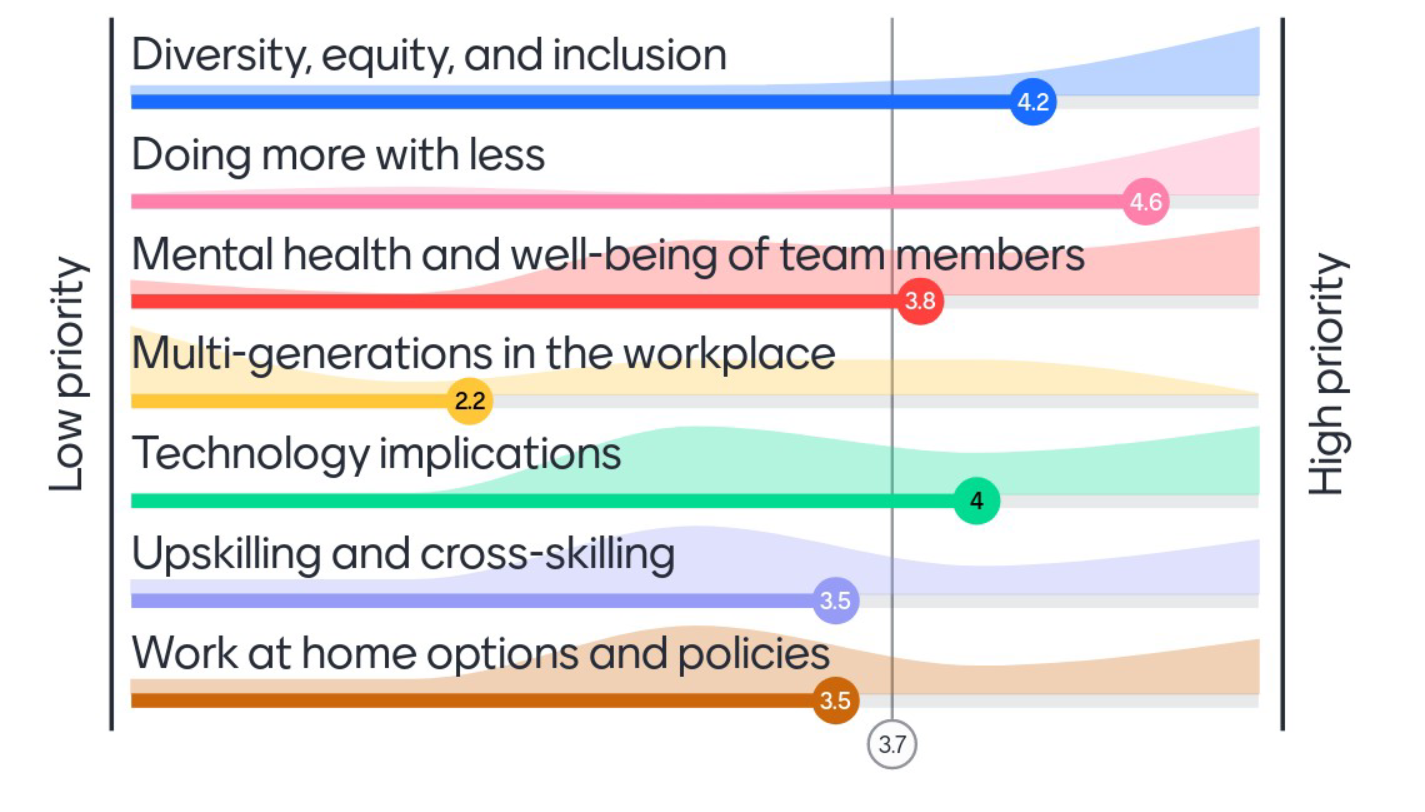
“Doing more with less” was rated a top priority for the rest of this year — a prevalent issue the past two years that many are redefining as they move forward, whether that’s getting away from doing more with less or determining how to better maximize the time of their still-understaffed teams.

“We’re trying to find tools that allow us to streamline processes to get the same results with fewer people,” one participant explained. “We’re more willing than we were over the last two years to put resources toward outsourcing something, so it doesn’t hit the internal team’s bandwidth. Now we’re trying to do less of ‘doing more with less.’”

In addition to asking for more resources or outsourcing, these digital leaders are also managing “doing more with less” by:

  • Increasing focus on automation and project management tools
  • Saying no to some activities to prioritize bandwidth
  • Focusing on specific tasks each quarter instead of constantly trying to tackle everything at once
  • Customizing scope of services to the true needs of the property
  • Training property team members to backfill positions

Other highly rated priorities among the group include ensuring the mental health and wellness of their teams, upskilling and cross-skilling, and defining work-from-home options and policies, which has become a hot topic as more prospective employees want to have the flexibility of a remote work environment. “People are expecting to work remotely,” one participant said. “And the best talent isn’t always local.”

When it comes to talent, roundtable attendees shared that they’ve spent more time involved in hiring activities this year than ever before. Some have been successful in using digital campaigns through Google or Facebook for recruiting purposes, while others have amplified their company culture and incentivized their current staff in referring professionals to join their team. For those who are still building back their teams and navigating the lack of staffing at agencies, using gig workers and contractors has been the way to go. They’re also tapping into smaller boutique agencies or agencies with specialized knowledge related to a specific need.

Navigating the tech stack — and the brands — to get a complete picture of the guest has still proved to be an obstacle as well, as many digital leaders are figuring out what CRM solutions work best and what it will take to have access to data across the management company. “We have a lot of disparate systems right now,” one group member expressed. “We have a data warehouse, we have an email service provider. We’re using lots of separate systems, so for this year, we are looking to bring all that together and have everything under one umbrella. We’re looking at new solutions across the board to map all the data together.”

Another participant put it this way: “It’s tough to fully know the full value of a guest when all systems don’t integrate.”

Other topics of discussion included the use of social media (while it’s difficult to track direct revenue for social efforts, the low cost of entry has been “worth the exposure; it’s just one more lever we can pull to get traffic over to the website”), as well as inflation in a world of automation.

“There’s a real push at my organization to understand, from a revenue generation and strategic marketing positioning, that our cost to operate hotels is going up pretty quickly, from utilities to labor costs to the cost of food in the restaurants — everything,” one participant said. “Even where demand may not be peak in pushing our pricing up, we’re taking some risk and trying to hedge inflation. And then that impacts our marketing strategy because we’ve got to really highlight the value proposition of the experience guests are getting, and we have to try to get more of top-tier guests who are willing to pay for the experience. The cost model at the hotel is driving revenue strategy, that’s impacting how we market to customers to keep conversion up at higher positions, so it’s been interesting to see.”

HSMAI Americas Board Talks Business Travel, Current Talent Landscape

The 2022 HSMAI Americas Board of Directors held its first meeting earlier this week, discussing the business of the association as well as uncovering multiple trends and sentiments regarding what they’ve seen in their own companies and in the industry related to the status of business travel and talent. Here are some of the insights and sentiments they shared about surprising trends they are seeing, the return of business travel, and the biggest talent challenges they are seeing in their organizations.

According to HSMAI president and CEO Bob Gilbert, the sentiments of the board were generally consistent with those found to date in a series of executive roundtables that HSMAI is hosting in February and March.  Findings from those peer groups will be published in the coming weeks.

Positive trends that have surprised the group, which represents 21 unique hotel brands and management companies as well as 14 partner organizations and universities, included:

  • Group business is coming back strong.
  • Travel in North America has been resilient through Omicron.
  • Staffing issues are beginning to stabilize.
  • Pricing power is strong.
  • There’s significant improvement in GDS booking pace looking into Q3 and beyond.
  • Strong shoulder night demand and increased occupancy Sunday and Monday.

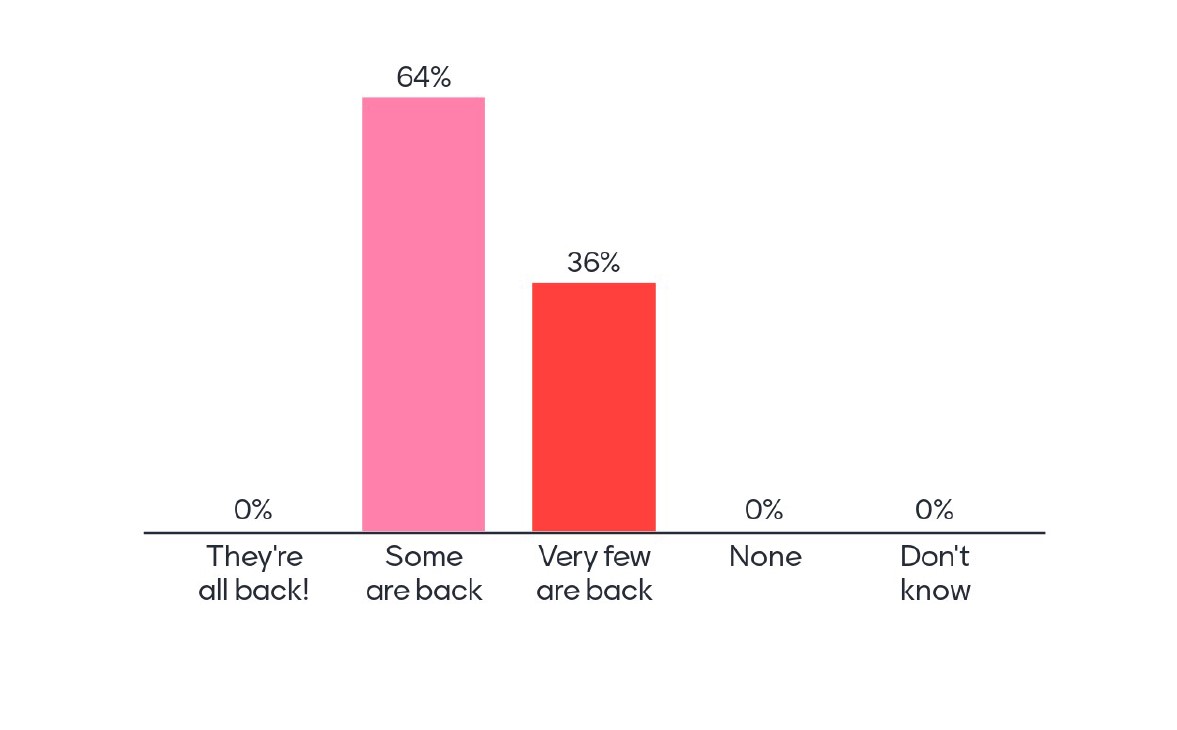
When asked about the return of business travel, 64% said that some are back and only 36% said that very few are back.

Key metrics board members are watching to monitor the return of the business traveler include:

  • GDS booking metrics
  • Return to office versus working from home
  • Weekly STR data
  • Weekday TSA traffic
  • Demand reports, feedback from partners, and airlines schedules and bookings
  • Large corporate accounts’ mid-week production
  • Activity at non-leisure destinations

When asked about the challenges facing commercial talent in hospitality, the group ranked issues in this order:

  1. Poaching from other industries
  2. Compensations/benefits
  3. Lack of interest of loyalty to hospitality
  4. Lack of pipeline to hospitality
  5. A lack of career pathing and growth options

When asked about priorities facing them personally in their workplace, the priority themes were:

  1. Mental health and well-being of team members
  2. Work-at-home options and policies
  3. Doing more with less (tied)
  4. Diversity, equity, and inclusion

Digital Trends to Improve the Guest Experience and Drive More Business

By Michael Goldrich, CHDM, CRME, Chief Experience Officer, The Hotels Network

Whether it’s trip stacking, virtual reality, “benchmarketing,” or other hotel marketing trends, hoteliers have overwhelmingly been part of the late majority to take advantage of technology and use it to provide better service both onsite and pre-arrival. Yet that doesn’t mean there aren’t opportunities to incorporate these trends and growing marketing developments into our strategies for the future.

These are the trends that HSMAI Marketing Advisory Board members are navigating in this ever-evolving digital landscape.

Benchmarking

  • “When it comes to benchmarking data, instead of us looking at straight ROI as a KPI, we’re evolving more into looking at KPIs against the comp. For so many years, it’s been more focused on how much money did our website book, and did that grow year over year, which is a very siloed approach. It’s more about really understanding if your website is getting its fair share. The other benchmarking data you can look at is your cost of sales against other types of similar hotels or brands. For example, if you’re looking at airport hotels, how are you performing against other airport hotels versus just using your star data? Expand your benchmarking to understand other KPIs.”

Dealing with Constrained Resourcing

  • “Over 70% of my team has turned in the last year. They’ve all left the hospitality business, and I think as an industry, we have to look at how are we going to retain talent and show them pathways of growth — both laterally as well as hierarchically — because they’re making 30-40% more in different industries. I’ve had to get creative, working with freelancers and some other agencies just to plug holes. This is on the corporate side as well as on property.”
  • “We’re building, essentially, a hybrid workforce, where it’s 80% agency partners and freelancers and 20% FTE. And there’s still, at least in 2022, a level of uncertainty from the revenue stream perspective, so we need the flexibility. I’ve got some positions that are open, listed as contractors, and I’ve got some very talented people who want to join my team, but they don’t want to leave the comfort of an FTE position for a contractor role. Hopefully, time will cure this, but it’s definitely something that’s top of mind.”
  • “As challenging as it is to have limited resources, it also provides some opportunities to look at staffing in a different way. It gives us an opportunity, especially at the property level, to take a hard look at all the different things we need to accomplish and the skill sets we need on board to get those things done. Then we can approach it in a variety of ways, where it’s not just one solution fits all.”

Zero Clicks

  • “Rand Fishkin published a study that said 65% of searches on Google didn’t lead to a click. As marketers, what do we do to not only make sure we’re answering questions appropriately, but also to get those consumers on our website? Our stats are showing about 44% of search results are things like FAQs. Exploring this, SEO, personalization, and things like that have some real value.”
  • “We talk about zero clicks in our hotel digital marketing essentials class, and I just updated it to add the ‘subzero click.’ In Google, you’ll start to get an answer to your question as you’re typing it into the search box. So, if you’re typing about the weather, for example, the weather in your location shows up before you even finish. Subzero clicks are here now as well.”

Removing ‘Invisible Friction’

  • “We’re typically focused on driving top-line revenue and helping improve the guest experience, and removing invisible friction, such as difficult payment methods and slow page load speed, kind of helps do both right. One area we’re looking at that we find is a friction point is the different communication methods between digital and offline. You search for a hotel online, you can call the hotel, or you can direct message to the hotel. It’s difficult to have a consistent experience for that guest across all those different communication points. The person picking up the phone and having a great experience with our front desk should have a similar experience with the online live chat.”

Virtual reality

  • “There are a lot of things hotels can take advantage of now to help set themselves up for the future of VR. There are a lot of ways this is natural for the travel space. For example, could you show actual views and allow people to choose their hotel room? Could you showcase the property or the destination in a way that makes people feel like they’re there, so they want to choose your destination or your hotel or your experience? Is there a way to drive exclusive experiences for your loyalty members? VR is still in its early stages, but there’s a lot you can do now, such as setting up AR filters.”

Trip Stacking

  • “I think about trip stacking as tentative planning. As a consumer, I’ll book a whole vacation, knowing there’s a good chance I’ll cancel it because it’s fully refundable, or I can reuse those dollars on the airlines at a future time. There’s nothing that locks me in, so I’m more apt to book it and maybe cancel it. How do we, as marketers, deal with that? And how do we lock travelers in? Is this a short-term or long-term problem?”

Top, Middle or Bottom: Where Is Your Time and Energy Best Spent?

By Allison Handy, Senior Vice President Commercial, Prism Hotels & Resorts

As sales leaders, we often find ourselves supporting the bottom — whether it’s bottom-performing hotels, sales teams, or salespeople. There is so much scrutiny around what they aren’t doing, what they are doing wrong, what needs to be fixed, and how to propel them forward. To think we can move the bottom to the top, though, may be futile.

For years, we’ve all heard that a successful leader is more focused on the top — what is going right, and how we can emulate that behavior and performance across the organization. Have you been successful in shifting your organization to apply more resources and talent toward the top performers? Maybe, maybe not?

Now, here’s a different spin. Maybe the way to really move the needle in an organization is by focusing on the middle. That’s where there may be the greatest opportunity to effect change.

The HSMAI Sales Advisory Board recently discussed this topic, based on an article published in Harvard Business Review. Here are some key soundbites provided during that conversation that may help you determine where and how to focus your energy when it comes to managing performers at all levels.

  • “We tend to focus on the thought that if someone’s bad at, let’s say, math, and you spend all this time on math, but they’re never going to get it, then why spend the time? Instead, maybe we focus on their strengths and give them a better sense of self-awareness. When someone’s hired and they’re just not getting it, maybe it’s time to put energy toward finding what they do well, and then move them to a place where they’ll be successful.”
  • “Over 20 years ago, [former GE chairman and CEO] Jack Welch wrote a book on winning, where he says you need to focus on the core 70% because that is where the ‘meat’ and the opportunity for growth and success are. Invest your time in training, motivation, engagement, coaching, etc., with those individuals. The bottom 10%, he said, they just need to go. Granted, Welch had a controversial leadership style, and this is not how we should operate today. We need to invest and give people the opportunity.”
  • “The issue is with the bottom 10%, we’ve got to go through those processes, and it is time consuming, but it is a necessary evil. With those top performers, you just take the roadblocks out of their way and let them go. Focusing on the middle portion of our teams and helping them grow is where I think we all know we need to spend more time on.”
  • “We have a development continuum where we identify the core competencies for the job, and then rate the person based on those competencies. It helps you focus and identify where you spend your time with each person. If you put a practice like this in place, it will help you be more efficient in dealing with each individual to figure out what they need to do to get better or if maybe they have to go to another position or leave the organization. Putting a little science to it helps a lot.”
  • “We’re rewriting all our job profiles because we found that they were more about the accounts the sellers handle and not about the sellers. We realized our sellers also had a mindset of, ‘Well, I’m a better seller if I have a bigger book of accounts,’ and that’s how our job profiles were written. But that doesn’t help me when I’m working with them on what it takes to get to the next level. It was hard to give them the feedback and hold them accountable when we didn’t have good job profiles that explained what we were asking of them.”
  • “We have monthly coaching across our leadership team, which is really good, but it’s not a one-size-fits-all proposition. Coaching must be done deliberatively and tailored to the individual. You can’t ignore the bottom 10% because there may be people there who can move to the middle with the right coaching. Just like you can’t ignore the top performers because you could potentially lose them if you’re not coaching them. As a leader, you have to look at the whole spectrum and make decisions on who you coach and how you coach them.”

This robust discussion resulted in the advisory board seeing value in not just how much time is spent with the top, middle, and bottom performers, but how we spend the time being the key differentiator for success. The group found that there was disproportionate attention being placed on the bottom, but most, if not all board members, had programs in place to shift attention toward capitalizing on strengths and not just teaching skills.

Additional Resources:

The CMO Perspective: Insights on Resource Allocation, Loyalty Programs and Talent

By Frances Moffett, Editorial Content Director, HSMAI

Industry leaders everywhere have been navigating the new landscape brought on by the pandemic over the past two years, analyzing trends that seem to frequently change and managing shifting goals to reflect these constant developments. HSMAI recently sat with leaders from Accor, Aqua-Aston Hospitality, Associated Luxury Hotels International, CoralTree Hospitality, Extended Stay America, Hilton, IHG, KSL Resorts, Marriott International, Outrigger Hospitality Group, Red Roof Inn, and Wyndham Hotels & Resorts during its Chief Marketing Officer Executive Roundtable, presented in partnership with The Hotels Network and Uplift.

The group discussed many topics, ranging from priorities for this year, loyalty programs, working with agencies, resource allocation and more. Here are some of the highlights from this robust conversation.

Q&A: In the new talent and work landscape of your corporate team, what themes are a priority for you in 2022?

  • “The one that’s really polarizing for us as a company is the work-at-home options and policies. The talent who are newer to the industry find it inconceivable that we wouldn’t be completely flexible with work-at-home options. While [the more seasoned professionals] feel that working from a location is sort of mission-critical because we expect it of our frontline people. The newer professionals just expect it to be an option, and they’re getting it in other industries.”

  • “I think [offering more flexibility] is the biggest opportunity in our industry. I had a managing director of a large resort tell me they learned during the pandemic that dual-income families are willing to take a sacrifice — to earn less — to work from home part-time versus being full-time in the workforce. They want the freedom and flexibility to work for whomever and however they want. It’s impacting the ability to recruit for middle-manager jobs.”
  • “If we’re going to continue to work in this environment of doing more with less, my team is so much more efficient when they don’t have to get in cars and drive an hour or so to come in. They did so much with less and literally carried the company through the recovery, and now, they don’t really see the value of coming in, considering they already did so much with less. So, we have to show the value of being onsite [if we want to do that], and it has to be very empirical and clear to our teams.”

Q&A: What loyalty or business direct solutions are you seeing outside of traditional loyalty programs?

  • “We’re tailoring our loyalty program more toward the needs of our specific target guest, as opposed to just travelers broadly. In our case, that translates to, what are the unique benefits and interests associated with people who are staying a week or more, as a point of competitive differentiation.”
  • “Especially for smaller companies like us, we are tapping into the power of alliances, leveraging marketing partnerships, and being less traditional, whether it’s through airlines, credit cards, etc.”

Q&A: What changes are you seeing in the agency landscape?

  • “Since the pandemic, it seems like agencies have gotten more specialized. You have the website development companies and the media companies and the search companies, where we used to have that all kind of pulled together [under one umbrella]. Now, it seems like you have to reeducate yourself and, at least in my search, I’ve been having a hard time finding an agency that can really put all the strategy together.”

Q&A: How has resource allocation shifted?

  • “If we want to be better stewards in connecting with the local teams, villages, and communities [in which we work], we must have more people inside — whether it’s the resort, the property, or the campus — who play that community role and can build those bridges while facilitating between the team inside and outside. But, with that, comes things like reconsidering the terms ‘concierge’ or ‘director of activities and recreation’ — maybe these terms are outdated. Now, I think it’s more about, how can we help guests really have the greatest success when they stay with us, and finding more genuine ways to help them discover what happens inside, what happens outside, and to make those connections. Maybe that means more of those roles appearing on the roster, possibly at the expense of some other positions.”

Two Marketing Trends to Have on Your Radar

  • Predictive personalization

Consumers want to be served content they like and information that is relevant to them.

Marketing professionals can identify the customers who are visiting their websites and predict their behaviors using a predictive algorithm through AI. As pointed out during the discussion, “We could maximize the percentage of our direct bookings by understanding the customer and not wasting time, effort, resources, and budget in consumers who are not really going to convert.”

  • By now, pay later

Customers want more payment options and “buy now, pay later” is exploding across the internet. As reported during the session, 55% of U.S. consumers have used a buy now, pay later service, and this number is expected to grow. For hospitality marketers, this could be a new opportunity for increasing bookings at their property across all demographics.

HSMAI Foundation Chair Michelle Woodley Talks What’s New with the Foundation

Michelle Woodley, president at Preferred Hotels & Resorts, was recently appointed chair of the HSMAI Foundation, the research and educational arm of HSMAI dedicated to elevating the overall caliber and performance of sales, marketing, and revenue management professionals in the global hospitality industry. Here, Woodley provides an overview of what’s on the horizon for the organization, as well as what she’s looking forward to most.
HSMAI: What are your main goals during your term as chair of the Foundation?

Michelle Woodley: My goal is to ensure that each area our 2022 plan (to attract, develop, and engage talent) is implemented and makes meaningful, long-lasting impact in our industry, and that it furthers our mission to secure the sales, marketing, and revenue optimization talent we need today and into the future. It is also a priority to ensure the Foundation remains financially healthy, as it has been since its start in 1982.

During this time when there are talent shortages across the industry, why is the mission of the Foundation even more important?

The entire hospitality industry is faced with the challenge of fierce competition for talent. We applaud and support the industry organizations that are promoting and tending to the operational talent needs of hospitality. The HSMAI Foundation has a specific focus on the commercial disciplines of hospitality, which we believe needs focused attention.

What are some initiatives that HSMAI members can look forward to in 2022 from the Foundation?

The Foundation has some great initiatives and programs for this year, including:

  • Releasing our first “State of Talent” report identifying and discussing the top 10 trends for executive attention
  • Enriching our online resource portal, promoting careers in hospitality
  • Expanding the library of online educational programs in the HSMAI Global Academy
  • Supporting the Rising Leader Councils in all our global regions
  • Securing DEI partnerships to bring further insight to the industry
  • Launching a new Individual Giving Campaign, as we’re leading up to the celebration of HSMAI’s 100th anniversary

What’s one trend you’re watching that you think will impact talent and industry growth over the next year?

Our “State of Talent” report identifies the top 10 trends — all of which need our attention. The one that can be more impactful than we think, if not taken seriously, is mental health, safety, and well-being. I do not believe we fully understand or have seen the impact of the past two years on the individuals in our industry today or those contemplating hospitality as a profession.

What are you most excited about for 2022?

I am thrilled to be working with a group of exceptional leaders, representing all aspects of hospitality, who are volunteering their time to serve on the Foundation board and support our global initiatives.

10 Talent-Related Trends Hospitality Leaders Should Know About

By Karen Wollard, HSMAI Foundation Research Manager

The devastating COVID-19 pandemic laid bare the talent crisis that has been slowly brewing in the hospitality industry since at least 2007. Sales, marketing, and revenue optimization talent has always been a key ingredient in the success of the industry, yet now we are facing a new landscape. What has changed over the past two years? How should companies be moving forward?

The following outlines the talent-related trends the HSMAI Foundation has identified and will discuss in its new report, The State of Hotel Sales, Marketing, and Revenue Optimization Talent: 2020-2021.

1. Corporate culture and values matter.

Restoring trust and commitment are essential across the industry, as is rekindling the passion for hospitality. Organizations with people-first cultures made impossible decisions without betraying that trust. Corporate culture will dictate how teams can function and thrive. This is even more important now that four generations are in the workforce for the first time ever.

2. Expectations of leadership are changing.

Strong leaders with diverse teams moved decisively and with empathy. Leadership humility and servant leadership have proven to be productive. Authenticity, accountability, and transparency are the trends in leadership that matter.

3. Mental health, safety, and well-being move to the forefront.

These became essential considerations for surviving the crisis for employees who remained onsite, those who were furloughed, and individuals working from home.

4. Doing more with less is a treadmill.

With the abrupt shutdowns, initial cutbacks were a strategy for survival. Talent was redeployed to ensure multiple tasks were completed with less cost. This became a two-edged sword, as workers insisted on compensation increases and flexibility to return to work. Burned out talent simply resigned or left the industry.

5. Silos continue to disappear.

Sales, marketing, and revenue management teams — stripped to their minimums — became partners who learned from each other, sought out new tools for finding business, and became generalists who had to do what it took to get the job done.

6. The above-property office community changes.

Remote work became essential in an industry based on personal interaction. Organizations are wrestling with how to put policies and guidelines in place to maximize the quality of community and collaboration as workplaces reopen. Having had time to reflect, people are choosing to prioritize work-life balance.

7. KPIs and incentive plans are being reevaluated.

Salespeople watched all their business fall off, while marketers found their entire plans were no longer useful. Revenue professionals’ analyses and strategies were upended. Goal setting is a particular challenge with individual goals and variable compensation being adjusted to an uncertain environment.

8. Talent pipelines went dry, and new channels have to be tapped.

The talent ecosystem requires repairs. Seventy-five percent of hospitality schools report falling enrollment, while Joblist reports that, as of Q2 2021, 60% of job seekers are not interested in a hospitality job. Innovative approaches for recruiting are needed. Returning employees are demanding more choice and control over their pay, timing, hours, schedules, compensation, benefits, working conditions and management.

9. Development, reskilling, and upskilling are necessities as technological acceleration continues.

Learning for the future and cross-training for flexibility are essential. The future requires associates who can adapt, adjust, innovate, create, and collaborate. Building skills and abilities for a more resilient workforce can buffer volatile market changes. COVID-19 accelerated technology adoption, specifically in the ways we communicate and collect data, driving innovation across commercial applications. Technology is continuing to change us in ways we don’t yet recognize or see coming.

10. Organizations can lower turnover and increase retention.

Diverse industries have been poaching sales, marketing, and revenue professionals with the lure of higher compensation and quality of life. Burnout, better opportunities, regular hours, and changing generational values are prompting talent to look elsewhere. The solutions start with reigniting the passion for hospitality and showing the positive changes organizations within the industry have made to acknowledge the damage done and prioritize talent well-being.

This is an excerpt from the HSMAI Foundation’s The State of Hotel Sales, Marketing, and Revenue Optimization Talent: 2020-2021 report.  To learn more about the HSMAI Foundation and its mission, visit the Foundation website.

HSMAI Perspective: The State of Talent in the Industry

As we start to see a post-pandemic world on the horizon, the need for talent has never been greater. Staffing challenges in sales, marketing, and revenue optimization are being felt across all hotel companies at the unit and corporate levels, due to the circumstances brought on by the pandemic. The industry was shut down. Employees were laid off or sent home to work remotely. Many decided to retire or leave the profession entirely. And while progress has been made on many fronts over the past two years, there’s still a lot to be done to attract, develop, and engage the best hospitality professionals in this new and ever-evolving time.


To address this, the HSMAI Foundation is focusing on the need to strengthen the pipeline to ensure the industry has the top talent it needs — but that won’t be without its challenges. Throughout this month, HSMAI hosted multiple executive roundtable discussions with members who hold leadership positions within their organizations, roles such as chief marketing officer, chief loyalty officer, chief revenue officer and others. When these leaders were polled about the challenges they saw facing commercial talent in the industry, the top three included:

  1. Compensation and benefits
  2. Poaching from other industries
  3. Lack of career path, growth options or pipeline into hospitality

When considering the new talent and work landscape of their corporate teams, these leaders also ranked the following themes as priorities for 2022:

  1. Doing more with less
  2. Mental health and well-being of team members
  3. Work-from-home options and policies
  4. Technology implications
  5. Diversity, equity, and inclusion

We discuss these themes and more in a new Foundation report that will be released next week titled, “The State of Hotel Sales, Marketing, and Revenue Optimization Talent: 2020-2021.” The report dives into 10 talent-related trends we have identified as key considerations for attracting new talent, developing emerging talent, and engaging existing talent.

The first of 10 trends we discuss in the report revolves around the increasing importance of defining (and refining) corporate culture and values. Trust and commitment are essential across the industry, and restoring them will be a key factor in propelling us toward recovery and ensuring our teams are not only motivated but find true satisfaction in their work.

To move forward, we must look at the entire workforce ecosystem and reassess what it takes to find people who will take our businesses to the next level, as well as how we foster an environment of belonging, well-being, and understanding. The insights featured in this report will offer food for thought for every leader in our profession as we continue to navigate how we cultivate the talent pipeline.

The HSMAI Foundation’s State of Hotel Sales, Marketing, and Revenue Optimization Talent: 2020-2021 special report is now available. To learn more about the HSMAI Foundation and its mission, visit the Foundation website.

5 Emerging Trends Among U.S. Travelers

In a recent HSMAI webinar, “The Crystal Ball Is Less Cloudy: Using Traveler Sentiment Research as a Guidepost Forward,” Amir Eylon, president of Longwoods International, presented sentiment and visitor research on what travelers are thinking, how they are behaving, and how they are evolving to help hospitality professionals understand the road ahead. Here are five emerging trends he highlighted, based on data compiled by Longwoods Travel USA.

1. Americans are traveling in larger party sizes. In addition to trips with the immediate family, including grandparents or other relatives, friends are getting together and traveling as groups. “For those of you on the hotel side of the business, you’ve got to be able to accommodate those small groups,” Eylon said. “Can you give them a floor together? [In your dining room], are you able to accept more parties of eight or 10 versus parties of four? As you’re developing your marketing plans, expect those numbers of small groups to be traveling together much more frequently.”

2. Travelers are taking longer trips. People are taking fewer but longer trips. With more people being able to work remotely, they’re extending their time off and checking in with the office from the road or partaking in a “workcation.”

“But don’t ignore the short trips,” Eylon advised. “We’re also seeing more spontaneous travel, [with] a lot of day trips or short weekend getaways.”

3. The planning and booking cycles are long (and short). In light of the pandemic, people are taking those bucket list trips that typically take longer to plan. At the same time, Eylon noted that the data showed an increase in travel spontaneity, as some people may have more flexibility to travel than they did pre-pandemic.

4. Travelers are venturing into the great outdoors. These are still the No. 1 types of activities, according to the data Eylon presented. “Think about why people are traveling,” he explained. “They’re traveling for all those words that start with the letters ‘R-E.’ They’re traveling now to reconnect, to rekindle relationships, [to attend] family reunions, or to rejuvenate and recharge their batteries.”

5. Road trips are still dominating. Road trips were on the rise pre-pandemic and will continue to grow, according to Eylon. Early in the pandemic, road trips allowed people to feel safer in their own vehicles and more in control of their surroundings.

Overall, Eylon said the most important trend hospitality professionals need to be watching for is that shift in traveler mindset from pandemic to endemic, as their data showed that one in four travelers said the pandemic has no more bearing on how they travel.

“There’s light at the end of the long tunnel,” he said, “and we’re seeing it. It’s starting to shine on us. And we are going to be back stronger than ever.”

Lessons on Leadership, Building Relationships: An Interview with HSMAI Americas Chair John Washko

By Frances Moffett, HSMAI Editorial Content Director

When John Washko started his career, he didn’t think he’d land in hospitality. Though he grew up in the industry — his father had a 25-year career with Marriott — he hadn’t intended on heading in that same direction.
“Honestly, I never thought I was going to be in the hotel business. I kind of fell into it,” he explains. “My degree was in marketing, and hospitality wasn’t on my career path. My father had been in operations, and back then, he worked six days a week. That busy lifestyle was a bit daunting. That’s why I initially went into hotel sales instead of the operations track. Sure, at times, there were long hours, some nights and weekends, but I found I really enjoyed the client interaction.”

It’s been more than 25 years since Washko made that decision, and he hasn’t looked back since. Throughout his career in the independent resort sector, he has held executive-level roles with Atlantis in Paradise Island, Bahamas, and The Broadmoor in Colorado Springs. He was named one of HSMAI’s Top 25 Extraordinary Minds in Sales & Marketing in 2015, as well as Resort Marketer of the Year in 2010. Now, as vice president of sales and marketing at Connecticut-based Mohegan Sun and the new chair of HSMAI Americas, he is dedicated to furthering his impact on the industry and bringing others along for the ride.

“I have always been a believer that, to be successful in life, you have to figure out ways to be a resource and to help other people — and that doesn’t always mean it’s self-serving to you in the short term,” Washko says. “What I have always tried to do in my career, and what I encourage my teams to do, is look at their expertise, their experience, and their knowledge and see how we can use that to help others in this industry with whatever challenges they’re facing.”

Over the past two years, there has been no shortage of challenges. The pandemic has changed many things, including how hotels operate; how sales, marketing, and revenue optimization professionals work; and how business leaders lead.

“[The pandemic showed us] you have to really embrace empathy,” Washko says. “Everybody’s situation was different — your customer’s situation was different, your employees’ situation was different, and your situation was different. And if you weren’t being an empathetic leader during that time, you missed a real opportunity you’ll never get back.”

Part of that empathetic leadership, for Washko, was being a resource to the industry, as he and his team at Mohegan Sun produced and widely shared information and tips on COVID-19 safety guidelines and protocols for convention meeting spaces. During a time when planners had no roadmap on where to go or what to do, Washko aimed to help where he could.

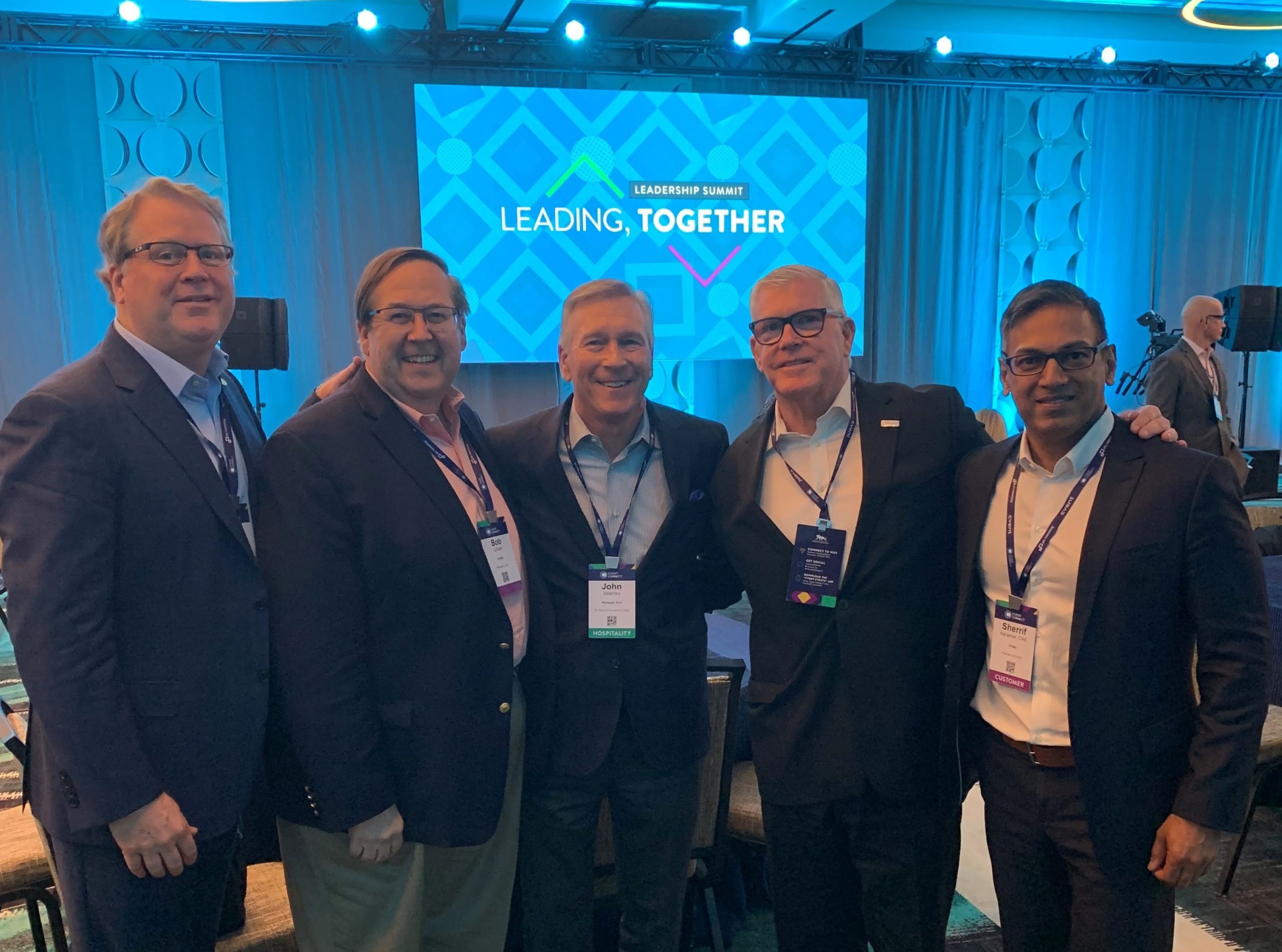
John Washko (center) with industry association leaders (left to right) Paul Van Deventer, President & CEO, MPI; Bob Gilbert, President & CEO, HSMAI; Don Welsh, President & CEO, DMAI; Sherrif Karamat, President & CEO, PCMA

“If you have a one-and-done mentality, that you’re just going to focus on closing a piece of business and that’s it, you may make your quarter, but you’re not going to make your career,” he says. “We should constantly be focusing on being a resource within our organizations but also within the ecosystem of the hospitality industry. What you put out into the universe is what you get back. People don’t forget when you help them. If I could position myself and Mohegan Sun as a resource, that will come back to us.”

In this industry, relationship building is key to success, and that’s what it all boils down to for Washko. While the increased use of videoconferencing, virtual meetings, and remote workplaces have changed the way people communicate and how they collaborate with each other, at the end of the day, hospitality is a business of people, and building genuine rapport and connections matter. “We use the term ‘relationships’ a lot in this industry,” Washko says, “and I think it’s easy to focus on that when everything’s going well. The real strength of an organization’s commitment to relationships is really emphasized when things get tough.”

To illustrate this, Washko explains how Mohegan Sun was able to safely hold events earlier than some organizations because of the withstanding trust with three main clients they created “bubbles” for: NCAA Basketball, Showtime Boxing, and Bellator MMA. “We converted our arena into an international broadcast center in a bubble. And the reason we could move forward with those three types of events was because of the relationships we had established with them over the years.”

A strong network of peers is just as crucial as a strong network of established customers. Expanding his network of like-minded professionals was the reason Washko joined HSMAI more than 15 years ago, after being introduced to the association by his mentor Mike Dimond during his tenure at The Broadmoor in the early 2000s.

“I have been so blessed by people in the industry that I’ve been able to call and share successes with or to ask questions. Having that relationship and the confidence that people within your network will try to guide you as best they can — because they know you’ve got their back and they’ve got yours — is so important,” he says. “I have Mike to thank for that. He helped me get involved with my local chapter, and over time, I got involved with the Americas board, which led me to my current appointment as chair. I am very humbled and very honored to serve this great industry in this role.”

Washko will serve as chair of HSMAI Americas for a two-year term, and during this time, he says he hopes to show more individuals resources they can use toward a successful career in hospitality. He says, “This is a very pivotal time for our industry. We want to make sure the next generation of leaders and superstars in the hospitality industry see the pathway forward and see the resources that are available, as well as how HSMAI can play a vital role in their growth and career maturation. I want to do the best I can to pass along just how exciting, fun, fulfilling, and rewarding a career in hospitality can be.”

Washko is familiar with the challenges that can come with determining a career path, particularly in hospitality, and advises new professionals to become well-versed on the in’s and out’s of their job and also take advantage of every learning opportunity, whether it’s sitting in on important meetings or talking with leaders to learn the intricacies of sales, marketing, and revenue optimization.

“Also, show a level of passion and enthusiasm for your work,” he advises. “My father told me, ‘If you bring passion and enthusiasm, you completely control your day, and you control your career just by bringing those things to the table.’ And if you bring that, people are going to want to help you and be around you. It’s infectious.”

This passion and enthusiasm are what keep Washko optimistic about the future of travel and the hospitality industry.

“I think we’re going to be surprised by how quickly the recovery takes place,” he says. “We’re already on the downside of the most recent variant, and every time we’ve gone through this, we’ve learned lessons and we’ve learned coping skills. Across the board, I think everyone’s ready to get back to travel and face-to-face meetings, getting that business traveler back into the industry, back to meeting with customers in the market. My outlook is bullish. We’re going to see, I believe, a rebound in all those facets that are so intricately tied to the hospitality industry. It’s a natural need. People need to interact with people.”