How Changes in Revenue Optimization Impact Sales Leaders

By SiuYin Ko, Senior Corporate Director of Global Sales, Rosewood Hotel Group, and a member of HSMAI’s Sales Advisory Board

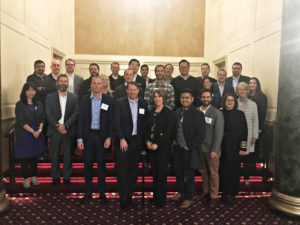
My colleague Nicole Young, CRME, is the senior corporate director of global revenue management for Rosewood Hotel Group, vice chair of HSMAI’s Revenue Optimization Advisory Board, and a recipient of HSMAI’s 2019 Revenue Optimization Professional of the Year Award. In other words, she knows revenue optimization. Recently, I facilitated a discussion during a call with HSMAI’s Sales Advisory Board (SAB) in which Nicole answered questions about the relationship between sales and revenue leaders. 

What do sales leaders need to know and understand about the role of data in revenue optimization to constantly improve and refine their skills?

“There’s an important distinction between revenue and data,” Nicole said. “They are two completely separate things.” Historically, she explained, sales has been reliant on data provided to them from other disciplines, particularly revenue management, but when you look at the core of the sales function and the data that drives it, it’s very different from what revenue optimization looks at.

“As sales leaders, the important thing is that data is a party where you don’t want to be the last one to show up,” Nicole said. “What I’m hoping to see within the industry is evidence of sales organizations independently taking ownership of the data and analytics. They need to make their decisions and not be dependent on fitting data that already exists within organizations to suit them.”

Nicole added that while the industry has been on an upswing in the past few years, even if sales are good, profits are not. She suggested that this partly explains why revenue optimization tends to drive the pressure toward sales organizations — and why both groups feel pressure that a healthy top line is not enough.

How do we ensure that we don’t lose sight of the customer as hotels continue to optimize pricing and look to drive profit as well as revenue?

According to Nicole, this is where data really comes into play, because organizations have so much of it that tells customers’ stories in an unbiased way. But, she added, there are also great resources from third-party sources that can help validate the voice of the customer. “As the industry becomes more sophisticated, we should look towards the more commercial retail environments where personalization has been made possible because of all the data that we have available to us,” Nicole said. “Our customers are speaking to us in our industry through the exact same methods, we just maybe haven’t had the emphasis on harnessing that and turning it into usable nuggets for our sales strategies.”

Companies also need to better communicate through data internally, she said. Revenue managers can only evaluate the information they have available, so when additional metrics and information comes in, that changes the way they evaluate sales. Because of that, it’s important to sell not just externally, but internally, within the organization. “Every piece of business, you almost have to sell twice,” Nicole said.

An SAB member asked if there is a way to streamline the selling process, to avoid selling twice. Nicole replied that transparency and consistency throughout an organization help a lot, so sales professionals can handle their own evaluations with less conflict. Another tactic she suggested is taking a look at any automated systems that are being used, to make sure they are appropriate and can inform the sales process from the sales manager’s point of view.

How will the next economic downturn adjust revenue strategies in the short term or long term — and how can sales leaders prepare for this adjustment?

“Even though we’ve got a lot of strong indicators in our economy, there is this desperation where no one believes it’s really going to continue,” Nicole said. She pointed out that publicly traded companies are trying to squeeze out as much profit as they can while times are healthy.

Nicole suggested focusing on efficiency. Specifically, she said, revenue professionals are looking to educate partners in sales and marketing to focus on technologies and automations that help boost profit, and on being lean to help ease tensions when the economy is less favorable.
5 Questions for HSMAI Sales Professional of the Year Laura Dinu

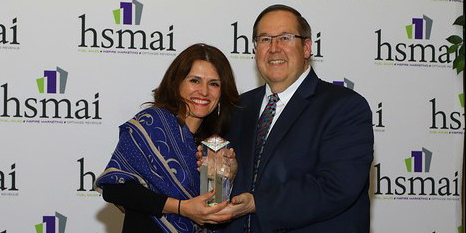
When Laura Dinu received the HSMAI Hotel Sales Professional of the Year Award in the Above-Property category — presented at HSMAI’s Mike Leven Leadership Conference in March — it was the just the latest stop on a career path that stretches back more than 20 years. Director of groups and meetings – global sales Americas for IHG, Dinu talked to HSMAI about cross-functional collaboration, the evolution of hospitality sales, and her advice for young hotel professionals.

What was your first job in the hospitality industry?

My first job was as an assistant in social catering at the Pan Pacific hotel in San Francisco [today the JW Marriott San Francisco Union Square]. I have always worked in hospitality, and this is where my passion for the industry began. I had a great leader who taught me about the importance of the customer, service, and creating memorable experiences.

What do you like about working in hospitality sales?

There are so many facets within hospitality sales, but one area I’m most excited about is the cross-functional collaboration it takes to be successful. I enjoy being part of a team with the same growth and strategy goals for our accounts and working daily with our hotels to ensure we deliver the right business at the right time — plus, the day-to-day engagement with customers to create mutually beneficial outcomes and solutions.

How has hospitality sales changed during the time you’ve been part of it?

I’ve been doing this for well over 20 years, so the first thing that comes to mind is the technology changes. We’ve also evolved our approach to sales, moving from strictly relationship selling to leading with insights. We focus on knowing and understanding the customer’s business and objectives for their company and providing solutions they may not have considered.

Is there a new innovation in the hospitality industry that you’re particularly excited about?

For IHG specifically, it’s our cloud-based reservation system IHG Concerto, but I’m excited about the overall investment in technology in the industry. While we’ll never move away from human interaction, these advancements will enable us to build more efficiencies around customer service and revenue delivery.

What advice would you give to someone who is considering a career in hospitality sales?

Become indispensable to your customer! Never stop learning, and be open to every opportunity. The more knowledgeable you can be about every aspect of the industry, the more value you’ll bring to interactions with your colleagues and customers.

The Power of Fear Itself

Judi Holler is a widely renowned keynote speaker who presents on the topic of using fear as a secret weapon. Her new book, Fear Is My Homeboy: How to Slay Doubt, Boss Up, and Succeed on Your Own Terms, will form the basis for her general session presentation on “Building Your Leadership Muscles” at HSMAI’s 2019 Revenue Optimization Conference (ROC) in Minneapolis on June 18–19. Holler uses her background in improv theater to deliver engaging presentations that allow participants to see how they relate to fear in a fun and interesting way.

Holler is no stranger to the hospitality industry, having worked in sales and marketing for Omni, Marriott, and other companies. Recently she spoke to HSMAI about what to expect when she takes the stage at ROC 2019.

How did you get started with fear as a topic?

I moved to Chicago by way of a promotion in the hotel industry and simultaneously started doing improv theater at night at Second City. I started to watch all of my improv training make me not only successful onstage as an improviser, but also successful on the stage of my life — personally and professionally. Improv training made me braver and it really became sort of like my fear church. My work on fear challenges participants to stop chasing the unrealistic goal of “fearless” and instead spend more time getting comfortable being uncomfortable, so you can start fearing less.

What will your ROC presentation be about?

My work takes the experimental ideas from the improv theater and applies them to the unscripted stage of everyday life.   will help participants view themselves as an everyday improviser and inspire them to get more comfortable with getting uncomfortable. For example, I propose the idea of doing small fear experiments, every day, to push yourself outside of your comfort zone. Things like being the first to raise your hand in a meeting, asking for the raise, or saying no to something when you really mean it. Scary things won’t ever be less scary, but you will get stronger. Confidence comes though repeated attempts of doing scary things and succeeding. The goal is to have the courage to do things scared.

What do you want people to take away from your presentation?

My work on fear is for someone who knows fear is an issue but wants to get to the other side of it. We all have fears and they will look different for each of us. What a 20-year-old fears is a lot different than what a 50-year-old fears. In addition, men and women process fears differently.

We shouldn’t think we have no fear. Fearless is the most reckless idea on the planet and one I challenge. If you’re fearless, you’d never go to a doctor, you’d never pay your taxes, and you’d probably walk right out into traffic. We don’t want to be fearless; we want to work our brave muscles slow and steady every day to get better at fearing less. The ideas in my keynote will help participants think differently about all the sneaky ways fear shows up and how to manage it in order to move forward.

How does this relate to hotel revenue optimization?

When you think of revenue managers, the role is evolving from being primarily behind-the-scenes to now becoming more focused on having strong communication skills and connecting authentically with clients and colleagues. Revenue mangers are working hard to have a seat at the table and it’s now starting to happen. The role has even become more customer facing in some scenarios. My goal is to is to help them be more comfortable connecting and communicating, so they can succeed and stay relevant.

We’re all improvisers, every day. None of us have a script. What I learned in improv is that while you’ll never be fearless, t you can get really good at fearing less, and when you learn to get comfortable in those uncomfortable situations, that’s when you make things happen.

12 Trends That Are Surprising Hotel CDOs

At HSMAI’s Chief Digital Officer Executive Roundtable at the Roosevelt Hotel New York last month, we asked attendees — about two dozen digital executives working for hotel brands, management companies, and owner groups — what trends have surprised them in the last year or so. Here are 12 that they identified:

  • Data security: Figuring out how to make sure consumers feel safe doing business with us is important.
  • Innovation: We’re seeing the slow adoption in the U.S. market of products like Booking.basic that have been active in Asia.
  • ADA: Website accessibility and usability issues related to the Americans With Disabilities Act (ADA) still aren’t resolved.
  • Influencers: While there have been some great success stories, the sheer number of request our hotels are getting from influencers has been surprising.
  • Mobile: The year-over-year growth rate of mobile penetration as a percent of total is accelerating.
  • Data control: Brands are possessive of their data and reluctant to release it to management companies.
  • Occupancy: We are seeing record occupancy as an industry but still struggle to fill our hotels on shoulder nights, meaning we have to discount heavily or go through OTA partner channels more aggressively than we’d like.
  • Meta: We’re stuck in a reactive state when it comes to our reliance on metasearch and solutions like Expedia TravelAds.
  • GDPR: We all knew it was coming, but GDPR compliance was more demanding than we expected in terms of resource allotment and operations.
  • Parity: Now that OTAs are moving toward new marketplaces and sometimes getting their inventory from people other than us, we’re seeing parity get out of control — and policing it is difficult.
  • Voice: The adoption rate of voice, as well as usage demographics, continues to be surprising.
  • Google Reviews: Maybe we’ve been ignoring it, but in the last year Google Reviews seem to have taken off — which can be challenging because they’re starred reviews that don’t have to include any actual content, making them difficult to respond to.

The session was facilitated by Dr. Donna Quadri-Felitti of Penn State University, and sponsored by Adobe and iSeatz. Companies represented at the Roundtable were iAccorHotels; Aqua-Aston Hospitality; Concord Hotels; Crescent Hotels and Resorts; Denihan Hospitality Group; Dream Hotel Group; Four Seasons Hotels & Resorts; Interstate Hotels & Resorts; Leading Hotels of the World; Loews Hotels & Co; Marriott; Noble Investment Group; Omni Hotels & Resorts; OTO Development LLC; Outrigger Hotel Group; Preferred Hotels and Resorts; Red Roof; Remington Hotel Corporation; Two Roads Hospitality/Hyatt; Windsor Capital Group; Wyndham Hotels & Resorts. HSMAI brings together Chief Marketing Officers, Chief Digital Marketing Officers, Chief Sales Officers, Chief Revenue Officers, and Hotel Management Company Sales & Marketing Executives through the year.
 

Executive Briefing: Accor’s Heather McCrory

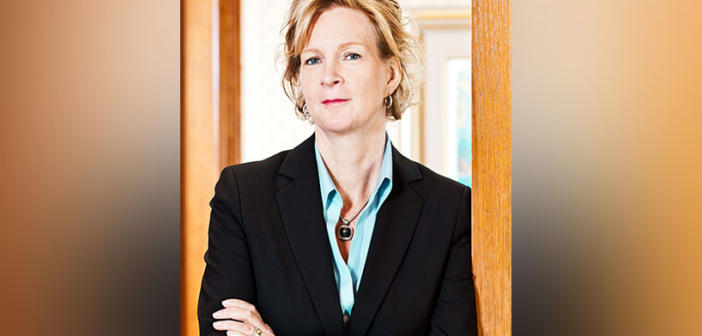
Heather McCrory didn’t just get started in the back of the house. Her first job in hospitality was in laundry at the Fairmont Banff Springs, in Alberta, Canada, as part of her work term during college. “Back of the house,” McCrory said in a recent interview with HSMAI, “and underground.” 

Within a year she moved into sales, and eventually ended up as the property’s director of sales and marketing. She stayed with Fairmont, moving from property to corporate and back several times, and when AccorHotels bought the company in 2016, she became Accor’s executive vice president for operations in North and Central America. Recently she was named Accor’s CEO for North and Central America.

Not a bad run for someone who wasn’t gunning for a hotel career in the first place. “I don’t think I did really know what I wanted to be,” McCrory said. “I was actually going to school for finance and accounting. I was more in tune to going that route than anything in sales and marketing at that period in my life, so I can’t say it was a calling, but it was something that as soon as I was in the industry, I fell in love with it.”

What skills were most helpful when you worked in sales and marketing?

I think the two most valuable sales skills were, one, listening to understand, because obviously as a salesperson we would have handled a lot of group contracts, and trying to understand what the group wanted — in order to make a successful event, you needed to make sure you were really listening. I find that, to this very day, half the problems that you encounter are because you didn’t listen or didn’t understand what the real issue was.

The other one is — win-win is too much of a cliché, but negotiating so that both people feel good about it. You can walk away with a positive outcome for both parties.

When you’ve moved from the property level to the corporate or brand level, what has been the key to managing that transition?

Managing the transition is interesting, because of course when you’re in the field, you have no idea what corporate is all about. At the end of the day, I think the biggest difference is that, here at corporate, it’s more of strategy, more guiding the ship. At property, which is a lot of fun, too, it’s more day in, day out, hit your numbers, achieve the objectives, provide a phenomenal guest experience, have great interaction with your colleagues. It’s quite a team environment. They’re really, truly two different jobs. As time goes on and you become more and more comfortable with the corporate role, it ends up being the same thing with the team, just at a different level.

How has your background in sales and marketing helped prepare you for your role as CEO?

I am very proud of the fact that I came up through sales and marketing. It’s an incredibly useful skillset. I think sales skills are universal, because every single day I’m selling something — whether I’m selling someone on why they should join our company, or whether I’m selling someone on why they should have our brand. You’re always selling, you’re always listening to understand and make sure you’ve put the number-one reason on why it would make sense for that person. Sales skills are part of my success. They’re part of what is my makeup and how I even think about things and what you need to get done. To me, it’s fundamental to the CEO role.

What are your priorities as CEO?

I have a few priorities, but my number-one priority is to grow the organization, which frankly goes right back to selling. We have 12 brands here in North America, but the company has 38 brands, and they’re great brands. They’re not very well known in North America, so really expanding the company in terms of people knowing our different brands, what our capabilities are, and growing the number of units that we have in North America. That is my number-one job and it’s my number one objective to get done.

Last book you read? I’m reading Thatcher, by Jacob Bannister, and it’s very, very interesting. Great lady.

Favorite vacation spot? Our cottage up north on Lake Huron.

First paying job? I worked in the flower department at a grocery store.

Bucket-list goal? Having traveled so much, the one place I have not been to is New Zealand. I would love to go spend a fair amount of time there and explore New Zealand.


Is integrating sales, marketing, and revenue optimization part of that?

I’ve always seen them as integrated. Not that I was ahead of the curve or anything like that, but having worked as a director of sales and marketing in big group houses and having to make all those decisions about whether you take groups or you take transients is very much a revenue-management role, and how much of your allocation of your inventory are you putting to each market segment. To me, the whole revenue management, marketing, positioning the hotel — and, frankly, nowadays I’d even say total hotel revenue, whether it be retail, F&B, everything — I really see that as something that is truly the director of sales and marketing’s role and responsibility, and will continue to be more and more so as it goes forward.

How do you foster that mindset?

It’s something I’ve been dealing with my entire career, because revenue management in particular is becoming more of a discipline. It’s actually always reported into sales in our organization — when I was VP of sales, revenue management was one of these vice presidents who reported to me. In this organization, I’ve been around for a very long time. Everyone’s quite aware of my way of thinking on this, and as revenue management has become more and more important at other brands and they report to general managers. We make concessions, and we do what we need to do in order to maybe attract the right people. But the idea is that they’re a team, and it really truly is that group of people who have to maximize the revenue. Even if there’s a situation where not everyone is 100-percent aligned on where the positions fit perfectly within an organization, we’re fairly flexible on how we make it work with the team.

What are some new trends in the industry that really excite you?

One that is exciting me most these days is the idea of all the different disciplines moving under one umbrella of hospitality. Whether it is something like WeWork, or we just rolled out a new one that’s called WOJO, it’s that sort of piece of the puzzle. It’s not just about hospitality, but it’s about one fine stay. It’s about, wherever a guest wants to stay, that a product’s available. It used to be very dispersed — all these different business units — but now it’s becoming more and more under one umbrella. I think that’s a very exciting trend, because I think it allows the hospitality industry to continue to grow and morph and to listen to our guests.

Engaging guests with authentic experiences

By Robert A. Gilbert – President and CEO of the Hospitality Sales & Marketing Association International (HSMAI)

The state of the art in hospitality digital marketing involves engaging guests more proactively — sometimes before they even think about connecting with you. 

Preparing for a Downturn When You’ve Never Been Through One

By Christian Boerger, CRME, CHDM, Corporate Director of Revenue Strategy, Pacific Hospitality Group, and a member of HSMAI’s Revenue Management Advisory Board 

The Great Recession is 10 years past. Millennials and members of Generation Z are projected to make up more than 50 percent of our workforce by 2021. And some type of economic downturn seems to be on the horizon — whether that’s a slowdown, a recession, or a full-on crash.

All of that adds up to a sobering realization: If a downturn does happen, our companies will go through it with many employees who have never experienced one before. On a recent call for HSMAI’s Revenue Management Advisory Board (RMAB), I led a discussion about how we can help prepare our younger colleagues for a bear market. Here are six takeaways from our conversation:

1. Recognizing trends: “The first thing that would be helpful to teach someone who hasn’t necessarily gone through a full economic cycle is early recognition and pressure testing as it relates to our markets,” one RMAB member said. “At what point do we recognize a trend as a risk, or recognize a softening perhaps as incidental? We try to get ahead of overreacting, but also recognizing early and coming to terms with reality.

“There’s a lot of information right now about a slowdown in Chinese growth,” the member continued, “and what we’re finding is that the actual revenue managers [in Chinese hotels] are recognizing, and they’re happy and careful to react to softening conditions. But we’re finding we’re really having to get the message to their leadership, because their ability to execute strategy can sometimes be thwarted by managing directors or asset managers not wanting to agree with or recognize the situation that they’re in. So, giving them tools, talking points, and also support where we step in and validate these trends that they’re seeing.”

2. Reading the data: “In the last downturn, we really relied on more traditional metrics, like a slowdown in conversions,” an RMAB member said. “The difference now is that there’s so much more transparency outside of your own transactional environment. We can see search patterns — all that digital marketing data and behavioral data is what we’re pushing them to look at to be able to start recognizing. That’s one of the things where the progression of technology — the melding of revenue management and digital — will give us a better chance to combat a softening market than we had the last time around. We just have to teach people how to do that.”

This is quite true: Technology has advanced greatly since the last downturn and will be a crucial part of our response to the next one — but only if everyone is familiar with it. We must make sure our teams are fully trained on the latest platforms as well as our processes and procedures. The goal is for everyone to know not just what to do but when and how to do it.

3. Leading vs. following: “We have always said, ‘Don’t be the dumb competitor. Don’t be the one who drags the market down,’” one RMAB member said. “Our regional directors are constantly working with the hotels to ensure that there is that education piece, to say, ‘If you’re seeing softening trends, then we need to have a conversation about some strategies that you could actually put in place that are going to target specific segments or specific channels as opposed to going out with an overreaching strategy.’ It’s our job as people who have lived through this before to educate.”

4. Sharing history: “The more that we can look at historical trends from past downturns and line it up with STAR and your own portfolio trends,” an RMAB member said, “and evaluate how you did and spend some time with them and say, ‘This is what we learned from the last downturn that we’re really trying not to repeat this time around’ — I think that’s going to resonate with them.”

5. Preparing for possibilities: “We’re really encouraging our hotels to ensure that they have completed scenario planning,” one RMAB member said. “So, if X happens, what are we going to do? Or if Y happens? That way, there’s a playbook for different scenarios and they’re being thoughtful about it. They know ahead of time, depending on what type of slowdown happens, everyone’s prepared and has discussed it already and can just start implementing.”

In fact, these tools can be used to help mitigate other external challenges, including natural disasters. Beyond that, for me, the best way to prepare for the worst is to challenge the status quo. The company that does things differently from the rest will be much better off during times of distress.

6. Looking for alternatives: This didn’t come up during our call, but it’s something I think is equally valuable when it comes to preparing for a downturn. We all must impress on our younger colleagues the need to diversify, looking at alternative distribution channels and uncovering new revenue generating opportunities. Indeed, that is good advice no matter how well the economy is performing.

The Next Big Things in Hospitality Marketing

As part of their ongoing visioning activities, members of our advisory boards recently told us the big issues on their radar for 2019. Below are the top five responses from our Marketing Advisory Board, with a representative quote for each one. Read the issues that our Sales Advisory Board spotlighted here, and that our Revenue Management Advisory Board shared here.

1. Consumer behavior: “Finding ways to monetize the shift from traditional behavior to ‘micro moments’ is critical. How do we message consumers with information they need, when they need it? How do we make transactions on mobile devices faster, easier, and secure? How do we respond to an increasingly mobile world in a way that provides the best possible experience for consumers?”

2. Voice: “Is voice search really the next big thing — and if so, how can hotels take advantage of it?”

3. Personalization: “How far do we take personalizing the guest experience online and offline?”

4. Disrupters: “Increasing inventory of alternative accommodations — how/will this impact us?”

5. Privacy/customer data: “Ethical use of customer data — GDPR is a harbinger of more regulations.”

The Marketing Advisory Board will explore these and other issues in 2019. Look for some of their insights as part of HSMAI events, content, and other programs throughout the year.

— Juli Jones, CAE, Vice President, Hospitality Sales & Marketing Association International (HSMAI)

Real-Time Data: Increased Profits And Successful Upselling

Excerpted from the HSMAI and Cvent White Paper: Room Blocks in Real Time

When a hotel team has up-to-date data at their fingertips, maximizing return on investment, RevPAR, and profitability feel like more attainable goals. “With the dashboard, [we’re] able to access realtime data and the [room] block from the desktop or a cellphone,” said Richard Taylor, director of sales and marketing for Pinnacle Hotel Harbourfront in Vancouver, British Columbia. “It really does allow for flexibility, especially for our revenue team, to maximize room blocks.” That lets Taylor and his team The greatest advantage is for the meeting planner to be able to see information in real time without even having to email or call us. — Lorena Aguilera, JW Marriott Phoenix Desert Ridge Resort & Spa quickly add more rooms to a block or make other tweaks. It also means they’re spending less time entering or mapping a rooming list, giving them more time to sell higher-value items, such as meeting breaks.

And it makes a huge difference in upselling. Software that displays a snapshot of how a hotel’s upselling is going at any particular moment — if it’s trending up or down from last month, for example — also allows for quicker, better decision-making. Upselling is about personalization, and because group members share the same stay dates, they often occupy a similar demographic, which makes them easy to target them with relevant offers.

For example, Riza Mina, reservations manager at Lansdowne Resort and Spa in Leesburg, Virginia, uses online booking software to upsell spa treatments to groups. “Usually I look at a group’s dates, then I look at our spa bookings and how many leisure guests we have,” Mina said. “If I see that we have plenty of open spots, I offer them a 15- to 20-percent promotion via an email campaign to the group. It’s great, because I don’t have to ask marketing for an email list.”

Many times, the person staying in a hotel room isn’t the person who actually made the reservation. A software solution that is built into a group’s registration system gives attendees the chance to customize their experience, whether it’s upgrading to a room with a view or booking a dinner reservation at the hotel during a free night. More often than not, attendees bite. “With the revenue we’ve seen [from room upgrades],” Taylor said, the software “has paid for itself a couple of times over.”

Get the rest of the story: Download the White Paper

From WOW! to WHOA! at CES

By Dr. Lalia Rach, Partner, Rach Enterprises

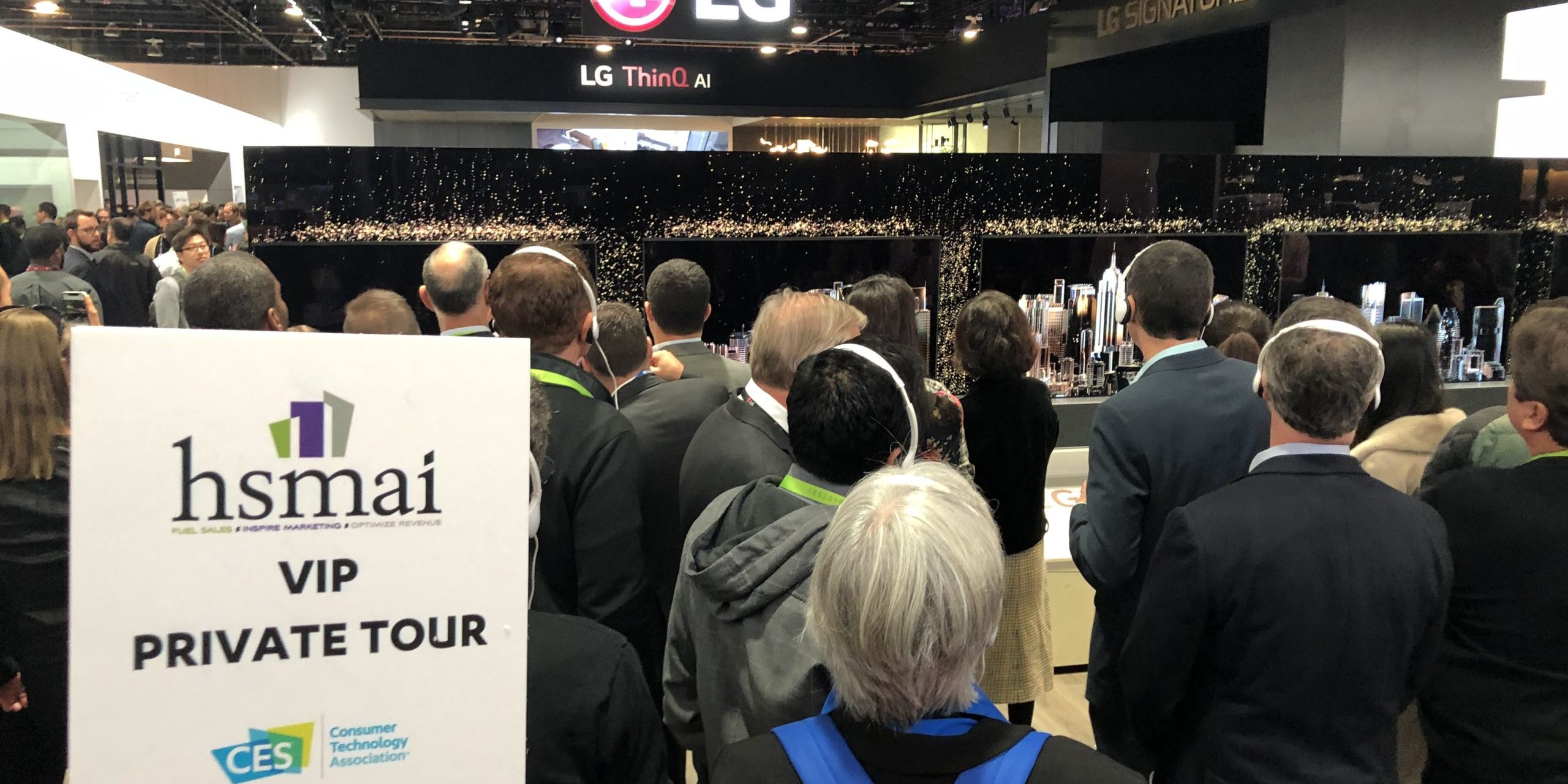
In early January, HSMAI hosted 10 hotel professionals at the 2019 Consumer Electronics Show (CES) in Las Vegas as part of its Executive THINK (Travel, Hospitality, Innovation, Networking, and Knowledge) program. CES continues to get bigger — this year’s show featured 4,500 exhibitors, including developers, suppliers, and manufacturers of hardware, software, and content, spread over 2.9 million net square feet of space, showcasing double the number of startups at 1,200 and providing 300 conference sessions. The show attracted 188,000 attendees, 34 percent from outside the United States, and has grown to 11 official venues in three primary sites: Tech West at the Sands Expo & Convention Center and The Venetian Resort Hotel Casino, Tech South at the ARIA Resort & Casino, and Tech East at the Las Vegas Convention & World Trade Center, the Westgate Las Vegas Resort & Casino, and the Renaissance Las Vegas Hotel.

Based on recommendations we received after last year’s tour, we spread our visit over two days, with the morning of day one spent at the Sands Expo and day two at the Las Vegas Convention Center. This left time each day to visit CES’s C Space area at the ARIA, where we heard from CEOs such as IBM’s Ginni Rometty and attended meetings with Google, Pandora, and Pluto TV.

HSMAI also arranged a curated tour of the show on Tuesday and Wednesday morning led by Ben Arnold, senior director of innovation and trends for the Consumer Technology Association, which produces CES. We visited 12 companies during the two-day tour, all selected based on their direct relevance to the hospitality industry or to expand attendees’ thinking about technology that may change the hotel business: 3M, Procter & Gamble, Kohler, Honeywell, ShadeCraft Robotics, Devvio, GoPro, LG, Bell, BrainCo, Amazon Alexa Automotive, and Mantis Vision.

Wow’s were found everywhere. There were flying cars — seriously, with one company, PAL-V, taking orders for a gas-powered three-wheeler with fold-out rotary blades on its roof and a propeller at its rear. There was perennial favorite LG, whose pavilion featured a curved-screen ceiling and walls displaying the beauty of OLED (organic light-emitting diode) technology, which is a gamechanger for hotel lobbies and event space. And, unexpectedly, I discovered a childhood dream come true in a programmable wall-drawing device called Scribit, which can turn a wall in your lobby — or anywhere, for that matter — into an experience.

For me, there was one exhibit that was a whoa: Kohler. On one hand, the home-products manufacturer’s pavilion offered an over-the-top display of luxury in every area of the bathroom. Veil mirrors with a touchscreen interface provide lighting to improve your mood and help you sleep better, while an imbedded Alexa app can program your shower temperature, flow, and lighting, or fill your tub just as you like it.

But, call me old-fashioned, out of step, or simply a prude, but every now and then I encounter an ordinary item that has been accessorized with smart technology and I think, Really, seriously, someone was paid to come up with this? This happened to me when I saw Kohler’s line of intelligent toilets. At $7,000, the most expensive of these toilets has built-in surround-sound speakers, ambient mood lighting, and Amazon Alexa voice controls. Having music and great lighting in your bathroom is not a new desire, but for me it’s a bit of a headscratcher for those features to be incorporated into your toilet. To be fair, the intelligent toilet has a seat warmer, a sanitation wand, and variable flush modes. But I am uncertain why I would want to talk to my toilet — or worse, have my toilet talk to me! In the end, the Kohler exhibit highlighted our growing desire to have technology everywhere, even where you never imagined you needed it. For the hotel industry, it is a clear demonstration that high-end consumers will expect accommodations to match what they have in their homes, which is a challenge at every level.

Regardless of my struggles with the intelligent toilet, I came away with three insights from our Executive THINK program at CES:

1. Game-changing technology takes more time than originally anticipated to actually create a difference.

 It’s been more than five years since 4K TV was introduced at CES, starting the more-pixels craze. Content for 4K has been slow to develop and is not yet the standard, but that hasn’t stopped TV manufacturers from touting 8K TVs at this year’s show. It was surprising that both LG and Samsung readily admitted there is not much viewing to be done in 8K — but they were plugging it just the same! In other words, it’s here, but it will be some time before you can appreciate the benefits of the advanced technology. Also, be aware that it requires a very sophisticated and discerning eye — and a mega-screen, 85 inches or more — to perceive the difference between 8K and 4K.

 There is no doubt we have become a screen universe. Whether it’s a phone, tablet, or monitor, we are spending hours each day staring at them. But with this extreme use comes issues — primarily bandwidth and download time. Speed is the name of the game. We are currently a 4G world, and while 5G was touted as a done deal by the likes of AT&T and Verizon during CES, it is likely that we are at 4.5G, with true 5G capabilities not being realized until 2020 at the earliest. The infrastructure and equipment needed to utilize 5G technology is just beginning to be produced, with 5G smartphones coming to market later this year, according to companies like Samsung, which highlighted its 5G prototype.

2. Technology with more immediate usability can become dominant almost overnight.

 Last year, CES was awash in the promise of self-driving technology. There were prototypes of self-driving cars and trucks, motorcycles that could be programmed to awaken and follow you in anticipation of a fast getaway, and a suitcase that followed you through the airport, freeing you from manual labor and giving you more time to tweet! I remember thinking, Okay, interesting, but…. This year, it was all about putting voice and touchscreen technology into vehicles to provide increased usability to the driver and enhance the experience of passengers. The Chinese startup Byton introduced a 48-inch dashboard display that replaces knobs and buttons with touch controls and offering media, maps, phone, and vehicle settings. Amazon Alexa and Google Assistant are going head to head to be integrated into the operating system of every car and truck on the road. These companies are determined to be in the driver’s seat when it comes to providing every possible voice-activated control, connection, and need for drivers and passengers.

 Bell introduced Nexus, a vertical takeoff-and-landing (VTOL) air taxi. While it is a prototype, this revolutionary product is expected to address many of our current transportation challenges — including inefficient infrastructure, overused roadways, and limited railways — and improve overall short-haul mobility. The Nexus is projected to be in use by 2025 and has the potential to truly disrupt our transportation system in a positive way.

3. Old dogs can learn new tricks.

 We’ve seen rollup screens in movies for a decade, and now the home-electronics industry — specifically, LG — is introducing a rollup OLED TV. Available later this year, the TV is just three credit cards thick and can be stored in box the size of a sound bar, out of sight, until you want to watch. To say it is cool is an understatement, as it will quickly be the thing to have. This is a space-design changer for living rooms, lobbies, and hotel rooms.

 Ranked 42 on the Fortune 500, 182-year-old Proctor & Gamble chose to exhibit at CES for the first time this year, which demonstrates that every company must be service- and experience-oriented, not simply product-driven. P&G is looking to regain its innovative spirit and bring its iconic brands to the cutting edge of technology, and chose to highlight skincare and makeup. Its exhibit underscored the generational changes that are upending many of our traditional strategies. P&G highlighted personal care for everyone — and while the company understood women may be a larger segment for skincare, its booth and products were designed to appeal to men as well.

 With technology that can evaluate the age of your skin and provide guidance on how to best maintain it, the absolute showstopper was P&G’s Opté Precision Skincare System, a handheld device that scans, detects and corrects facial blemishes, and reduces age spots. I did not expect to discover the advances that technology has brought to skincare at CES but left convinced that it was not a flash in the pan. While there were amazing products on display, the true purpose was for companies to demonstrate how they could help you use them more effectively — and also define the experience of using the them.

For the third year running, I will close with a repeat of what I wrote about CES 2016: “This was a singular experience, a rare opportunity to think differently about change, technology, and the hospitality industry. Perhaps the greatest benefit for those who participated will be the ongoing moments of ‘connectivity’ they will experience in meetings and conversations when traditional thinking dominates. They will be able to present ideas and knowledge based on their exposure to future reality!”

If you have never experienced CES, think about joining HSMAI’s Executive THINK program at CES 2020. It will cause your brain to overload and your feet to ache, but the experience will influence your thinking about every facet of the hospitality industry.