Transforming Talent Sourcing in the Hotel Industry: The Rise of the Gig Economy and Fractional Staffing Models

In the recently released HSMAI Foundation Special Report: The State of Hotel Sales, Marketing, and Revenue Optimization Talent 2023-2024, the second trend investigates how the gig economy and fractional staffing models are changing talent sourcing. Employers in the hospitality industry must adopt a marketing mindset to effectively attract and source the best talent. As businesses strive to fill critical roles in the post-pandemic world, it has become increasingly evident that traditional hiring approaches are insufficient to meet the growing demand for skilled professionals. The persistent shortage of skilled labor, especially in the hospitality sector, has created a challenging workplace environment. In North America, only 31% of workers report full engagement, with the majority either quietly quitting or engaging in negative behavior (Gallup, 2023). This talent gap remains a top concern globally, particularly in the United States, where over 75% of HR leaders identify it as a significant hurdle (Dean, 2023).  
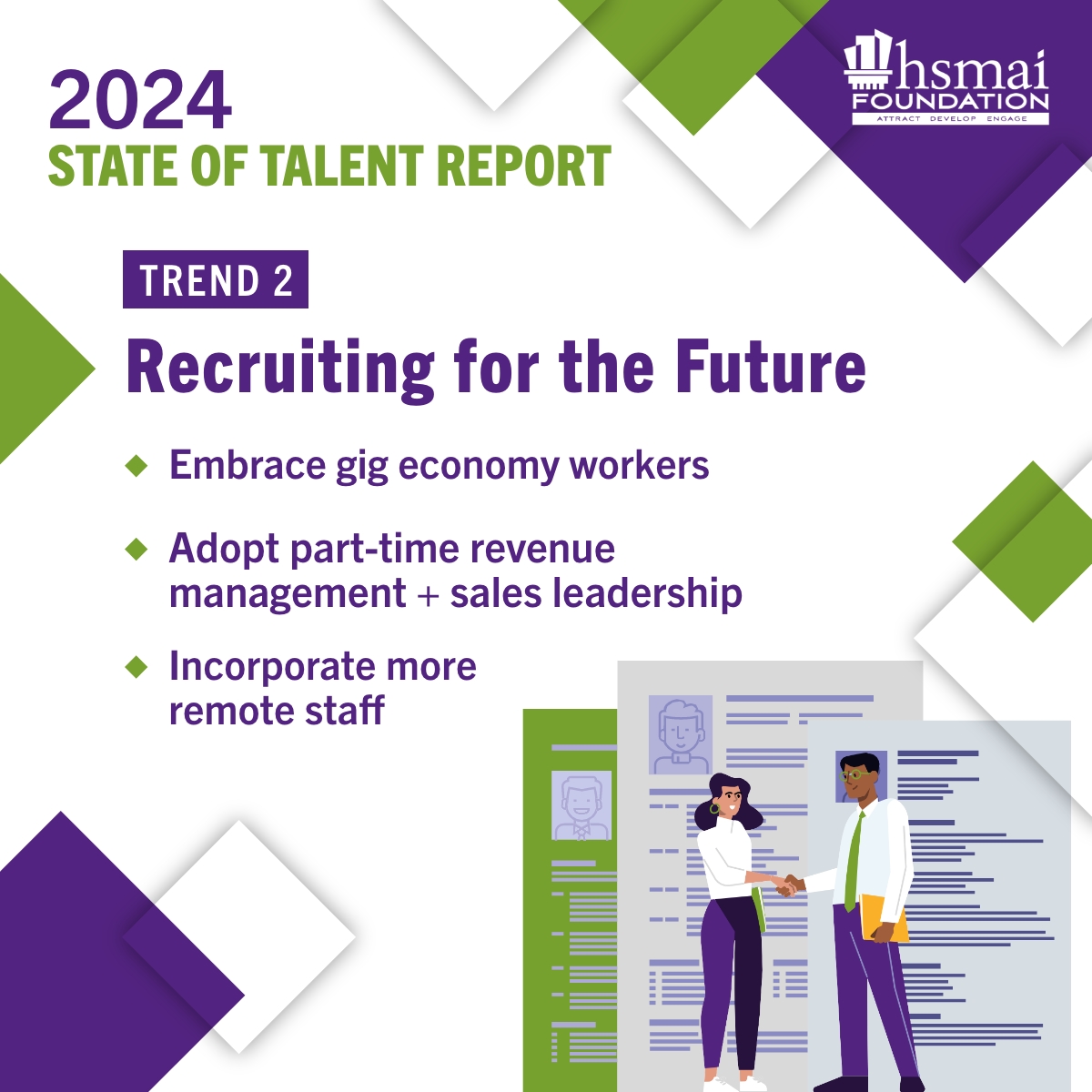
In a 2023 report by the World Economic Forum (World Economic Forum, 2023) businesses now perceive talent shortages as a more significant limitation to their performance than a shortage of capital. The scarcity of essential skills in the local labor market is seen as a more formidable barrier to transformation across various industries (Dean, 2023). 

As labor and talent challenges persist, independent contractors and the gig economy have become integral parts of the workforce. Between 2016 and 2021, the gig economy experienced a 31% growth, with projections indicating that contract employees in the U.S. will surpass 90 million by 2028 (McKinsey & Company, 2023).  

McKinsey’s American Opportunity Survey (AOS) found that 36% of employed respondents, equivalent to 58 million Americans, identify as independent workers. This figure includes not only gig workers but also highly paid professionals in various fields, highlighting the diverse nature of independent work. 

 A shortage of workers with specific skills has led to a growing acceptance of the Project Economy model, where workers are hired for specialized projects. This approach appeals to those who prefer the gig lifestyle and offers flexibility in employment arrangements. 

A report by Strategic Solutions Partners titled “Moving Beyond the Staffing Crisis” (Hoch, 2023) underscores the importance of gig workers in the hospitality industry. Gig workers are essential in filling roles that cannot be adequately staffed by full-time employees. They offer flexibility, crucial skills, higher pay, and the ability to work remotely.  

The hotel industry has evolved significantly, and the surge in gig labor has proven valuable, especially for management companies and brands. Gig labor allows swift access to skilled professionals for specialized roles. This agile approach enables companies to address specific needs promptly and effectively, such as new property openings, sales leaders with strong business development skills, Go-To-Market plans for new properties or properties that require repositioning.  

The use of fractional revenue management and sales leadership has been a trend for several years. As sourcing experienced talent in these fields becomes even more challenging, this model is gaining more traction. Tammy Gillis, a recognized sales industry expert, highlights the attractiveness of the gig labor model for sales professionals. She states, “Now more than ever, sales professionals are looking for work/life balance, and culture is one of the most important deciding factors in choosing their next employer. Many salespeople are tired of working on property and getting pulled into operations and want full-time remote or hybrid remote positions. They also value training, coaching, and support which the hotel industry does not consistently provide.” In this current labor market, attracting and retaining sales talent is challenging, and a fractional sales model allows hotels to focus on employee well-being and customer satisfaction without the burden of internal sales management. This is why many strong sales leaders are choosing fractional sales careers with organizations like Gillis and Associates. This offers them the ability to work from home in a dedicated sales environment with strong senior sales leaders that offer coaching, training, and sales enablement support.  

Owners and operators are also increasingly considering the cost of client acquisition, and a fractional sales model can be a costeffective solution, typically being only 1/3 of the cost of bringing a full-time resource in-house. For management companies, this approach can serve as a stop-gap measure while they search to fill vacant on-property sales positions, ensuring they remain competitive with active selling initiatives still in progress.  

The rise of gig labor is not a mere trend but a transformative force in the modern workforce landscape. For companies, it offers flexibility, specialized skills, and cost-effectiveness. Fractional talent models, especially in sales and revenue management, have become integral to the hotel industry’s success in adapting to post-pandemic challenges. As Bill Scanlon indicated, marketing to talent and having more personalized solutions to provide them with choice and fulfillment mirrors the kind of customer marketing all hospitality organizations are engaging in today, and they simply need to think of their employee base as another customer group. In addition, fractional employment solutions allow hotels, management companies, and brands to hire seasoned experienced talent at a lower cost that provides growth opportunities for their developing employees to have senior leader’s role modelling and supporting their learning journey.  


Key Takeaways 

  • Competition for talent means recruiting requires a marketing mindset and dedication to employer branding. 
  • Gig and independent workers are growing in relevance and value. 
  • Fractional revenue management and sales leadership continues to grow— both employees and employers value fractional employment. 

To read more about the top talent trends, download the  HSMAI Foundation Special Report: The State of Hotel Sales, Marketing, and Revenue Optimization Talent 2023-2024.  

Should Revenue Management be involved in Reputation Management?

Monika Morrobel, CRME, CHDM, Area Director of Revenue Management, Pyramid Hotel Group, HSMAI Revenue Optimization Advisory Board Member 

We know that reputation management is important, but how involved should revenue managers be in that process? I brought this topic to the leaders of the HSMAI Revenue Optimization Advisory Board to discuss our role in reputation management. Below are our top five takeaways.  

  1. Recognition of Reviews as Influential Decision Drivers: Consumer behavior is heavily influenced by reviews, with a staggering 95% of potential guests considering them before making a booking. 
  2. Direct Correlation Between Reviews and Revenue: Even marginal improvements in positive reviews can lead to substantial revenue gains, with a mere 0.5% increase potentially translating into a remarkable 25% boost in revenue. This underscores the tangible impact of reputation management efforts on the bottom line.
  3. Proactive Engagement with Reviews: Revenue leaders must spearhead efforts to raise awareness about the significance of reviews within their organizations. By highlighting the correlation between reviews and financial performance, revenue professionals can galvanize action across departments to improve review ratings.
  4. Accountability and Ownership: Operational teams, particularly general managers, play a crucial role in maintaining and enhancing a hotel’s reputation. It’s imperative to hold them accountable for addressing issues that impact review scores, fostering a culture of continuous improvement in service delivery.
  5. Comprehensive Organizational Approach: Reputation management should not be viewed in isolation but rather as a collaborative endeavor that involves revenue leaders, marketing and sales teams, and operational stakeholders. By analyzing data comprehensively, organizations can gain insights into the intricate relationship between service quality, reviews, and pricing strategies. 

Go Deeper:  

Why reviews and reputation management matter (fastcompany.com) 

Reputation and Its Risks (hbr.org) 

Questions for Your Team:  

  1. How much involvement does RM currently have in reputation management, and who “owns” the process?
  2. What responsibility should RM have in the process?
  3. Is RM currently making strategy decisions based on the state of reputation management, and should they? 
  4. Who is monitoring the revenue impact of reputation management?

Hospitality CMOs Tackle Five Key Challenges

Between managing growth challenges, rapid industry changes, and keeping up with evolving consumer behaviors – there’s no shortage of issues vying for a CMO’s attention. Last month in New York City, HSMAI brought Chief Marketing Officers together for an Executive Roundtable. Here are five of the top issues that CMOs are focusing on:

1. Growth Paradoxes: Balancing Ambition and Reality

Challenge: CMOs are often charged with scaling operations while maintaining quality, profitability, and operational efficiency. 

Silver Lining: An increased Average Daily Rate (ADR) and a commitment to travel highlight the industry’s strength. Hospitality brands are innovating with digital storytelling, enhancing the guest experience beyond traditional advertising and tapping into a rich narrative of travel enthusiasm.

2. Workforce Engagement: Bridging Generational Gaps

Challenge: Engaging a diverse workforce and bridging the motivational gap among different generations present ongoing hurdles. 

Silver Lining: The re-introduction of internship programs and the commitment to enriching educational opportunities underscore a proactive approach to talent development and intergenerational mentoring. These efforts are vital as the sector evolves, ensuring a pipeline of passionate, service-minded professionals.

3. Stakeholder Management: The Art of Diplomacy

Challenge: Managing expectations and fostering satisfaction among franchisees and stakeholders demands a nuanced approach. 

Silver Lining: There seems to be easier access to capital, signaling an investment in growth and stability. This financial flexibility allows for more strategic investments in property improvements and innovation.

4. Revenue Optimization: The Customer Journey

Challenge: The goal to optimize revenue streams has become more complex with the blend of physical and digital customer journeys. 

Silver Lining: Advances in technology are enabling more targeted and effective strategies. Our eagerness to embrace digital marketing avenues opens unprecedented opportunities for engaging with guests in meaningful ways.

5. Performance Anxiety: Striving for Excellence

Challenge: Concerns about maintaining brand performance, hospitality, and profitability are ubiquitous. 

Silver Lining: Overall, many continue to meet budgets and normalize leisure trends, trying to ensure future revenue streams are more predictable. The acquisition of new properties and the growth in small and medium-sized meetings reflect a continued demand for travel and face-to-face interactions. 

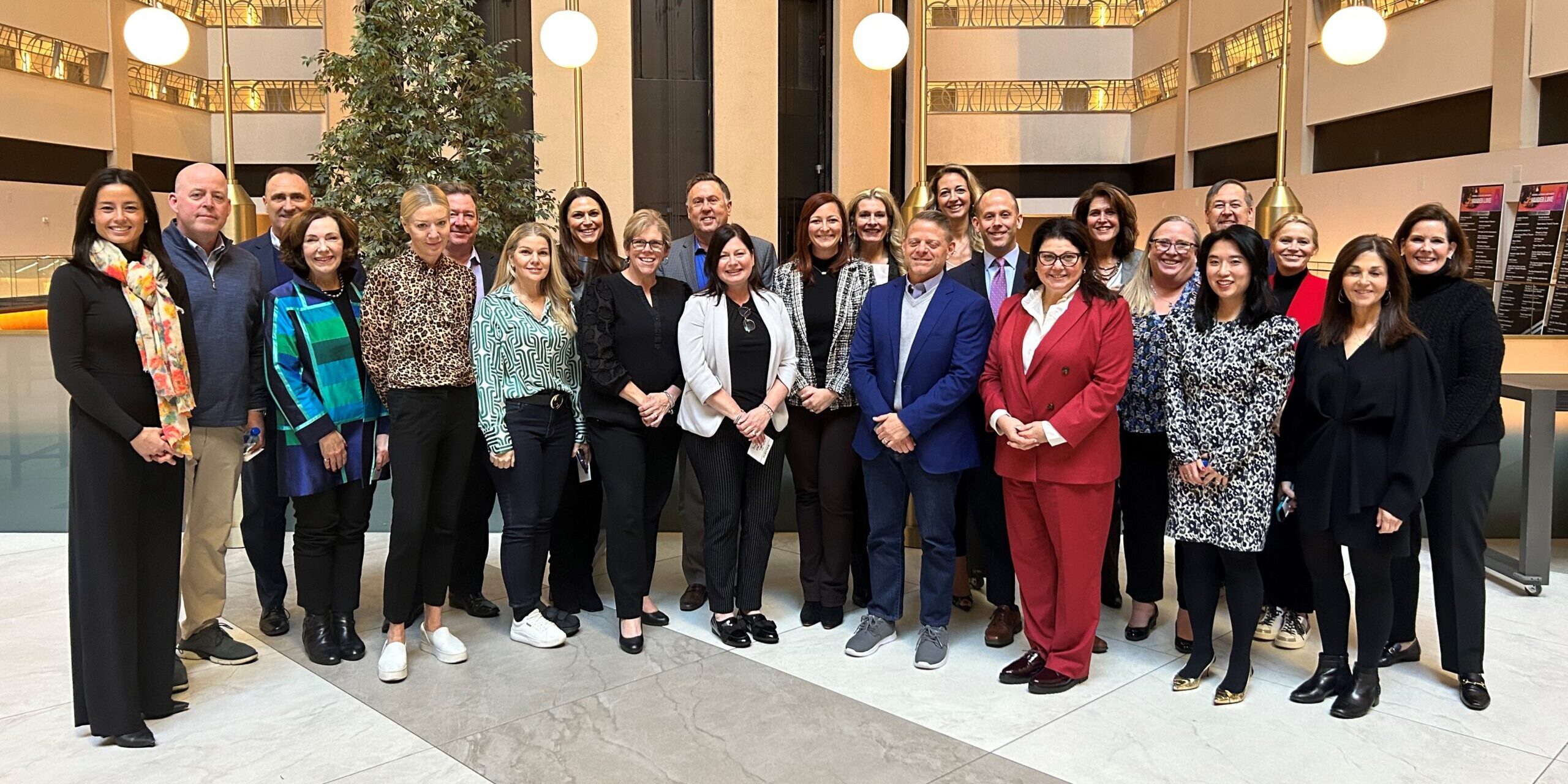
Thank you to our facilitator, Dorothy Dowling, Managing Director, Howarth HTL and to HSMAI’s co-hosts for this roundtable, Expedia Group, Lotus Marketing, and Sojern. We’re grateful for the candid discussion from the eighteen executives from sixteen companies, including:   

  • Associated Luxury Hotels International 
  • BWH Hotels 
  • CoralTree Hospitality 
  • Drury Hotels Company, LLC. 
  • Hilton 
  • IHG 
  • KSL Resorts 
  • Marriott International 
  • Omni Hotels & Resorts 
  • Outrigger Hotel Group 
  • Preferred Travel Group 
  • Pyramid Hotel Group 
  • Red Roof Inn 
  • Sonesta International Hotels Corporation 
  • The Boca Raton Resort & Club 
  • Wyndham Hotels and Resorts 

HSMAI hosts this unique by-invitation only forum annually forhospitality marketing executives. If you are interested in being invited next year, please emailBob Gilbert.    

Demographic Hiring Trends: Meeting the Needs of Multigenerational Workforces

In this excerpt from the HSMAI Foundation Special Report: The State of Hotel Sales, Marketing, and Revenue Optimization Talent 2023-2024, we explore the intricate dynamics of the hospitality industry, shaped by demographic trends and evolving workforce paradigms. My review illuminates the industry’s current landscape, characterized by both optimism and challenges as it emerges from the post- COVID-19 era. 

The U.S. Bureau of Labor Statistics anticipates a promising future for leisure and hospitality, projecting the sector to mostly recover pandemic employment losses; yet recovery is projected to extend until 2031, underscoring persistent industry challenges (TED: The Economic Daily, 

U.S. Bureau of Labor Statistics, October 17, 2022). According to the same agency, as of November 2023 almost 1.1 million job vacancies existed in the Leisure and Hospitality Sector, a vacancy rate of 6.4 percent. Additionally, Bain and Company in a report entitled “Moving Beyond the Staffing Crisis” predicts a significant shift of about 150 million jobs to older workers by the decade’s end, with older workers comprising over 25 percent of the workforce. This combined with a slower pace of entry of new workers into the workforce caused by fewer people entering college and making hospitality a career choice, citing both costs of education and financial rewards, will prolong the pressure currently felt by the lack of skilled workers. (James Root, 2023). 

Emily Dean’s research (Dean, 2023) highlights the significance of navigating a multigenerational workforce, with organizations now spanning four generations: 

  • Baby Boomers (1946-1964) account for 20-25 percent. 
  • Gen X (1965-1980) contributes 30- 35%. 
  • Millennials (born 1981-2000) constitute 35 to 40% of the workforce. 
  • Gen Z (2001-2020) makes up 5-10%. 


While there remain challenges (Magnus- Sharpe, 2022), the acceptance of a diverse workforce and the need to accommodate the changing workplace has grown to be widely accepted in the hospitality industry and in the corporate world in general. Many HR professionals (89%) (Dean, 2023) (Clarke, 2023) view a multi-generational workforce as a positive factor when it comes to business performance. According to a recent survey conducted by Bridge Partners LLC, 88% of large employers see their DEI initiatives as necessary, and 80% view them positively. DEI initiatives are essential to fostering a positive work culture. Through exposure to diverse perspectives, companies can improve employee morale, promote business ethics, and drive creative problem-solving and innovation. Companies that prioritize DEI (diversity, equity, and inclusion) are better equipped to respond to challenges, win top talent, and meet the needs of different customer bases. 

Several studies have come to the same conclusion, if companies want to promote innovative, successful, and productive workforces, there will be a need for bridging generational gaps and leveraging the unique strengths of each cohort (Dean, 2023). Organizations must also address inherent biases that hinder hiring and advancement across generations. Gen Z workers promise to be the most racially and ethnically diverse generation in U.S. history. Gen Z is projected to prioritize job flexibility and better work-life balance and resist many of the more restrictive management practices of prior generations (Gould, 2023, Rock 2023, Faraci, 2023).  

The Baby Boomer generation will continue to retire, but many will choose to prolong their time in the workforce. They can be a valuable resource for corporations as many of them will value passing on their skills and knowledge to younger workers and will be more motivated by such factors as personal growth, helping others, and having a strong team spirit (Root, 2023). 

We’ll now explore the impact of demographic shifts, the staffing crisis, and the evolving multigenerational workforce, with a focus on their impact on revenue management, marketing, and sales. 

Throughout the report we will provide actionable strategies and recommendations for talent management, including: 

  • Ongoing training 
  • Cross-generational learning 
  • Flexible work arrangements 
  • Leadership transition planning 
  • Diversity initiatives 
  • Health and well-being programs 
  • Technological adaptation 
  • Supporting client relationship transitions 


Demographic Shifts and Staffing Crisis: 

The scarcity of candidates with skills in digital, analytical expertise, and evolving market dynamics poses challenges in talent acquisition across commercial disciplines. This necessitates investment in ongoing training programs to upskill existing staff and adapt to industry demands, as well as fostering cross-generational learning. Examples include establishing discipline specific digital academies, as well as intergenerational mentorship programs. 

Cross-generational learning is pivotal for sales, marketing, and revenue management, as older professionals bring invaluable wisdom and strategic skills and can cater to diverse customer bases and needs. Strategies include cultivating a mentorship-driven culture, diversity and inclusion training, and offering flexible work arrangements. Intergenerational mentorship programs and keeping experienced sales leaders in part-time roles, offers the added benefit of facilitating smooth transitions of account relationships – critical for customer retention. 


Key Takeaways:  

  • The future is promising for leisure and hospitality. 
  • Moving beyond the staffing crisis. 
  • 25% of workforce +65 years. 
  • Navigating four generations in the workforce. 
  • Advanced training programs for digital skills DIGITAL ACADEMIES 
  • Cross generational learning through mentorship and collaboration. 
  • Ongoing sales training to ensure teams are leveraging full sales enablement capabilities and customer changes. 


To read more about the top talent trends, download the  HSMAI Foundation Special Report: The State of Hotel Sales, Marketing, and Revenue Optimization Talent 2023-2024.  
The State of Hotel Sales, Marketing, And Revenue Optimization Talent

Executive Summary 

The trends influencing the hospitality sector talent, particularly in sales, marketing, and revenue optimization, have demonstrated consistency with previous years. However, it is important to acknowledge the significant developments and emerging shifts that are impacting talent within hospitality. This report offers insights into past and emerging trends while examining how the industry has addressed these issues. The HSMAI Foundation State of Talent Report is made possible with the support of the HSMAI Foundation’s corporate talent partners and individual donors and is authored by Dorothy Dowling, Managing Director, Horwath HTL, and a special advisor to the HSMAI Foundation board. 

The 2023 -2024 HSMAI State of Talent Report explores 9 key talent trends: 

01 Meeting the Needs Of Multigenerational Workforces 

  • Promote cross generational learning through mentorship and collaboration.  
  • Staffing levels are predicted to return to pre-COVID levels by 2031. There is a slow entry of new employees into the workplace and retention of older workers.   
  • Digital academies can provide advanced training in digital skills.  

02 The Rise Of The Gig Economy and Fractional Staffing Models 

  • A marketing mindset and dedication to employer branding is needed for recruiting. 
  • Gig, fractional, and independent workers are growing in relevance and value. 

03 Retention Through Upskilling, Reskilling and Upward Mobility 

  • Hands on learning can fuel the talent pipeline.  
  • Internal employment marketplaces can increase retention.  
  • Lifestyle contracts, development plans, and career mapping are expected. 

04 Transforming Employee Engagement 

  • Employee engagement is a pivotal metric.  
  • Listening and learning from employees’ fuels efficiency and productivity.  
  • Utilize dynamic employee engagement tools. 

05 Leadership Defines Culture and Organizational Purpose 

  • Leaders must connect the dots for teammates to contribute effectively.  
  • Employee well-being are foundational pillars in successful hospitality business.  
  • Upskilling investments to leverage new technology. 

06 Return to Office and Hybrid Work Models 

  • Culture and teamwork are fueled by intentional efforts like collaboration days.  
  • Some see in-office work as important for career growth.  
  • Discussion continues how fully remote employees are tied to different compensation models. 

07 Cross Functional Teamwork and The Evolution Of Commercial 

  • Cross functional teams require effective leadership, people development, collaboration, and training.  
  • Shared objectives and KPIs  help cross functional teams. 
  • Labor shortages and the changing demographics of the workplace make cross functional teams more important. 

08 The Rise of AI 

  • AI is indispensable, enhancing efficiencies across commercial functions.  
  • Embracing AI is becoming the key to unlocking its full potential. 

09 Prioritizing Emotional Wellness 

  • Employees value workplace cultures that prioritize personal growth and happiness. 
  • Leaders need to ensure employee engagement surveys to provide insights into employee well-being. 


To read the full report, visit: 2023 -2024 HSMAI State of Talent Report 

Top 4 Concerns Across HSMAI Advisory Boards for 2024

Every year each of the HSMAI Sales, Marketing, Revenue Optimization, and Global Distribution Advisory Boards scout important issues for the coming year. This article looks at four themes that cut across the commercial disciplines.  

1. AI & Technology

It is no surprise that embracing and leveraging artificial intelligence (AI) and technology was top of mind across advisory boards. There was a focus on automating processes to enhance efficiency and improve productivity.

2. Talent

The battle for top talent continues to intensify. Much like the HSMAI Foundation, advisory boards are prioritizing retaining, developing, and recruiting skilled professionals. Tactics include illustrating clear and compelling career paths.  

3. Commercial Strategy

Aligning sales, marketing, and revenue management strategies is more crucial than ever. Advisory boards are actively engaging in discussions on how to ensure these areas work in concert rather than in silos.  

4. Economics

With the constant flux of the global economy, advisory boards are deeply engaged in understanding the cost of sales, return on investment (ROI), and macro-economic trends. Staying ahead of economic shifts allows organizations to make informed decisions, mitigate risks, and seize opportunities as they arise. 

Travel Experiences in a Digital First World: Preparing for Disruption with the Rise of AI

Julie Hoffman, Global Director Industry Strategy Travel, Hospitality and Dining, Adobe 

This is the third installment in a series of articles sharing insights from our partners who presented at an HSMAI Chief Marketing Officer Roundtable 

Brief overview of research 

The last 3 years have brought unforeseen challenges to the travel industry and accelerated the need to simplify. More than ever, today’s businesses face pressures to evolve rapidly, catering not only to the demands of their customers but also the emergent technological landscape. 

5 challenges business face in retaining loyalty:  

  1. Competition in Loyalty Retention. 
  2. Rapid Market Changes. 
  3. Rise of In-Session Service & Support. 
  4. Scaling Personalization Through Maturity. 
  5. Massive Personnel Shortage. 

Today, it is not just about delivering but how quickly you can do it. Both digital and physical experiences need to be rapid, seamless, and aligned. Through our research we discover the evolving consumer behaviors and answer the questions:  

  • How many chances do we get before losing a customer?  
  • What drives loyalty in today’s world? 

Biggest Takeaways 

Brands that are digital-first are leading in personalization maturity. Online Travel Agencies (OTAs) currently set the tone at the initial stages of the consumer journey. Three findings to highlight: 

  1. Loyalty is hard to gain, but easy to lose. 
  2. Consumers are buying experiences, not products. 
  3. Speed, convenience, and relevancy are now more important than cost savings.  

We found that a delay of even 1,000 milliseconds can turn away customers, when their expectations are not being met. It is pivotal for brands to optimize their digital platforms. Brands need to offer an integrated journey, binding both digital and physical experiences for a genuinely personalized touch. 

Why is this Research Timely? 

AI has reached the disruption tipping point. Especially in sectors like travel, brands leveraging personalization through automation are seeing substantial returns. We have witnessed an acceleration in digital progress, operating at speeds 20-25 times faster than previously predicted. In this new era, speed and convenience form the backbone of loyalty. 

Implications for Marketing Professionals 

Consumers want a brand that sees them. Meeting this need for connection can cement loyalty. The integration of offline and online experiences is a necessity. Companies have the opportunity to utilize data from past interactions to enhance future engagements. Recognition, acknowledgment, and awareness are integral to hospitality and can significantly improve consumer relations. 

Understanding and adapting to these insights is not just about keeping pace but about moving ahead. 

Learn More 

Webinar: Driving Consumer Loyalty During Digital Disruption 

State of Personalization in Travel & Dining 

HSMAI Perspective: Unlocking Talent Trends – Insights from the State of Talent Report

Robert A. Gilbert, CHME, CHBA, President and CEO, Hospitality Sales & Marketing Association International (HSMAI) 

The hospitality industry is continually reshaped by transformative trends and innovations. The HSMAI Foundation Special Report: The State of Hotel Sales, Marketing, and Revenue Optimization Talent 2023-2024, a cornerstone resource for sales, marketing, and revenue optimization leaders, offers a roadmap for navigating these changes. This year’s report is more than findings and forecasts. It offers best practices, case studies, and suggested actions to improve talent outcomes across the commercial functions.  

The report is made possible with the support of the HSMAI Foundation’s corporate talent partners and is authored by Dorothy Dowling, Managing Director, Horwath HTL, and a special advisor to the HSMAI Foundation board. 

Key Insights  

This year’s report unveils nine crucial trends: 

  1. Meeting the Needs of Multigenerational Workforces 
  2. The Rise of The Gig Economy and Fractional Staffing Models 
  3. Retention Through Upskilling, Reskilling and Upward Mobility 
  4. Transforming Employee Engagement 
  5. Leadership Defines Culture and Organizational Purpose 
  6. Return to Office and Hybrid Work Models 
  7. Cross Functional Teamwork and the Evolution of Commercial 
  8. The Rise of Artificial Intelligence 
  9. Prioritizing Emotional Wellness 

Dive Deeper 

The State of Talent Report is an invitation to be a talent leader, championing models that thrive on research, inclusivity, and forward-thinking leadership.  

“Each of the 9 trends represents a piece of our industry’s talent puzzle,” said Lori Kiel, CHDM, HSMAI Foundation Chair and Chief Commercial Officer, The Boca Raton Resort and Club. “The State of Talent Report highlights the industry’s positive trends while honoring the adaptability and innovation inherent in hospitality.” 

Explore the full report and join the conversation on how we can collectively elevate the people at the heart of hospitality. 

The HSMAI Foundation is funded solely by individual and corporate donations. If you are interested in being a 2024 Corporate Talent Partner, click here.  The Foundation is also focused on building a bridge to the future of talent via individual, tax deductible gifts to the Century Campaign.  You can learn more and donate here. 

What’s On the Mind of Rising Sales Leaders?

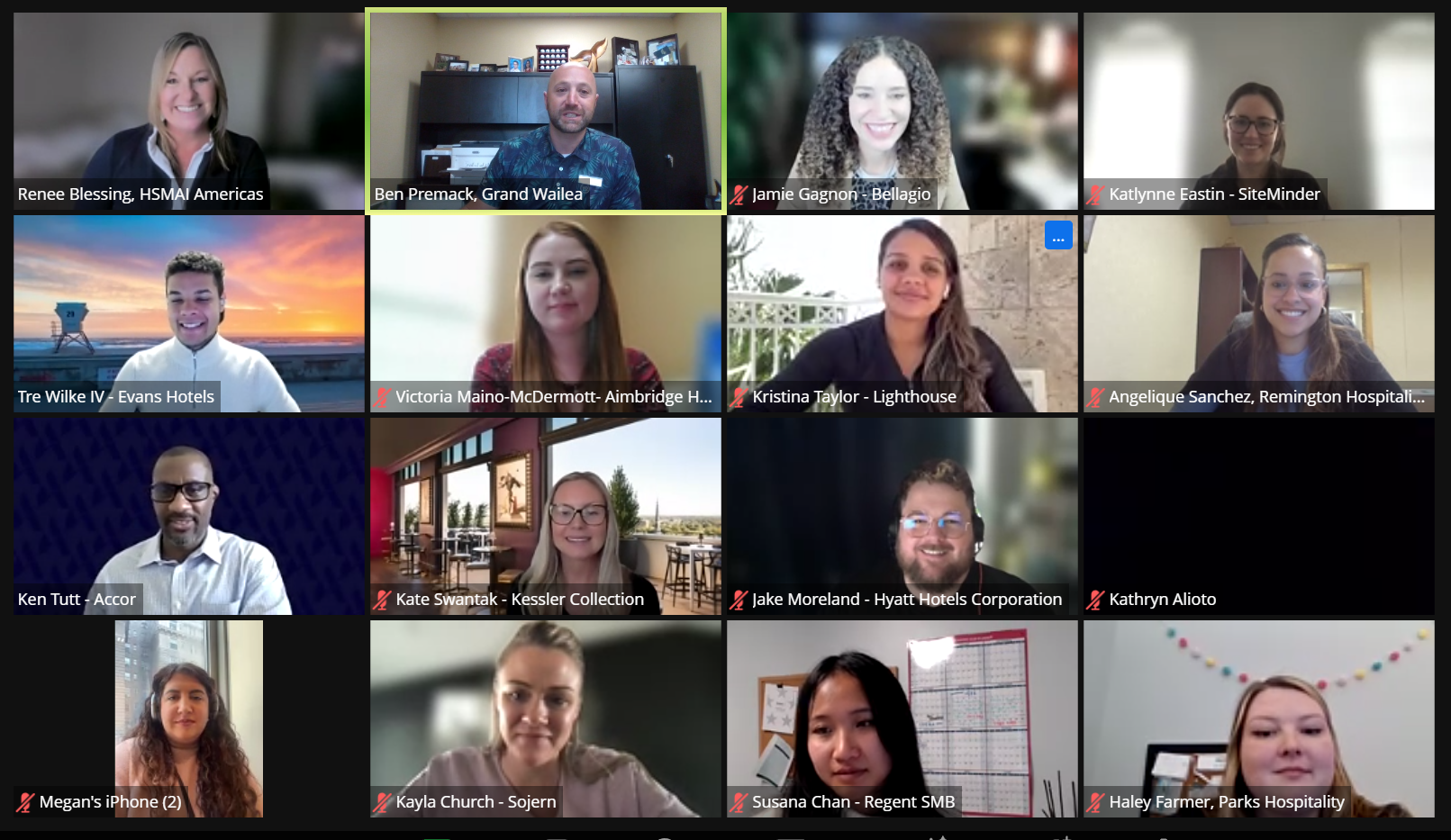
HSMAI’s Rising Sales Leader Council Members are the future of sales leadership, with new ideas and creative solutions. They are adapting to an industry that is influenced by economic uncertainties, rapid technological developments, and changing customer needs. At their first meeting of 2024, they reviewed their scouting reports, covering the topics they believe will be most relevant this year.  

  1. The Balancing Act of Inflation and Service Excellence

Rising leaders are focusing on how to maintain client relationships amidst rising costs. They are focusing on adding value through unmatched service levels. It’s all about showing appreciation and ensuring clients feel the worth of every penny spent. 

  1. Embracing Technology and AI with Mostly Open Arms 

From social media marketing to the latest event tech and AI tools like ChatGPT, technology is a game-changer. The group discussed how they use tech as an aid, but don’t forget the human touch that makes the hospitality industry so special. 

  1. Staffing Challenges and the Search for Talent Post-Pandemic

The pandemic left a void in experienced staff, but it also opened opportunities for reinvestment in training. Rising leaders are striving for a balance between attracting top talent and ensuring a healthy work-life balance for their teams.  

  1. Geographic Trends and Competitive Strategies

The impact of geographic location on business is significant, with trends varying from city to city. The council members thought that adapting strategies to local markets while keeping an eye on the competition is key to staying ahead. 

  1. Changing Customer Buying Habits

Rising leaders are brainstorming creative ways to engage clients and ensure prompt responses.  

  1. Preparing for Economic and Political Shifts

With elections, ongoing conflicts, and the resulting shaky economic outlook, 2024 has a lot of uncertainty. RSLC members are actively preparing for economic ebbs and flows, staying agile and informed. 

The 2024 Rising Sales Leader Council members include:  

  • Kathryn Alioto, Sales Manager | Raymond Management 
  • Susana Chan, Reservations Manager | IHG – Regent Santa Monica Beach 
  • Megan Chase, Sales & Event Manager | The Otesaga Resort Hotel 
  • Kayla Church, Sales Team Lead | Sojern 
  • Cecilia Quinones, National Sales Manager | Bellagio Resort and Casino 
  • Katlynne Eastin, Solutions Consultant Sr Manager, Global Strategic Accounts | SiteMinder 
  • Haley Farmer, Sales Manager | Parks Hospitality 
  • Danielle Fournier, Sales Manager | Hilton Denver Inverness 
  • Tayla Hull, Convention Sales Manager | ARIA Resort & Casino 
  • Max Ingerman, Convention Sales Manager | MGM Resorts International 
  • Jenna Keegan, Regional Director of Sales | Aimbridge Hospitality 
  • Victoria Maino-McDermott, Area Director of Sales | Aimbridge Hospitality 
  • Jake Moreland, Global Sales Manager | Hyatt Hotels Corporation 
  • Mandy Murray, Area Director of Sales | Aimbridge Hospitality 
  • Megan O’Neill, Convention Sales Manager | MGM Grand | MGM Resorts International 
  • Angelique Sanchez, Senior Sales Manager | New York LaGuardia Marriott 
  • Kate Swantak, Kessler Sales Manager | Kessler Collection 
  • Kristina Taylor, Regional Sales Manager | Lighthouse, formally OTA Insight 
  • Tre Wilke IV, Sales Coordinator & Business Development | Evans Hotels 

Behind the Scenes of the Adrian Awards: Judges Reveal Winning Strategies

Every year, the Adrian Awards demonstrate creativity, strategic excellence, and technological innovation. This year’s awards have not only highlighted the excellence that illuminates our industry but also presented a wealth of insights from the judges —insights that can benefit every travel marketing and PR professional. Here, we dive into the trends that distinguished winners from entrants in the eyes of the judges. Our judges have a rich history of involvement with HSMAI and a deep understanding of the industry’s evolution.  

1. Strategy Meets Creativity 

The essence of winning entries lies in their ability to blend strategic planning with creative execution. Campaigns that stood out were lauded for their “great content strategy” and “impressive results,” proving that a solid campaign foundation combined with innovative execution could create magic. But what sets the winners apart? 

The awards highlighted the undeniable power of creativity—be it through captivating visuals, compelling storytelling, or innovative content formats. Judges were particularly taken with entries that pushed the boundaries of creativity, offering audiences something truly memorable. 

2. The Importance of Technology 

This year, technology emerged not just as a tool but as a core element of storytelling and engagement. The integration of new technologies, from augmented reality to advanced analytics, demonstrated that the future of hospitality marketing lies in embracing innovation. Yet, as we marvel at the tech-infused narratives, a call for authenticity echoes, reminding us that technology should enhance, not overshadow, the human touch. 

3. Demonstrating Results 

In a landscape driven by data, the emphasis on measurable results has never been stronger. Entries that presented clear ROI and tangible outcomes captured the judges’ attention, underscoring the importance of not just crafting beautiful campaigns but also demonstrating their impact on business objectives. 

For Future Competitors 

The shift towards more engaging, technology-driven campaigns has set a new standard. Bolstering the trends, one judge shared some advice for future entrants: 

  1. Strategic Clarity and Comprehensive Reporting: Future entrants, whether hotels, agencies, or DMOs, are encouraged to lean into strategic planning and transparent reporting. It’s not just about winning an award; it’s about fostering growth and learning within your team.
  2. Results and ROI: While tangible results are crucial, the ability to weave a compelling narrative about your campaign’s impact can be just as powerful, especially when numbers are hard to come by. Either way, demonstrating results is key for winning entries. 
  3. Embrace Authenticity and Innovation: In a sea of advertisements, authentic and innovative campaigns stand out. Future entrants should focus on creating marketing messages that resonate on a personal level while leveraging the latest technologies to enhance their storytelling.

As we look forward to the 2024 awards competition, let’s take these lessons to heart, daring to innovate, inspire, and, most importantly, inspire travel in meaningful ways. 

Visit the Adrian Awards Winners’ Gallery for more insights.