Everyone Loves a Kitchen: The Changing Face of Extended Stay

Dan Reeder, Director of Revenue Management, Hilton, HSMAI Revenue Optimization Advisory Board Member 

Extended stay hotels are experiencing a dynamic shift, reflecting changes in travel trends, sustainability demands, and technological advancements. I recently led a discussion on the topic with the HSMAI Revenue Optimization Advisory Board and we delved into the challenges and opportunities this sector faces.  

Adapting to the Changing Travel Landscape 

Extended stay hotels are uniquely positioned to cater to a diverse array of travelers, from business visitors to families seeking longer accommodations. This could involve diversifying offerings to appeal to different traveler segments, such as providing more home-like amenities or flexible space for work and relaxation. 

Embracing Sustainability 

Sustainability is no longer a choice but a necessity. With 80% of guests prioritizing eco-friendliness, extended stay hotels must incorporate sustainable practices. This could include upgrades such as: energy-efficient appliances, electric car charging stations, and bicycle rentals.  

Staying Competitive 

In the face of competition from short term rentals, extended stay hotels need to emphasize their unique selling points. Celebrating strengths such as consistency in service, safety, and the comfort of a home-like environment can set them apart. Additionally, offering flexibility in services, like guest-led room turnover, caters to the modern traveler’s desire for personalized experiences. 

Leveraging Technology 

The impact of technology on extended stay hotels is significant, especially in areas like revenue management. Adapting technology to support various lengths of stay, ensuring seamless connectivity, and providing digital conveniences can enhance guest experiences and operational efficiency. 

The Economics of Extended Stays 

Economy extended stay brands are targeting the same business segment, emphasizing cost-efficiency. The lower turnover of rooms in extended stays leads to reduced operational costs, making this model financially attractive for both operators and guests. 

The Developer’s Perspective 

For developers, the extended stay model can be an initial step before transitioning to more transient accommodations. This strategy allows for a gradual market entry, adapting to the specific needs of the location and traveler demographics. 

Read Further:  

Questions to Consider:  

  1. How will extended-stay hotel brands adapt to changing travel trends in the post-pandemic world? 
  2. How will additional Extended Stay Brands impact nontraditional distribution channels that include Vacation Rentals and Corporate Housing. 
  3. How will extended-stay hotels incorporate sustainable and eco-friendly practices in their operations in the future? 
  4. Will extended stay hotel brands expand their offerings to cater to different traveler demographics or preferences? 
  5. What role will technology play in shaping the future of extended stay hotel brands, such as automation and contactless services? 

 

Leveraging Fintech in Travel

Nima Vaez, Director Key Accounts, Hopper, HSMAI Marketing Advisory Board Member 

Financial technology (fintech) in hospitality has generally been used to reduce processing costs, provide traveler flexibility, or minimize friction in expense reimbursement for business travelers. The need for simplifying booking, rebooking, and payment processes for travelers has been highlighted post-pandemic. There is a high potential for growth within the industry if tech solutions are properly understood and applied appropriately. In a recent gathering of the HSMAI Marketing Advisory Board, I brought this topic for discussion. This article delves into our discussion, offering insights into how fintech could shape the future of hospitality. 

The meeting highlighted fintech’s potential to revolutionize the sector, and AB members noted its increasing significance at both strategic and operational levels. The integration of fintech solutions is seen as a vital component in enhancing customer engagement and operational efficiency, from small boutique hotels to large chains. 

We also discussed the challenges in adopting fintech solutions. Issues were raised such as selecting the right fintech tools, ensuring seamless integration with existing systems, and maintaining high-quality operational service delivery are central concerns. Overcoming these obstacles is essential for companies to fully benefit from fintech advancements. Some raised questions about whether fintech is more attainable for larger hotel chains, or if smaller enterprises can also effectively leverage these technologies. One challenge is the scalability and adaptability of fintech solutions – businesses of all sizes can benefit from these innovations. 

Innovation in fintech, driven by consumer feedback and market research, was a key point of emphasis. The discussion highlighted how consumer insights play a crucial role in shaping fintech solutions. Customer surveys and market analysis can drive innovation in fintech, tailoring solutions to meet evolving consumer needs and preferences. As the industry continues to embrace digital transformation, understanding and leveraging fintech will be key to staying competitive and meeting the changing demands of travelers. 

Read Further 

Questions For Your Team 

  • How familiar are you with fintech?  
  • Do you see your own companies using fintech solutions in the near future?  
  • What fears/obstacles/challenges need to be overcome when implementing fintech solutions? 
  • What other ways are you combating the need for more flexibility and ease of travel planning for travelers? 

From “NOW to NEXT”; Scenario Planning for Hospitality Sales and Marketing

Bart Berkey, Founder and CEO, Most People Don’t, LLC 

HSMAI hosted Sales Executive Roundtables in Long Beach and invited Bart Berkey to facilitate a session with the group, read on for his takeaways. 

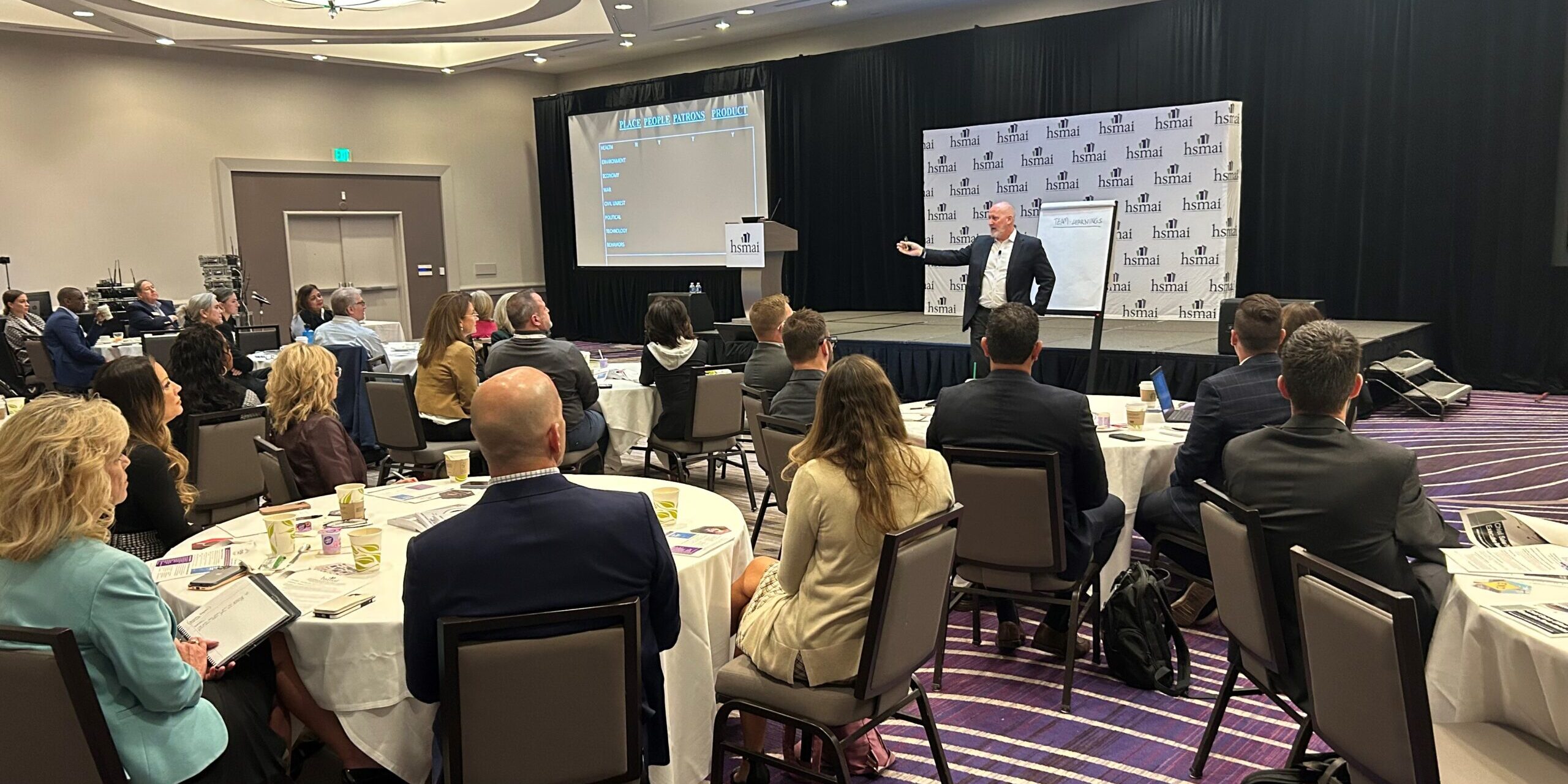
While it may be impossible to predict the future, we can certainly share, discuss, and consider EVENTS that may occur in order to be more prepared. This is the topic that nearly forty commercial executives contributed to during a group conversation facilitated by Bart Berkey, Founder of Most People Don’t. 

What is NEXT that we may know about or predict? What are we doing NOW to prepare and think about next? While external factors like the environment, climate, global war, civil unrest, political instabilities, and economic fluctuation can all affect hospitality, we focused on the PEOPLE component of our industry. 

This group of esteemed professionals shared that their greatest learnings of the past (during the pandemic) also revolved around PEOPLE and HOW WE TREATED OURSELVES AND EACH OTHER. 

  1. Resiliency, Creativity, and Innovation: We remained tough and strong in the face of uncertainty and adversity. We thought outside of the box to solve problems and resolve situations that we had never faced.
  2. Empathy, Care, and Humanity: We embraced the value of the human spirit and focused on how we treated others, how we felt, and together how we could rise. 
  3. Vulnerability, Teamwork, and Resources: We learned that we don’t need to be alone and that when we opened up, there were others that needed us as much as we needed them. This encouraged working together and using tools that we shared.

The following was then revealed for thoughts for NEXT Preparation in Hospitality Sales and Marketing and what we SHOULD DO NOW: 

  1. Share in advance our contributions on what we do in Sales and Marketing and how it impacts and affects our hourly colleagues. Ensure that the revenue producers as well as the operations team equally understand the impact customers and guests have on the hotel’s success and bottom line. Sales is not trying to make it difficult for anyone when they have a 2 am bus arrival… they are simply trying to create revenue to keep employees “employed” and “fulfilled” with meaningful and profitable work. 
  2. Focus more on MENTAL WELL-BEING, and don’t view it as a weakness. Embrace differences, provide resources, and talk more about FEELING GOOD and THINKING GOOD (thoughts). 
  3. Continue to ask, “how can I help you?” from a professional lens and a personal lens. Be selfless and giving in your time and attention. 
  4. Realize that our actions will either help to “create wellness” or “contribute to un-wellness.” 
  5. Look at each employee and colleague as a WHOLE PERSON and get to know them. Consider more than “just what their role is” and “what they do” and understand “WHO THEY ARE.” 

By learning from the past and applying lessons toward the future, the hospitality industry, with its focus on PEOPLE, will only continue to shine brighter for NEXT. 

Thank you to the executives from participating companies:   

  • AccorHotels/Fairmont 
  • Aimbridge Hospitality 
  • Associated Luxury Hotels International 
  • Atrium Hospitality 
  • BWH Hotels 
  • Concord Hospitality 
  • CoralTree Hospitality 
  • First Hospitality Group 
  • G6 Hospitality 
  • Kessler Collection 
  • KSL Resorts 
  • Loews Hotels 
  • Marcus Hotels & Resorts 
  • Opal Hotels Group 
  • Paliosociety 
  • Parks Hospitality Group 
  • PM Hotel Group 
  • Preferred Hotel Group 
  • Regency Hotel Management 
  • Remington Hotels 
  • Rosewood Hotels & Resorts
  • Sage Hospitality Resources 
  • Wyndham Hotels and Resorts 

HSMAI hosts this unique by-invitation forum annually for sales executives. If you are interested in being invited next year, please email Bob Gilbert.    

HSMAI Perspective: Advancing Women in Hospitality

Robert A. Gilbert, CHME, CHBA, President and CEO, Hospitality Sales & Marketing Association International (HSMAI)    


As we close another chapter and welcome the New Year, I reflect on HSMAI Foundation’s enduring commitment to our core tenets: attracting, developing, and engaging commercial talent in the hospitality industry. This year, in collaboration with Women in Travel THRIVE, we took a significant step towards our mission with the release of the “The Power of Mentorship” research paper. This study, a critical examination of mentorship’s impact on female leadership in hospitality, offers insightful strategies for nurturing the next generation of women leaders. 

The research, led by Dr. Emily Ma, Professor of Hospitality, University of Surrey and Dr. Laurie Wu, Associate Professor, Temple University, provides a detailed analysis of how mentorship programs can effectively support and elevate women in our industry. It emphasizes the need for organizations to embrace mentorship as a key tool in creating inclusive environments where women can thrive. As we enter 2024, this paper serves as a crucial resource, guiding our efforts to break down barriers and pave the way for greater gender parity in leadership roles. 

Silvia Camarota, Executive Director and Founding Chair of Women in Travel THRIVE says:  

“Through the collaborative efforts of HSMAI Foundation and Women in Travel THRIVE, our joint research emphasizes the transformative impact of mentorship on fostering and empowering female leaders in the hospitality industry. This partnership underscores our commitment to bridging the gender gap and nurturing a diverse, inclusive leadership landscape within our field. “

I couldn’t agree more. The new year brings new opportunities for collaboration, mentorship, and building bridges. The HSMAI Century Campaign is about “Building a Bridge to Our Brightest Future” more than a celebration of our past. It is a pledge to the future talent in sales, marketing, revenue, and global distribution fields in hospitality. By focusing on attracting diverse talent, creating through supportive networks, and promoting mentorship and leadership opportunities, we are setting the stage for transformative years ahead.  Individuals can support the Century Campaign and companies are encouraged to support the work of the HSMAI Foundation as a Corporate Talent Partner for 2024. 

Let us unite in this mission as we step into 2024, committed to fostering an industry that values diversity, champions mentorship, and celebrates the achievements of all its members. 

Happy holidays and best wishes for a prosperous New Year! 

Leadership Under Fire: Essential Lessons from Crisis Management

HSMAI Global Distribution Advisory Board  

From wildfires and hurricanes to system hacks and geopolitical conflict, we face crises in the hospitality industry on a regular basis. Crises are not just challenges but opportunities for developing leadership and strengthening our organizations. The HSMAI Global Distribution Advisory Board tackled this topic recently and came up with key insights on how to prepare for crisis situations. 

1. Effective Communication 

In a crisis, the importance of clear, timely communication becomes vital. Leaders must ensure they’re equipped to relay information swiftly. Does your organization have processes in place for crisis communication when systems are down (e.g., phones, emails, and/or message systems)? One member asked, “do you have a printed list of phone numbers for your team and your partners that you were able to pull out of a desk drawer?” This underlines the necessity of having accessible, reliable communication methods and multiple methods for contacting employees and partners.  

2. Business Continuity Planning 

The absence of a solid business continuity plan can expose significant vulnerabilities during crises. One AB member reflected, “The disaster recovery plan was something I had – the team knows the backup procedures, but the business continuity plan was what was really missing.” This speaks to the need for comprehensive planning to ensure that operations can continue seamlessly during and after a crisis. 

3. Leading with Calmness 

The demeanor of a leader during a crisis profoundly influences team morale. As a leader, how do you keep your team calm? How do you ensure that your team has what they need to run their part of the organization, but ensure that their team can also handle stress appropriately? Keeping calm and providing training ahead of and support during a crisis are important to maintain focus and efficiency under pressure. 

4. Learning and Improvement 

Crises are opportunities for introspection and growth. Reflecting on the crisis to identify areas for improvement is necessary to enhance future crisis response strategies. 

HSMAI’s Global Distribution Advisory Board monitors the landscape of hotel distribution and identifies ways that HSMAI can better serve the discipline. Members include:   

  • CHAIR: Sarah Fults, Vice President, Distribution, MGM Resorts International  
  • Sam Al Asmar, VP Revenue, Rotana Hotels & Resorts  
  • Brij Bhushan Chachra, CRME, Vice President – Revenue Management & Distribution, The Indian Hotels Co. Ltd.  
  • Andrea Daniels, Director, AMER Distribution & Intermediary Strategy, IHG  
  • Greg Duff, Principal and Chair of Hospitality, Travel and Tourism Practice, Foster Garvey PC  
  • Paolo Federico, Senior Vice President, Revenue Management & Distribution, Jumeirah Group  
  • Sydney Goodwin, Director of Distribution, Omni Hotels and Resorts  
  • Michael Hucho, Owner & Founder, michaelhucho.de Management Consultant  
  • Lauri Mussa, Corporate Director of Reservations & Distribution, Rosewood Hotels & Resorts  
  • Bela Nagy, SVP Distribution, Accor  
  • Vikram Pradhan, GVP, Global Revenue Management and Distribution, Wyndham  
  • Shelly Ransom, Director, Distribution, Hyatt Hotels Corporation  
  • Dan Reeder, Director of Revenue Management, Hilton 
  • Dan Wacksman, CHDM, CHBA, CRME, Principal, Sassato LLC  
  • Jeff Wermager, CRME, Independent  
  • Dave Roberts, Professor, Cornell Peter and Stephanie Nolan School of Hotel Administration  


Is Generative Al Over-Hyped or Does It Have Real Business Value?

Michael Goldrich, Founder & Chief Advisor, Vivander, HSMAI Marketing Advisory Board Member 

For the past year, generative AI has been everywhere, but is it all hype? I set out to explore this question with HSMAI Marketing Advisory Board at a recent meeting. There were mixed opinions in the room, highlighting both the potential and the challenges of integrating AI into the hospitality sector. 

3 Key Suggestions from Our Discussion:  

  1. Invest in AI Education and Understanding 
  2. Develop Clear AI Policies and Guidelines 
  3. Foster a Culture of Collaboration and Knowledge Sharing  

AI’s Promise and Pitfalls 

Our discussion revealed that some still view AI with a degree of skepticism, concerned about the hype and possible limitations of the technology. Others, however, see immense promise in AI’s ability to revolutionize various aspects of hotel operations. This divide underscores a broader need for more education and understanding of AI’s capabilities and limitations. 

The key challenge lies in balancing the opportunities AI presents with the risks it carries, particularly concerning data privacy and regulatory compliance. Adopting AI isn’t just about harnessing new technology; it’s about doing so responsibly. This requires cautious, informed approaches, coupled with clear guidelines and policies that mitigate potential risks while maximizing benefits. 

One consensus among participants was the vital role of continuous learning and knowledge sharing. To effectively leverage AI, hotel executives and staff need to understand its complexities and stay informed about the latest developments. This involves not just individual learning but also fostering a culture of knowledge sharing and collaboration. Regular discussions and exchanges of best practices can help create a more informed and prepared industry, ready to harness AI’s potential. 

As technology continues to rapidly improve, these insights can help set us up for success and make informed decisions about integrating AI into our organizations. 

Further Reading:  

Economic potential of generative AI | McKinsey 

Noy_Zhang_1.pdf (mit.edu) 

Goldman Sachs Research Newsletter 

Gartner Places Generative AI on the Peak of Inflated Expectations on the 2023 Hype Cycle for Emerging Technologies  


Top 4 Lessons from Commercial Strategy Insights 101

In today’s competitive environment, commercial strategy can give you an edge in efficiency, growth, and profitability. A cross-discipline working group of Rising Leader Council members set out to capture suggestions for those undertaking this journey. The insights, drawing on the wisdom of 67 industry experts, aim to help us understand the path to building a commercial strategy team.

4 Key Characteristics of Successful Commercial Strategy Teams:

  1. Strong Communication
  2. Broken Down Silos
  3. Effective Cross-Training Initiatives
  4. Lowered Barriers to Collaboration

The research highlights two dominant themes: the critical role of communication and the urgent need to dismantle organizational silos. These findings point to a widespread need for improvement in these areas, emphasizing that effective communication is not just a skill but a cornerstone for successful commercial strategy teams.

While some hotels have embarked on cross-training initiatives, the study suggests a deeper exploration into their implementation and impact. Understanding these programs’ effectiveness is key to enhancing operations and achieving a cohesive commercial strategy.

Collaborating with peers in Sales, Marketing, and Revenue presents its own set of challenges. These include misaligned goals, communication barriers, a lack of understanding and follow-through, and staffing issues. Overcoming these obstacles is essential for a unified and effective commercial approach.

The research outlines various tools to facilitate cross-training, such as online learning platforms, webinars, workshops, mentoring, and regular inter-departmental meetings. It also offers practical tips for working across departments, including over-subscribing at project inception, forming core teams with diverse representation, balancing communication, and maintaining a focus on revenue generation and outcomes.

Organizations that prioritize commercial strategy find significant benefits, such as enhanced collaborative communication, a deeper understanding across departments, a people-first attitude, and improved guest services.

For a more in-depth exploration of these insights, click here.

5 Place Based Marketing Strategies for Hotels

Davis Keeter, CHDM, Leisure Groups Team, BWH Hotels, Rising Marketing Leader Council Member 

At Best Western we have properties all over the globe. Domestically, there are a few key locations that we heavily market to make sure our customers know about. The biggest being our National Park hotels. You can find a Best Western location near almost all national parks in the US. This led me to spark the conversation with the Rising Marketing Leaders on how we are utilizing strategic hotel placement. Here are our top tips.  

  1. Utilize Strategic Locations: The success of a hotel often depends on its location. Whether it’s nestled in a national park or centered in a bustling city, location plays a pivotal role in attracting guests.
  2. Targeted Marketing Campaigns: Understanding guest interests is crucial. Hotels in sports-centric locations, for example, tailor their marketing to attract sports fans, creating a stronger personal connection.
  3. Emphasize Luxury and Exclusivity: For luxury hotels, highlighting the exclusivity and unique aspects of their location can add an extra layer of appeal and intrigue for guests.
  4. Capitalize on Niche Markets: Hotels like those along Route 66 exploit unique opportunities by being the sole option in some regions. This strategy creates a unique selling point that can attract guests.
  5. Innovative Revenue-Generating Strategies: Using targeted marketing like destination emails can generate incremental revenue. Partnerships with local brands provide guests with unique, location-specific experiences.

Read Further:  

Questions for your team:  

  • What are some key locations that your company has strategically placed a property? 
  • What are some new locations you would like your company to tap into? 
  • What are some niche hotel locations under your brand? 
  • How does your company leverage hotel location in their marketing efforts? 

Redefining Wanderlust: The Shift in Travel From a ‘Want’ to a ‘Need’

Nathan Kellar, Senior Director Distribution US/CAN + Global Wholesale, Marriott International, HSMAI Global Distribution Advisory Board  

Historically travel demand has been directly tied to economic conditions. Travel demand has increased during times of economic prosperity and declined during economic declines or recessions; however, COVID significantly impacted travel demand shifting it closer to a “need” than a “want.” This change reflects a deeper societal shift where experiences and exploration have become integral to personal fulfillment and well-being. 

Is this shift a temporary reaction or a long-term trend? How will it shape the future of travel and tourism? I brought these questions to the HSMAI Global Distribution Advisory Board to discuss with the experts in the room. Read on for the takeaways from our discussion.  

Short-Term Reaction or Long-Term Trend? 

Most of us are optimistic about the sustained growth in travel demand. Factors like increased domestic travel, the resurgence of events and conferences, and the emergence of newer markets all contribute towards this optimism. The rise of remote work and the desire for flexible work policies, particularly among younger generations, may recalibrate travel patterns, leaning towards more meaningful and experience-driven travel rather than traditional luxury tourism. However, several members of the Advisory Board cautioned against potential dampeners such as economic uncertainties and changing work dynamics – which could anchor people back to a desk and limit flexibility.  

Generational Shifts and Demographic Trends 

Younger generations, notably, are prioritizing travel and experiences over traditional life milestones like marriage or children and are often more interested in spending their disposable income to get out into the city or connect with nature. This generational shift signals a potential pivot in travel demand towards more wellness experiences and options that allow flexibility. On the other end of the spectrum, boomers are retiring and there’s an element of increased traveling there. However, not everyone is eschewing traditional norms, and geographically we see differences even among generations.  

Geopolitical Instability and Safety Concerns 

In the wake of COVID and with growing geopolitical tensions, travelers are increasingly prioritizing safety and security. This trend could lead to a rise in domestic travel or travel to destinations that are perceived as safer. There is an additional aspect on the impact of a conflict relative to the macroeconomic context that will need to be assessed and whether a potential for something like a rise in fuel prices would affect travel demand.  

As travel stabilizes, growth may not be exponential, but the industry can expect a more informed, experience-seeking traveler. 

Questions  

  1. As we approach 2024, given the current economic conditions, pressure from inflation and labor costs, do we anticipate that this prioritization on travel will remain, or do we see the market returning to historical norms? 
  2. How do we see the generational prioritization impacting demand in the future?
  3. Will geopolitical instability have a significant impact outside of areas of unrest?

Go Deeper 

HSMAI Insight: The Current Group Business Landscape: 12 Trends on the Relationship Between Group Travel and Hotel Sales

Maxwell Smith, Worldwide Sales Manager, Sports, BWH Hotels, HSMAI Rising Sales Leader Council 

Group business comes in many forms – corporate, sports, entertainment, government, religious, etc. – and it is an essential piece of hotel sales. With the dreaded pandemic in the rearview mirror, the Rising Sales Leader Council discussed group travel’s current state, how it has shifted, and where it is headed. 

Three Notable Shifts in Group Travel: 

  1. Business trips have transformed and continue to trend in the direction of incorporating personal or family vacations, mixing work and leisure more so than ever. 
  2. Tradeshows, company retreats, and corporate networking events are finding more creative opportunities for connection and are utilizing their community partners to create memorable moments for attendees, rather than purely focusing on just the event’s educational content. 
  3. There is increased flexibility in cutoff dates and greater potential for earlier room block reviews. These should be used to protect the hotel’s inventory by allowing them to closely monitor pickup and make strategic business decisions accordingly. 

Four Strategies Hotels Can Use for Attracting New Business: 

  1. When submitting a room block proposal, it is vital to showcase the uniqueness of the property and its amenities that differentiate it from competitors. 
  2. Adjust how concessions such as commission and rebates are structured by negotiating terms that make financial sense for the hotel, while still providing attractive rates for the group. 
  3. Utilize specific programs offered by Convention and Visitors Bureaus (CVBs) to attract group business, particularly when competing outside of the local market. In general, having a beneficial relationship with the local CVB will keep you in tune with events and opportunities in the area. 
  4. Offer unique amenities that set the hotel apart or tweak common concessions to make them more appealing for the group. 

Two Ways New Hotels Are Being Developed: 

  1. Dynamic, multi-purpose, and unique workspaces, gathering areas, and meeting spaces are being built. Hotel development seems to be focusing more on creating different immersive and sharable experiences for guests. 
  2. The surging demand for apartment hotels and vacation rental properties in the market is leading to new, creative approaches to short-term lodging. 

Three Growing Concerns of Group Business: 

  1. Slow response times with Request for Proposal (RFP) submissions are a major issue. Sitting on an RFP and waiting to submit a proposal could mean missing out on the opportunity entirely. 
  2. Increasing group concessions means longer negotiations. 
  3. Event planners have concerns with navigating complex and strict hotel contracts, as they’re typically averse to any potential legal or financial risks. 

The ever-evolving landscape of group business reflects a nuanced response to post-pandemic societal shifts. As hotels strategically adapt to the fusion of business and leisure, the emphasis on unique experiences and collaboration underscores a commitment to meeting evolving traveler preferences. Navigating newfound roadblocks will be pivotal in shaping a future where innovation and customer-centric approaches drive the narrative of memorable group travel experiences.